
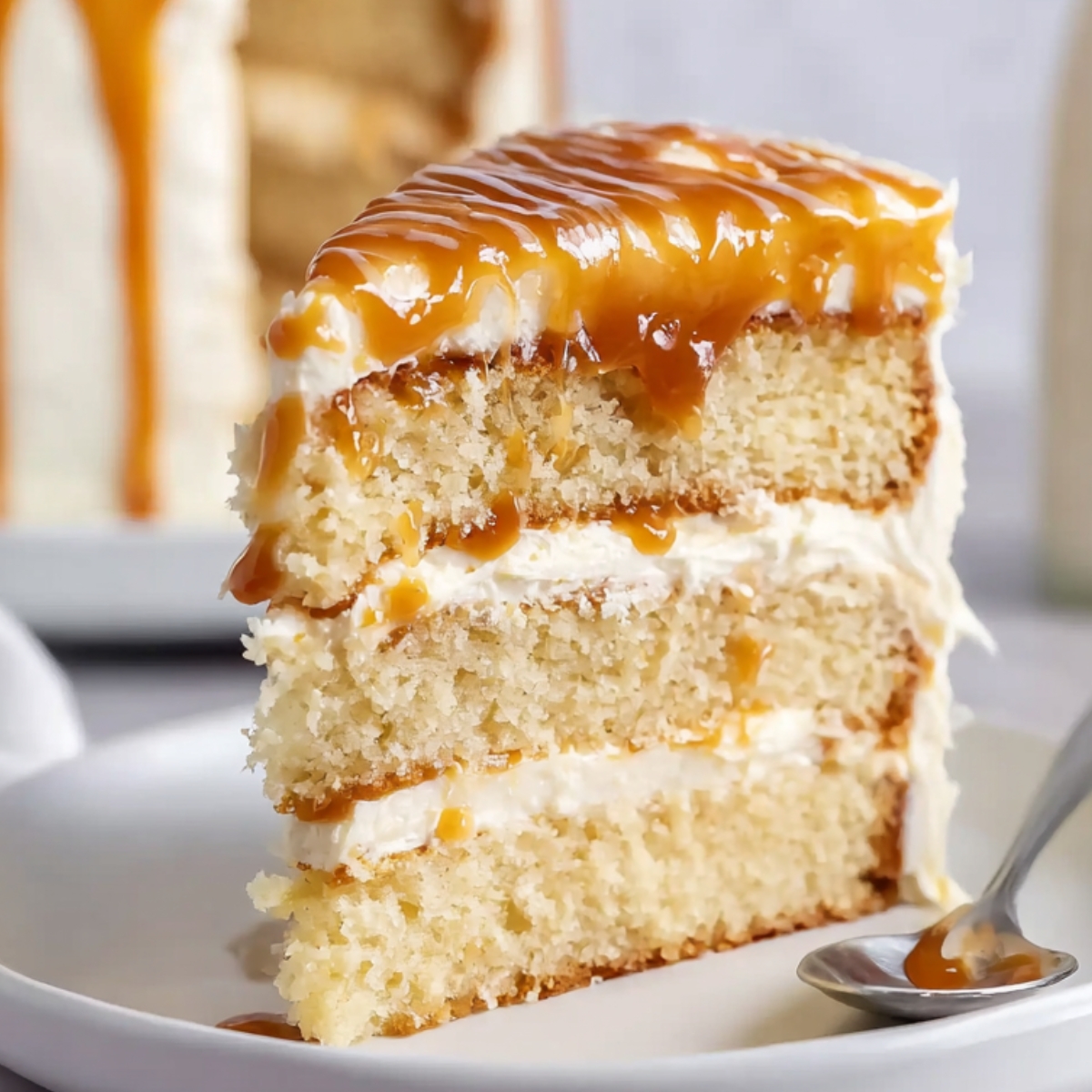
This Salted Caramel Cake is everything you want in a celebration dessert: soft vanilla layers, silky buttercream, and ribbons of golden homemade caramel with just the right amount of salt. I made this for my sister Karla's birthday last year, and she declared it "better than any bakery cake she'd ever had" before going back for thirds. The caramel soaks into the cake just enough to keep it moist, and that sweet-salty contrast is absolutely irresistible.
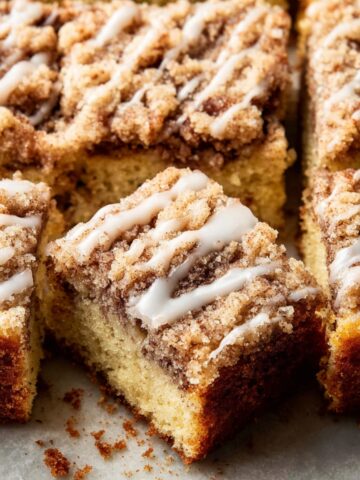
If you love rich, indulgent desserts, this one's calling your name. For more comforting treats, try my Sour Cream Coffee Cake or these Crumbl Chocolate Chip Cookies that disappear just as fast.
What Makes This Salted Caramel Cake Special
The magic is in the balance. The Salted Caramel Cake is light and buttery without being too sweet, so the caramel can really shine. The salted caramel sauce adds that deep, toasty flavor with a hint of salt that keeps it from feeling heavy. And the buttercream? It's fluffy and rich, with just enough caramel mixed in to tie everything together. You get sweetness, salt, and that melt-in-your-mouth texture all in one slice.
This is a showstopper Salted Caramel Cake that doesn't require fancy techniques. If you can mix batter and spread frosting, you can make this. It's perfect for birthdays, holidays, or any time you want to impress someone. And if you're in the mood for something equally comforting, my Banana Muffins are another family favorite.
Jump to:
- What Makes This Salted Caramel Cake Special
- Salted Caramel Cake Ingredients
- How to Make Salted Caramel Cake
- Ingredient Swaps and Substitutions
- Equipment For Salted Caramel Cake
- How to Store Salted Caramel Cake
- Serving Suggestions
- Expert Tips
- Why You'll Love This Salted Caramel Cake
- FAQ
- Related
- Pairing
- Salted Caramel Cake
Salted Caramel Cake Ingredients
Here's everything for the Salted Caramel Cake, caramel, and frosting.
See Recipe Card Below This Post For Ingredient Quantities
For the Salted Caramel Sauce
- Granulated sugar: This melts down into the caramel base. Make sure the sugar is evenly moistened so it melts uniformly.
- Water: Helps the sugar dissolve and prevents it from burning too quickly.
- Butter: Adds richness and silky texture to the caramel. Use unsalted butter so you can control the salt level.
- Heavy cream: Gives the caramel that smooth, pourable consistency. Make sure it's at room temperature so it blends easily.
- Salt: Balances the sweetness and gives the caramel that signature salted flavor. A big pinch is just right.
For the Vanilla Cake Layers
- All-purpose flour: Forms the structure of the cake and keeps it tender. Don't overmix once you add it.
- Cornstarch: Makes the cake extra soft and gives it that bakery-style crumb.
- Baking powder and baking soda: Work together to help the cake rise and stay light.
- Salt: Enhances all the flavors and balances the sweetness.
- Butter: Adds richness and moisture. Make sure it's softened to room temperature for the best texture.
- Granulated sugar: Sweetens the cake and helps create a tender crumb when creamed with the butter.
- Eggs: Bind everything together and add structure. Room temperature eggs mix in more smoothly.
- Sour cream: Keeps the cake incredibly moist and adds a subtle tang that balances the sweetness.
- Vegetable oil: Adds extra moisture and keeps the cake soft for days.
- Vanilla extract: Brings warmth and depth to the flavor.
For the Caramel Buttercream
- Butter: The base of the buttercream. Beat it well for a light, fluffy texture.
- Powdered sugar: Sweetens and thickens the frosting. Sifting it first prevents lumps.
- Vanilla extract: Adds warmth and rounds out the flavor.
- Caramel: Gives the buttercream that gorgeous caramel flavor and a hint of color.
How to Make Salted Caramel Cake
Here's how to make each component and put it all together.
Making the Salted Caramel
Combine sugar and water: In a medium saucepan, mix the granulated sugar and water together. Stir it around so all the sugar is evenly wet, then flatten it into an even layer across the pan.
Melt the sugar: Place the pan over medium-high heat and let it melt, stirring occasionally, until it turns a deep golden brown. This takes about 5 to 7 minutes. Watch it closely because it can go from perfect to burnt quickly.
Add the butter: Once the sugar is melted and golden, reduce the heat to medium. Stir in the butter and keep stirring until it's completely melted and smooth.
Stir in the cream: Slowly pour in the heavy cream while stirring constantly. The mixture will bubble up and steam, so be careful. Keep stirring until it's fully combined and smooth.
Season and cool: Remove the pan from the heat and stir in a big pinch of salt. Pour the caramel into a shallow bowl and let it cool to room temperature. Pop it in the fridge for 30 to 60 minutes to help it thicken up.
Baking the Vanilla Cake Layers
Preheat and prep: Preheat your oven to 170ºC (340ºF). Line three 20 cm (8-inch) baking pans with parchment paper and set them aside.
Mix dry ingredients: Sift together the all-purpose flour, cornstarch, baking powder, baking soda, and salt in a medium bowl. Set it aside.
Cream butter and sugar: In a large mixing bowl, beat the granulated sugar and softened butter together on high speed for 3 minutes. You want it light, fluffy, and pale.
Add eggs: Add the eggs two at a time, mixing well after each addition until they're fully incorporated.
Combine wet and dry: Add half of the dry ingredients and mix on low speed until just combined. Then add the sour cream, vegetable oil, and vanilla extract, and mix until smooth. Add the remaining dry ingredients and mix until everything is blended. Use a rubber spatula to fold the batter and make sure there are no streaks of flour hiding at the bottom.
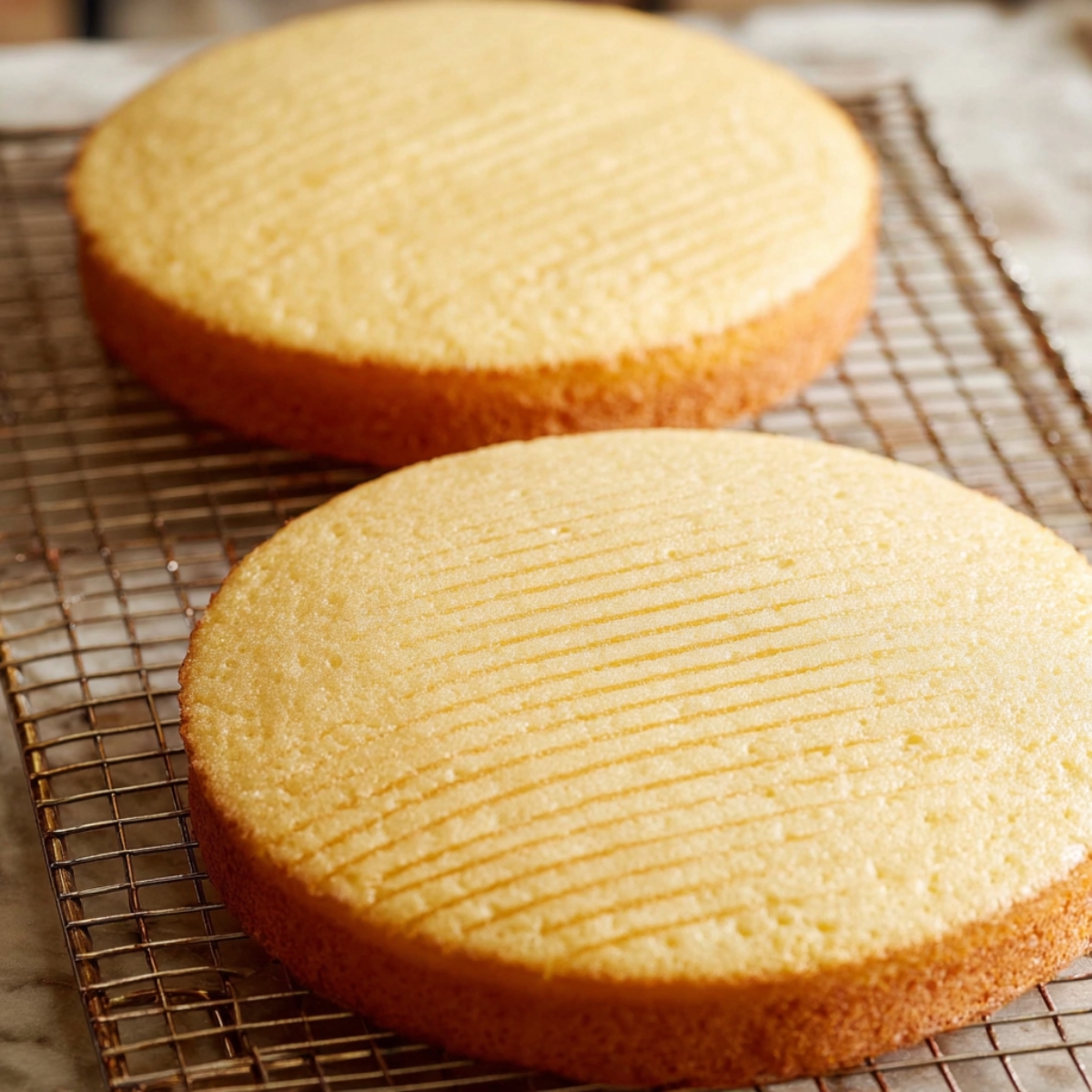
Bake: Divide the batter evenly among the three prepared pans. Bake for 19 to 22 minutes, or until a cake tester inserted in the center comes out clean and the tops spring back when lightly pressed.
Cool: Let the cakes cool in the pans for 10 minutes, then turn them out onto a cooling rack to cool completely before frosting.
Making the Caramel Buttercream
Prep the sugar: Sift the powdered sugar into a bowl and set it aside.
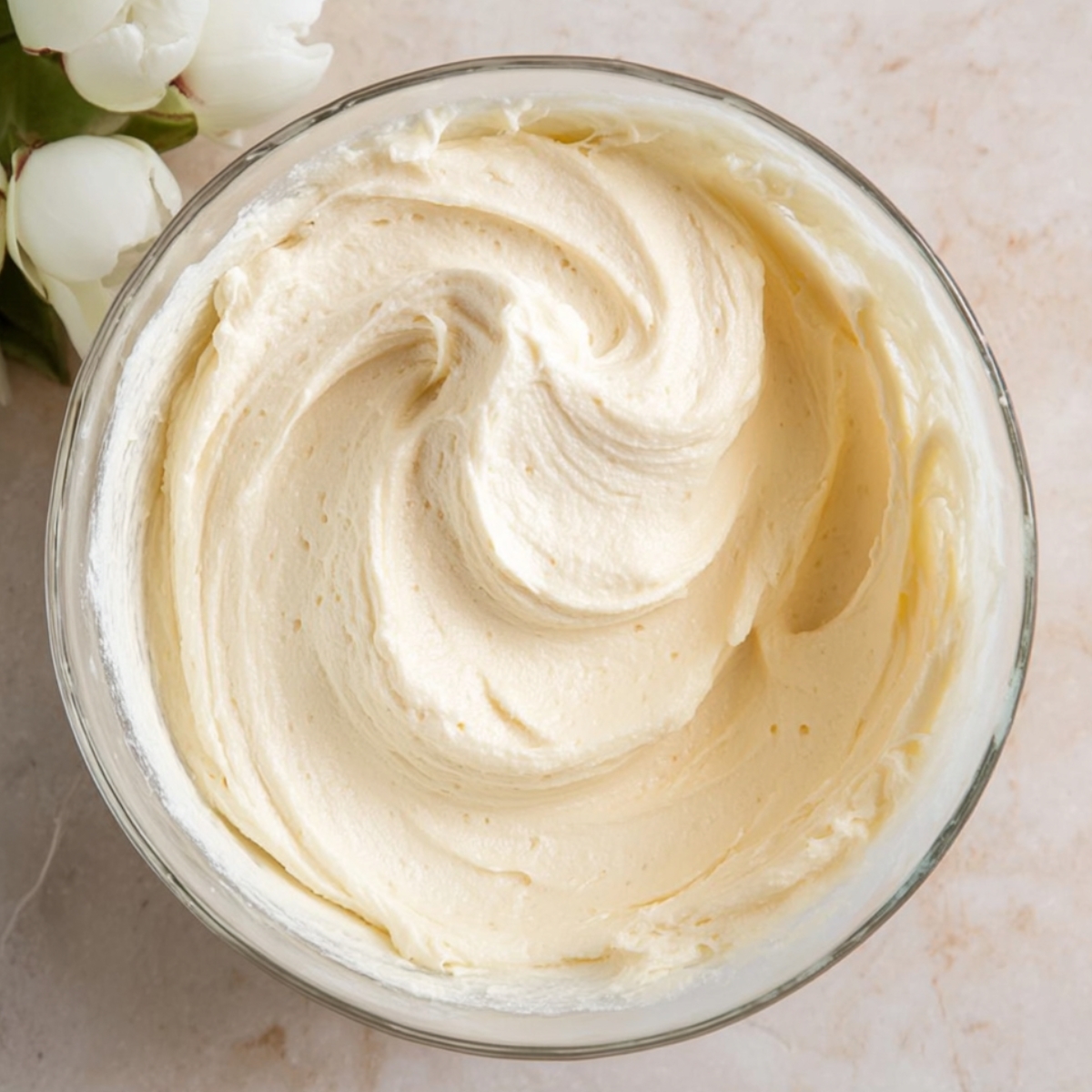
Beat the butter: In a stand mixer, beat the softened butter on medium-high speed for 4 minutes. Scrape down the sides of the bowl, then beat for another 2 minutes until it's super fluffy and pale.
Add sugar and caramel: Add the powdered sugar, vanilla extract, and caramel in two batches, mixing well after each addition. Scrape down the sides of the bowl and mix on low speed for 1 minute to get rid of any air bubbles.
Assembling the Cake
First layer: Place the first cake layer on your serving dish or cake board. Spread 2 big scoops of buttercream on top and smooth it out with an offset spatula.
Add caramel: Spoon 2 to 3 tablespoons of caramel over the buttercream, leaving a small border around the edge so it doesn't spill over.
Repeat: Add the second cake layer and repeat the buttercream and caramel process. Place the final layer on top.
Crumb coat: Spread a thin layer of buttercream over the entire cake to seal in the crumbs. Refrigerate for 20 minutes to let it firm up.
Final frosting: Spread the remaining buttercream evenly over the chilled cake, smoothing it with an offset spatula.
Finish: Drizzle the remaining caramel over the top and let it drip down the sides. You can swirl it into the buttercream with a knife for a marbled effect if you like.
Ingredient Swaps and Substitutions
Sour cream: You can use full-fat Greek yogurt instead. It'll give you the same moist texture with a slight tang.
Vegetable oil: Canola oil or melted coconut oil work just as well.
Homemade caramel: If you're short on time, store-bought caramel sauce works in a pinch. Just make sure it's thick enough to hold its shape.
Powdered sugar: You can make your own by blending granulated sugar in a high-speed blender until it's fine and powdery.
Equipment For Salted Caramel Cake
- 3 x 20 cm (8-inch) baking pans
- Hand mixer or stand mixer
- Parchment paper
- Offset spatula (optional, but helpful)
- Cake turntable (optional, makes frosting easier)
How to Store Salted Caramel Cake
Room temperature: This Salted Caramel Cake keeps well at room temperature for up to 2 days if stored in an airtight container or covered with a cake dome.
Refrigerator: Store in the fridge for up to 5 days. Let it sit at room temperature for 20 to 30 minutes before serving so the buttercream softens up.
Freezer: You can freeze unfrosted cake layers wrapped tightly in plastic wrap and foil for up to 3 months. Thaw in the fridge overnight before assembling.
Serving Suggestions
This Salted Caramel Cake is rich, so a little goes a long way. Here are a few ways to serve it:
With coffee or tea: A slice of this Salted Caramel Cake pairs beautifully with a hot cup of coffee or black tea. The bitterness balances the sweetness.
With vanilla ice cream: Serve a warm slice with a scoop of vanilla ice cream on the side. The cold, creamy ice cream melts into the caramel and it's heavenly.
For special occasions: This is perfect for birthdays, anniversaries, or holiday gatherings. It looks impressive and tastes even better.
With fresh berries: A handful of fresh raspberries or strawberries on the side cuts through the richness and adds a pop of color.
Expert Tips
Room temperature ingredients: Make sure your butter, eggs, and sour cream are all at room temperature. This helps everything blend smoothly and creates a better texture.
Don't overmix: Once you add the flour, mix just until combined. Overmixing can make the Salted Caramel Cake tough.
Watch the caramel: Sugar goes from golden to burnt in seconds. Keep a close eye on it and don't walk away.
Level your layers: If your Salted Caramel Cake layers have domed tops, use a serrated knife to level them before assembling. This makes stacking easier and gives you a neater finished cake.
Chill between steps: Refrigerating the cake after the crumb coat helps the final layer of frosting go on smoothly.
Use a turntable: If you have one, a Salted Caramel Cake turntable makes frosting so much easier. You can spin the cake as you spread the buttercream.
Why You'll Love This Salted Caramel Cake
This Salted Caramel Cake looks fancy, but it's surprisingly easy to put together. The vanilla layers are tender and light, and the salted caramel buttercream is so smooth it practically melts on your tongue. You get that beautiful caramel drip on top that makes it look like something from a bakery window, but you made it yourself. The homemade caramel sauce takes maybe ten minutes, and honestly, it's worth every second. Plus, you can make the layers ahead and assemble when you're ready.
FAQ
What is the 1234 cake rule?
The 1234 cake rule is an old-fashioned method for making a simple pound cake: 1 cup butter, 2 cups sugar, 3 cups flour, and 4 eggs. It's a basic ratio that produces a dense, buttery cake. This salted caramel cake uses a different ratio with sour cream and oil for a lighter, more tender crumb.
Which is the tastiest cake in the world?
That's totally personal, but many people say classic flavors like chocolate, vanilla, or red velvet are at the top. This salted caramel cake is definitely a contender with its sweet and salty combo. The balance of flavors and textures makes it unforgettable.
What are common Salted Caramel Cake mistakes?
Burning the caramel is the biggest one. Sugar can go from perfect to burnt in seconds, so watch it closely. Another mistake is not letting the caramel cool enough before adding it to the buttercream, which can cause the frosting to melt. Also, overmixing the cake batter makes it dense instead of light and fluffy.
What is the difference between caramel and salted caramel?
Regular caramel is sweet and buttery, made from sugar, butter, and cream. Salted caramel adds a pinch of salt, which balances the sweetness and brings out deeper, more complex flavors. The salt makes it less cloying and more interesting. It's a small addition that makes a big difference.
Related
Looking for other recipes like this? Try these:


Pairing
These are my favorite dishes to serve with Salted Caramel Cake
Salted Caramel Cake
Ingredients
Method
- In a medium saucepan, combine granulated sugar and water. Stir to ensure sugar is evenly moistened, then heat over medium-high heat until the sugar melts and turns golden brown. Stir occasionally for even melting.
- Once the caramel reaches a golden color, reduce heat to medium. Stir in the butter until fully melted. Slowly add the heavy cream, a little at a time, stirring continuously. The mixture will bubble, so be cautious. Stir until smooth and well combined.
- Turn off the heat and stir in a pinch of salt. Pour the sauce into a shallow bowl to cool quickly, then refrigerate for 30-60 minutes until it reaches room temperature.
- Preheat the oven to 170°C (340°F) and prepare three 20 cm (8 in) round cake pans by lining them with parchment paper.
- Sift together flour, cornstarch, baking powder, baking soda, and salt. Set aside.
- In a large mixing bowl, beat the butter and sugar together on high speed for about 3 minutes, until light and fluffy.
- Add eggs, two at a time, mixing well between each addition.
- Add half of the dry ingredients to the wet mixture, mixing on low speed until just combined.
- Add sour cream, vegetable oil, and vanilla extract, and mix until combined. Then add the remaining dry ingredients and mix until just combined.
- Use a rubber spatula to gently fold the batter to ensure everything is fully incorporated.
- Divide the batter evenly between the prepared pans. Bake for 19-22 minutes or until a toothpick inserted into the center comes out clean. The cakes should remain light and not overly browned.
- Allow the cakes to cool in the pans for 10 minutes before removing them and letting them cool completely on a wire rack.
- Sift the powdered sugar and set it aside.
- In a stand mixer or with a hand mixer, beat the softened butter on medium-high speed for 4 minutes until creamy. Scrape down the sides of the bowl and continue mixing for another 2 minutes.
- Gradually add the powdered sugar, vanilla extract, and caramel in two parts, mixing well after each addition.
- Scrape down the sides and mix again on low speed for a final 1 minute.
- Place the first cake layer on a cake board or serving dish. Spread a generous layer of caramel buttercream over the top with an offset spatula. Drizzle 2-3 tablespoons of salted caramel sauce over the buttercream, ensuring to leave the edges clear.
- Add the second cake layer, repeating the process with buttercream and caramel sauce. Place the final cake layer on top, then apply a thin crumb coat of buttercream around the entire cake.
- Refrigerate the cake for 20 minutes to firm up the crumb coat.
- Once firm, apply the remaining buttercream to the entire cake and smooth it out. Drizzle with the remaining salted caramel sauce on top, and optionally swirl it into the buttercream for a decorative effect.
Leave a Reply