
This lemon greek yogurt cheesecake is creamy, tangy, and lighter than traditional cheesecake, with bright citrus flavor in every bite. The crust is buttery and crisp, the filling is smooth and silky, and the whole thing just melts on your tongue. I first made this after craving something sweet but not too heavy one spring afternoon, and it's been my go-to dessert ever since.
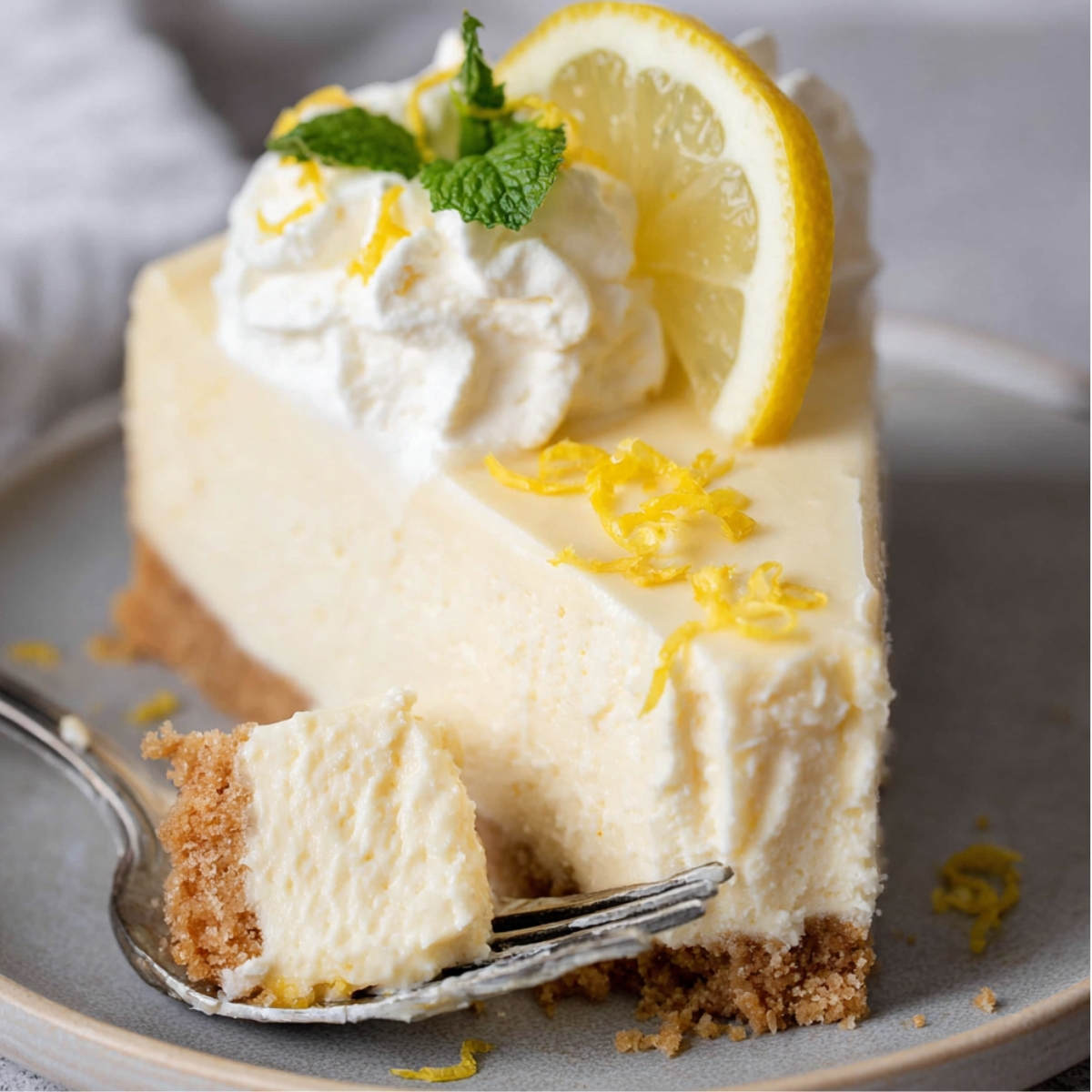

It's surprisingly easy to put together, and using Greek yogurt instead of all cream cheese gives it this wonderful lightness without losing any of that rich, dreamy texture. If you love citrus desserts like my Lemon Poppy Seed Cookies or the bright flavors in my Yellow Cake, this one's calling your name. It's gluten-free friendly too, so everyone at the table can dig in.
Why You'll Love This Lemon Greek Yogurt Cheesecake
This Lemon Greek Yogurt Cheesecake hits all the right notes. It's creamy without being too rich, tangy without making your mouth pucker, and just sweet enough to feel like a treat. The Greek yogurt keeps it light and adds this subtle tartness that makes the lemon really sing.
You don't need any fancy skills to make it. If you can run a food processor and wrap a pan in foil, you're golden. The water bath sounds intimidating, but it's just a little insurance against cracks, and honestly, even if it cracks, it still tastes incredible.
It's also a little healthier than your average Lemon Greek Yogurt Cheesecake. Less sugar, more protein from the yogurt, and that fresh lemon zest makes it feel like springtime on a plate. Plus, you can make it a day ahead, which is perfect for dinner parties or when you just want dessert ready and waiting in the fridge.
Jump to:
- Why You'll Love This Lemon Greek Yogurt Cheesecake
- Lemon Greek Yogurt Cheesecake Ingredients
- How to Make Lemon Greek Yogurt Cheesecake
- Substitutions and Variations
- Equipment For Lemon Greek Yogurt Cheesecake
- How to Store Lemon Greek Yogurt Cheesecake
- Expert Tips
- Serving Suggestions
- FAQ
- Related
- Pairing
- Lemon Greek Yogurt Cheesecake
Lemon Greek Yogurt Cheesecake Ingredients
Here's what you'll need to make this light Lemon Greek Yogurt Cheesecake from scratch.
See Recipe Card Below This Post For Ingredient Quantities
For the Crust:
- Gluten-free graham crackers : These form the base and add a sweet, slightly nutty flavor. You can use regular graham crackers if you're not going gluten-free.
- Butter, melted : Binds the crumbs together and gives the crust that buttery, crisp texture when it bakes.
For the Lemon Cheesecake:
- Cream cheese : The main structure of the cheesecake. Make sure it's softened to room temperature so it blends smoothly.
- Greek yogurt : Lightens the filling and adds a subtle tang that balances the sweetness. It also gives the cheesecake a creamier, softer texture.
- Maple syrup : A natural sweetener that adds depth and keeps the sugar content lower than traditional recipes.
- Lemon juice : Brings that bright, tart flavor that makes this cheesecake so refreshing.
- Lemon zest : Adds intense lemon flavor and a little pop of color throughout the filling.
- Vanilla extract : Rounds out the flavors and adds warmth.
- Lemon extract, optional : Boosts the lemon flavor if you really want that citrus punch.
- Large eggs : Bind everything together and give the cheesecake its signature creamy, custardy texture.
How to Make Lemon Greek Yogurt Cheesecake
Let's make this Lemon Greek Yogurt Cheesecake step by step.
Prepare the springform pan:
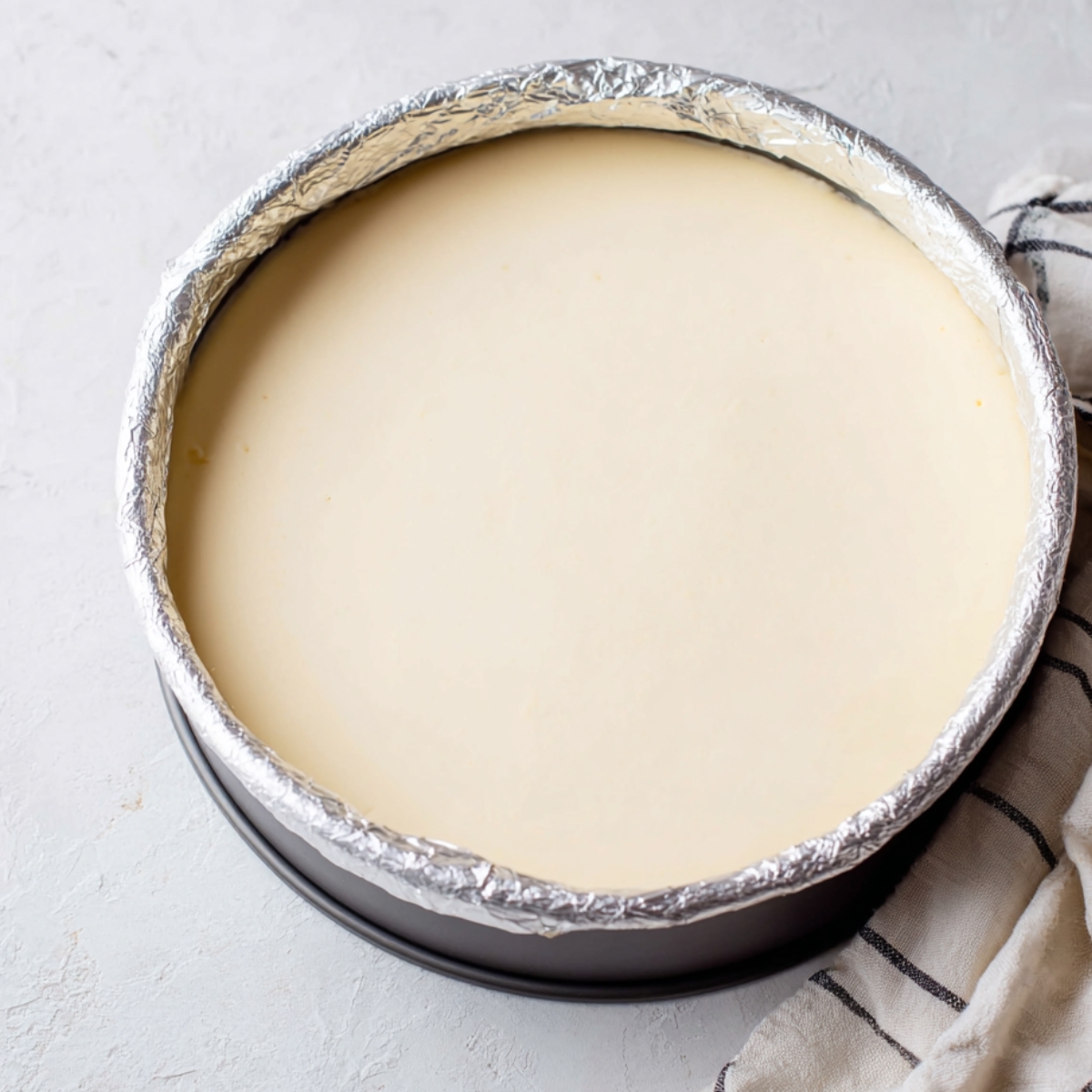
Preheat your oven to 350°F. Line the bottom of a springform pan with foil, folding it up at least 3 inches around the sides to keep water from leaking in during the water bath. Set it aside.
Prepare the crust:
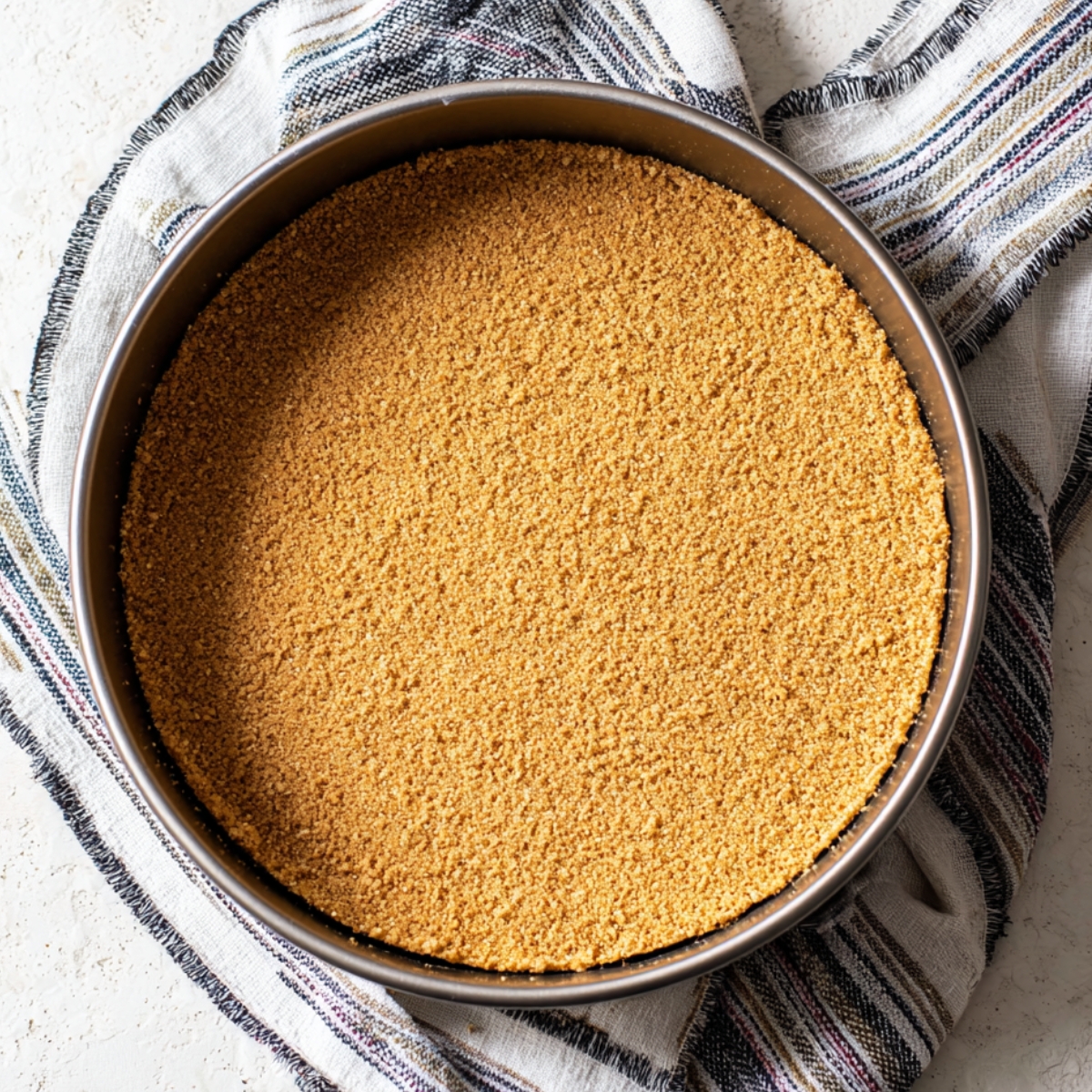
Add the gluten-free graham crackers to a food processor and pulse until they turn into fine crumbs. Pour in the melted butter and pulse a few more times until everything looks like wet sand. Press the mixture firmly into the bottom of the springform pan, packing it down with your fingers or the back of a spoon. Set it aside while you make the filling.
Make the cheesecake batter:
Add the room-temperature cream cheese to your food processor and blend until it's soft and smooth, about 30 seconds. Add the Greek yogurt, maple syrup, lemon juice, vanilla extract, lemon zest, and lemon extract if you're using it. Blend gently until everything is combined and silky, scraping down the sides if needed.
Add eggs:
Crack the eggs in one at a time, pulsing the mixture after each addition until the egg is just mixed in. Don't overdo it here. You want the batter smooth, but overmixing can make the cheesecake dense or cause cracks.
Assemble and bake:
Pour the cheesecake batter over the crust in the springform pan, smoothing the top with a rubber spatula. Place the pan into a roasting pan, then carefully pour 2 to 3 inches of boiling water around it to create a water bath. Slide the whole thing into the oven and bake for 55 to 70 minutes, until the center is set but still has a slight jiggle when you gently shake the pan.
Cool in oven:
Turn off the oven and crack the door open for 1 minute. Close it back up and let the cheesecake sit in the warm oven for 1 hour. This gradual cooling helps prevent cracks.
Cool at room temperature:
After an hour, take the cheesecake out of the oven and let it cool to room temperature on the counter. Once it's cool, cover it with plastic wrap and refrigerate for at least 4 hours, or overnight if you can wait. The flavor gets even better after a full night in the fridge.
Substitutions and Variations
Crust: Swap the gluten-free graham crackers for regular ones, or try vanilla wafer cookies or gingersnaps for a different flavor.
Sweetener: Use honey or granulated sugar instead of maple syrup. If using sugar, start with ½ cup and adjust to taste.
Citrus twist: Replace half the lemon juice with lime or orange juice for a different citrus vibe.
No lemon extract? No problem. Just use a little extra lemon zest instead.
Dairy-free option: Use dairy-free cream cheese and coconut yogurt, though the texture might be a bit softer.
Equipment For Lemon Greek Yogurt Cheesecake
- Springform pan: Essential for easy removal and clean slices.
- Food processor: Makes quick work of the crust and the batter.
- Roasting pan: Holds the water bath that keeps your cheesecake creamy and crack-free.
- Rubber spatula: Helps you scrape down the sides and smooth the batter.
How to Store Lemon Greek Yogurt Cheesecake
Keep this homemade Lemon Greek Yogurt Cheesecake covered in the fridge for up to 5 days. The flavor actually deepens after a day or two, so it's perfect for making ahead.
You can also freeze individual slices. Wrap them tightly in plastic wrap, then in foil, and freeze for up to 2 months. Thaw in the fridge overnight before serving.
Expert Tips
Use room-temperature ingredients. Cold cream cheese won't blend smoothly and can leave lumps in your batter.
Don't skip the water bath. It keeps the oven humid and helps the Lemon Greek Yogurt Cheesecake bake evenly without drying out or cracking.
Let it cool slowly. Rapid temperature changes cause cracks. The gradual cooling method in the oven makes a huge difference.
Chill overnight if possible. The texture and flavor improve after a full night in the fridge. It's worth the wait.
Check doneness carefully. The center should still jiggle slightly when you shake the pan. It will firm up as it cools.
Serving Suggestions
Serve this creamy Lemon Greek Yogurt Cheesecake with a dollop of whipped cream and fresh berries on top. Blueberries and raspberries are especially pretty and add a nice tartness.
Drizzle a little extra lemon curd over each slice for an even brighter flavor, or dust with powdered sugar for a simple, elegant finish.
It's also lovely with a cup of hot tea or coffee on the side, especially if you're serving it for brunch. Pair it with Tiramisu Cupcakes or Coconut Sugar Cookies for a full dessert spread.
FAQ
What does lemon juice do to Greek yogurt?
Lemon juice adds brightness and balances the richness of the yogurt and cream cheese. It also helps set the cheesecake and gives it that signature tangy flavor without making it too sour.
Is Greek yogurt good for cheesecake?
Absolutely. Greek yogurt makes the filling lighter and creamier while adding protein and cutting down on the heaviness of traditional Lemon Greek Yogurt Cheesecake. It also brings a subtle tang that works beautifully with the lemon.
Can you make cheesecake with Greek yogurt instead of cream?
Yes, but you'll still want some cream cheese for structure. Greek yogurt can replace sour cream or part of the cream cheese, like in this recipe, but using only yogurt might make the texture too soft or loose.
What is the difference between cheesecake and Greek yogurt cheesecake?
Greek yogurt cheesecake is lighter, tangier, and has fewer calories than traditional cheesecake. It still has that creamy, rich texture, but the yogurt gives it a fresher, less heavy feel. It's perfect if you want dessert that doesn't sit like a brick.
Related
Looking for other recipes like this? Try these:


Pairing
These are my favorite dishes to serve with Lemon Greek Yogurt Cheesecake



Lemon Greek Yogurt Cheesecake
Ingredients
Method
- Preheat the oven to 350º F. Line the bottom of a springform pan with foil, folding it up at least 3 inches to prevent water from seeping into the pan.
- Process the graham crackers into fine crumbs using a food processor.
- Add the melted butter to the graham cracker crumbs and pulse a few times to combine.
- Press the graham cracker mixture firmly into the bottom of the springform pan to form the crust.
- To make the cheesecake filling, add the softened cream cheese to a food processor and process until smooth and creamy. Stop to scrape down the sides of the bowl as needed.
- Add the Greek yogurt, maple syrup, lemon juice, vanilla extract, optional lemon extract, and lemon zest to the food processor. Process until everything is well blended, being careful not to overmix.
- Add the eggs one at a time, pulsing briefly to incorporate each egg before adding the next. Be careful not to overmix and trap air.
- Pour the cheesecake mixture into the prepared crust in the springform pan.
- Pour 2-3 inches of boiling water into a roasting pan. Place the springform pan with the cheesecake batter into the water, making sure the water does not touch the cheesecake.
- Bake for 55-70 minutes, until the center is set but slightly wobbly. The cheesecake should not jiggle.
- Once the cheesecake has finished baking, turn off the oven and allow it to sit in the oven for 1 minute. Then, crack the oven door and let the cheesecake cool for another hour.
- Allow the cheesecake to cool to room temperature before refrigerating it for at least 4 hours.


Leave a Reply