
These chewy Lemon Poppy Seed Cookies are sunshine in cookie form, with bright citrus flavor and a sweet glaze that sets into a thin, crackly coating. I first made these on a rainy Saturday when I wanted something that tasted like spring, and the kitchen smelled like lemon orchards within minutes. They're surprisingly simple to pull together.
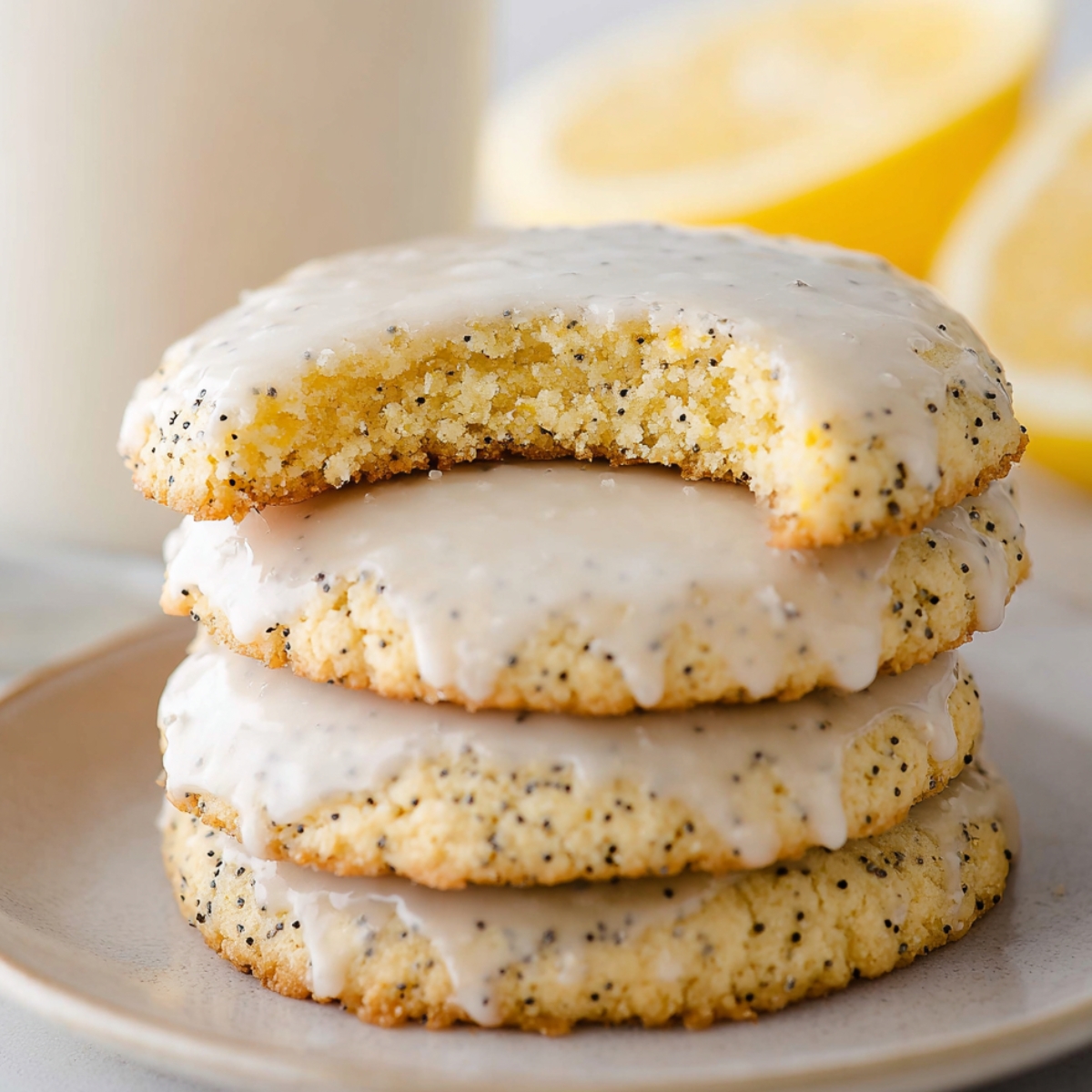

if you love treats like Cranberry Orange Icebox Cookies Recipe or Gingerbread Cake, you'll adore how the poppy seeds add a gentle crunch to each bite. The glaze makes them look bakery-perfect without any fuss.
What Makes These Lemon Poppy Seed Cookies So Special
There's a reason lemon and poppy seeds show up together in muffins, cakes, and cookies. The bright, tangy lemon cuts through the sweetness, while the poppy seeds add tiny bursts of nutty flavor and a speckled look that's just pretty. These Lemon Poppy Seed Cookies bake up with soft, chewy centers and crisp edges that give a little when you bite in. The glaze isn't too thick or too sweet, just enough to add a glossy finish and an extra hit of lemon.
They remind me a bit of the glazed cookies you'd find at a fancy bakery, but you can make a whole batch in about an hour. They're great for spring picnics, summer potlucks, or anytime you want something that feels a little more special than your standard chocolate chip.
Jump to:
- What Makes These Lemon Poppy Seed Cookies So Special
- Lemon Poppy Seed Cookies Ingredients
- How to Make Lemon Poppy Seed Cookies
- Substitutions and Variations
- Equipment For Lemon Poppy Seed Cookies
- Storage and Freezing Tips
- Serving Suggestions
- Expert Tips
- Why You'll Love This Lemon Poppy Seed Cookies
- FAQ
- Related
- Pairing
- Lemon Poppy Seed Cookies
Lemon Poppy Seed Cookies Ingredients
Here's everything for these glazed Lemon Poppy Seed Cookies with poppy seeds.
See Recipe Card Below This Post For Ingredient Quantities
For the Cookies:
- All-purpose flour: Forms the structure of the cookies and keeps them tender and chewy. Don't swap this for cake flour or they'll be too delicate.
- Baking soda: Helps the cookies spread and gives them a slightly softer texture.
- Baking powder: Works with the baking soda to create a gentle lift without making the cookies puffy.
- Fine sea salt: Balances the sweetness and brings out the lemon flavor. Don't skip it.
- Unsalted butter (softened): Adds richness and creates a soft, melt-in-your-mouth texture. Make sure it's at room temperature so it creams properly with the sugar.
- Granulated sugar: Sweetens the dough and helps create those slightly crisp edges. Creaming it with the butter also adds air for a lighter texture.
- Large egg: Binds everything together and adds moisture. One egg is all you need for this batch.
- Lemon zest: This is where most of the lemon flavor comes from. The oils in the zest are incredibly fragrant and give the cookies that fresh, bright taste.
- Fresh lemon juice: Adds tanginess and moisture. Bottled lemon juice won't taste as vibrant, so use fresh if you can.
- Poppy seeds: Give the cookies a subtle nutty flavor and a speckled appearance. They're also a classic pairing with lemon.
For the Glaze:
- Unsalted butter (melted): Adds richness to the glaze and helps it set with a slight sheen.
- Powdered sugar: Sweetens the glaze and gives it a smooth, pourable consistency. Sifting isn't necessary, but it helps avoid lumps.
- Fresh lemon juice: Thins out the glaze and adds a tangy finish that complements the cookies perfectly.
How to Make Lemon Poppy Seed Cookies
These easy Lemon Poppy Seed Cookies come together quickly with just a few simple steps.
Preheat oven: Preheat your oven to 350°F (175°C). Line your baking sheets with parchment paper or silicone baking mats so the cookies don't stick.
Mix dry ingredients: In a medium bowl, whisk together the flour, baking soda, baking powder, and salt. Set this aside while you work on the wet ingredients.
Cream butter and sugar: In the bowl of a stand mixer fitted with the paddle attachment, or using an electric hand mixer, cream the softened butter and granulated sugar together on medium speed until the mixture is light and fluffy, about 3 to 5 minutes. Scrape down the sides of the bowl as needed so everything mixes evenly.
Add egg and lemon: Add the egg and mix until well combined. Scrape down the sides of the bowl again. Add the lemon zest and lemon juice, mixing until everything is fully incorporated. The mixture might look a little curdled from the lemon juice, but that's normal.
Combine wet and dry: Gradually add the dry ingredients to the wet mixture, mixing until just combined. Don't overmix or the cookies will be tough. Stir in the poppy seeds on low speed until they're evenly distributed throughout the dough.
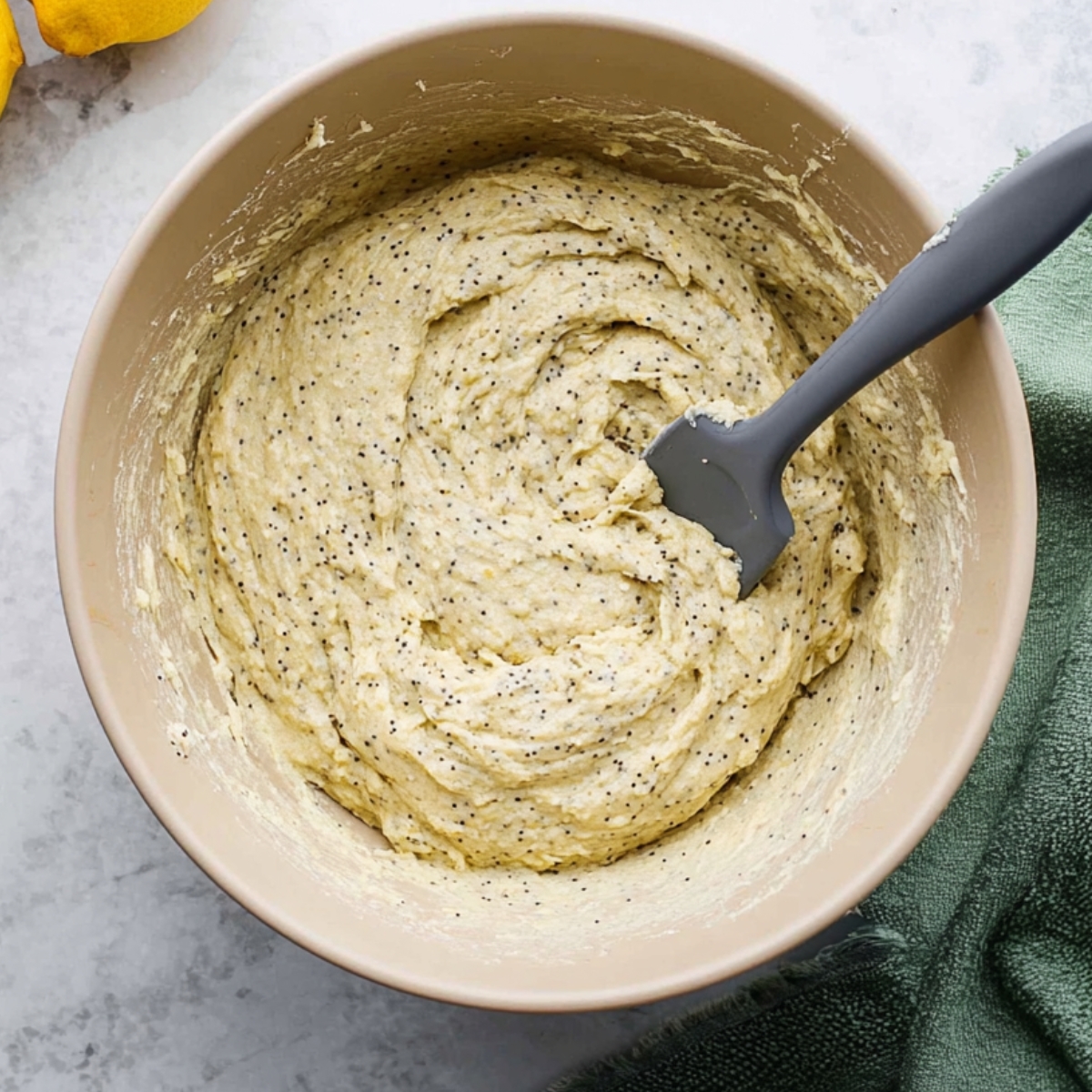
Scoop the dough: Using a small (1 tablespoon) cookie scoop, drop rounded scoops of dough onto the prepared baking sheets. Leave about 2 inches between each cookie so they have room to spread.
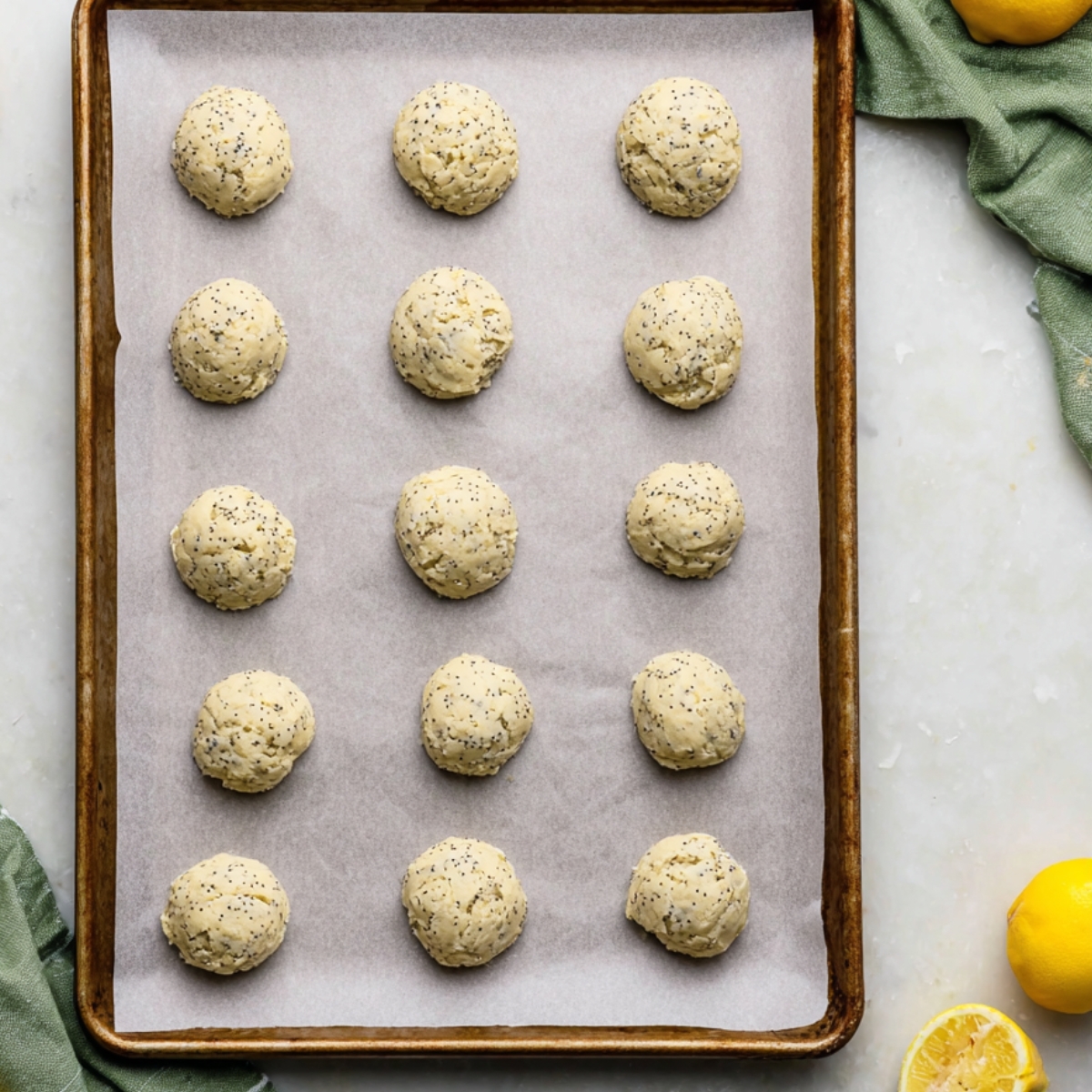
Bake: Bake for 9 to 11 minutes, or until the bottom edges of the cookies begin to turn golden brown. The centers will still look soft and slightly underdone, which is what you want.
Cool: Let the cookies cool on the baking sheets for 5 minutes. This helps them set so they don't fall apart when you move them. Transfer to a wire rack to finish cooling completely.
Make the glaze: Once the cookies are cooled, whisk together the melted butter, powdered sugar, and fresh lemon juice until smooth. The glaze should be thick but pourable. If it's too thick, add a tiny bit more lemon juice. If it's too thin, add more powdered sugar.
Glaze the cookies: Dip the top of each cookie into the glaze, letting any excess drip off. Set the cookies back on the wire rack and let the glaze set for about 15 to 20 minutes before serving. It will harden into a thin, sweet coating.
Substitutions and Variations
Use salted butter: If that's all you have, just reduce the added salt to ¼ teaspoon.
Swap lemon extract for some of the juice: If you want an even stronger lemon flavor, replace 1 tablespoon of the lemon juice in the dough with ½ teaspoon of lemon extract.
Try lime or orange: You can swap the lemon zest and juice for lime or orange to change up the flavor. Orange Lemon Poppy Seed Cookies are delicious and a little sweeter.
Add almond extract: A few drops of almond extract in the dough or glaze adds a subtle nuttiness that pairs beautifully with lemon.
Make them vegan: Use vegan butter and a flax egg (1 tablespoon ground flaxseed mixed with 3 tablespoons water, let sit for 5 minutes). The texture will be slightly different but still tasty.
Skip the glaze: If you want a simpler Lemon Poppy Seed Cookies, skip the glaze and roll the dough balls in coarse sugar before baking for a sparkly finish.
Equipment For Lemon Poppy Seed Cookies
- Cookie scoop set: A small 1-tablespoon scoop keeps the cookies uniform in size so they bake evenly. It also makes portioning the dough much faster.
- Nordic Ware aluminum half sheet pans: These sturdy baking sheets distribute heat evenly and won't warp in the oven. They're a game changer for consistent baking.
- Pre-cut parchment paper baking sheets: These fit perfectly on standard baking sheets and make cleanup a breeze. No more measuring and cutting parchment.
- Wire cooling rack: Essential for cooling cookies without trapping steam underneath, which can make the bottoms soggy.
- Stand mixer or hand mixer: Creaming the butter and sugar properly is important for texture, and a mixer makes it easy.
Storage and Freezing Tips
At room temperature: Store the glazed Lemon Poppy Seed Cookies in an airtight container at room temperature for up to 5 days. Place parchment paper between layers if you're stacking them so the glaze doesn't stick.
In the refrigerator: If your kitchen is warm and the glaze is getting sticky, you can refrigerate the cookies for up to a week. Let them come to room temperature before serving for the best texture.
Freezing baked cookies: Freeze the Lemon Poppy Seed Cookies without the glaze in a single layer on a baking sheet until solid, then transfer to a freezer-safe bag or container. They'll keep for up to 3 months. Thaw at room temperature and add the glaze just before serving.
Freezing cookie dough: Scoop the dough into balls and freeze on a baking sheet. Once solid, transfer to a freezer bag. Bake from frozen, adding 1 to 2 extra minutes to the bake time.
Serving Suggestions
These fresh Lemon Poppy Seed Cookies are lovely on their own, but here are a few ways to serve them:
With hot tea or coffee: The bright lemon flavor pairs perfectly with a cup of Earl Grey or a strong coffee. They're an elegant addition to afternoon tea.
As part of a cookie platter: Serve alongside Millionaire Shortbread and other favorites for a variety of flavors and textures.
With fresh berries: A handful of strawberries or blueberries on the side makes these feel like a light spring dessert.
Drizzled with extra glaze: If you're feeling fancy, drizzle a little extra glaze over the top in a zigzag pattern for a bakery-style finish.
Expert Tips
Use room temperature butter: Cold butter won't cream properly with the sugar, and melted butter will make the cookies spread too much. Room temperature butter should be soft enough to leave a fingerprint but not greasy.
Don't overbake: These Lemon Poppy Seed Cookies continue to bake on the hot pan after you take them out of the oven. If you bake them until they look fully done, they'll end up dry. Pull them when the edges are just set and the centers look slightly underdone.
Chill the dough if it's too soft: If your kitchen is warm and the dough feels sticky or greasy, pop it in the fridge for 15 to 20 minutes before scooping. This helps the cookies hold their shape better.
Zest before juicing: It's much easier to zest a whole lemon than one that's already been cut and juiced. Use a microplane for the finest zest.
Let the glaze set completely: If you stack or pack the Lemon Poppy Seed Cookies before the glaze hardens, it will smudge and stick. Give them at least 15 to 20 minutes to set.
Why You'll Love This Lemon Poppy Seed Cookies
Lemon Poppy Seed Cookies are the kind of treat that looks impressive but doesn't require any fancy techniques. Here's what makes them a winner:
Bright, fresh flavor. The combination of lemon zest and fresh lemon juice gives these Lemon Poppy Seed Cookies a bold citrus punch that tastes like sunshine. They're tangy without being sour.
Chewy texture with a slight crisp. These aren't crunchy cookies. They bake up soft in the middle with edges that have just a hint of crispness, and the glaze adds a delicate sweetness on top.
Simple ingredients. You probably have most of what you need already. Butter, sugar, flour, eggs, and fresh lemons are the stars here. Poppy seeds are the only thing you might need to pick up.
Perfect for gifting. The glaze makes them look polished and professional, so they're great for cookie swaps, bake sales, or wrapping up as a homemade gift. They also pair beautifully with tea or coffee.
Make-ahead friendly. The dough can be made in advance and stored in the fridge, or you can freeze baked cookies for later. They stay soft for days if you store them properly.
If you're a fan of citrus desserts like Sour Cherry Pie or Carrot Cake Bars, these Lemon Poppy Seed Cookies will be right up your alley.
FAQ
How do you make lemon poppy seed cookies from scratch?
Start by creaming softened butter and sugar until fluffy, then mix in an egg, fresh lemon zest, and lemon juice. Fold in flour, baking soda, baking powder, salt, and poppy seeds. Scoop the dough onto a baking sheet and bake at 350°F for 9 to 11 minutes. Let them cool, then dip the tops in a simple glaze made from powdered sugar, melted butter, and lemon juice. My daughter Emily says the hardest part is waiting for the glaze to set before sneaking one.
What's the best glaze for lemon cookies?
A simple glaze made from powdered sugar, melted butter, and fresh lemon juice is perfect. It's sweet, tangy, and sets into a smooth, glossy coating. For a thicker glaze, use less lemon juice. For a thinner drizzle, add a bit more. You can also add a drop of vanilla or almond extract for extra flavor.
Can you freeze lemon poppy seed cookies?
Yes. Freeze the baked cookies without the glaze in an airtight container or freezer bag for up to 3 months. Thaw at room temperature and add the glaze just before serving. You can also freeze the dough in scooped balls and bake them straight from the freezer, adding a minute or two to the bake time.
What's the secret to soft lemon cookies?
Don't overbake them. Pull the cookies from the oven when the edges are just set and the centers still look a little soft. They'll firm up as they cool. Also, make sure your butter is at room temperature when you cream it with the sugar. This creates air pockets that keep the cookies tender.
Related
Looking for other recipes like this? Try these:




Pairing
These are my favorite dishes to serve with Lemon Poppy Seed Cookies




Lemon Poppy Seed Cookies
Ingredients
Method
- Preheat your oven to 350°F. Line your baking sheets with parchment paper or silicone baking mats.
- In a medium-sized bowl, whisk together the flour, baking soda, baking powder, and salt. Set aside.
- Using a stand mixer with a paddle attachment or an electric hand mixer, cream the butter and sugar on medium speed until light and fluffy, about 3-5 minutes. Scrape down the sides of the bowl as needed.
- Add the egg and mix until fully incorporated. Scrape down the bowl as needed.
- Add the lemon zest and lemon juice, mixing until well combined. Scrape the bowl once more.
- Gradually add the dry ingredients to the wet ingredients, mixing until just combined. Add the poppy seeds and mix on low speed until evenly distributed.
- Using a small cookie scoop (about 1 tablespoon), scoop dough onto the prepared baking sheets, leaving 2 inches between cookies. Bake for 9-11 minutes, or until the edges are lightly golden.
- Allow the cookies to cool on the baking sheets for 5 minutes, then transfer to a wire rack to cool completely.
- For the glaze, whisk together the melted butter, powdered sugar, and lemon juice until smooth. Dip the tops of the cooled cookies into the glaze, allowing the excess to drip off. Set the cookies aside to let the glaze firm up.




Leave a Reply