Ingredients
Method
- Combine the flour, yeast, sugar, and salt in the bowl of your electric stand mixer outfitted with a dough hook.
- Pour in the chilled milk and eggs, then mix on medium-low speed for approximately 3 full minutes until the dough begins to gather around the hook and takes on a rough, shaggy appearance.
- Stop the mixer and scrape the interior sides of the bowl with a spatula to ensure all flour is incorporated, then resume mixing.
- Turn the mixer to medium speed and continue mixing for 8 to 10 minutes without interruption; the dough will gradually wrap around the hook and slap against the bowl sides, indicating proper gluten development.
- If the dough appears too loose after 8 minutes, add flour 1 tablespoon at a time until the dough reaches the correct consistency.
- Set a sheet of parchment paper on a sturdy cutting board and cut your cold butter into 8 equal-sized pieces, arranging them in a single layer on the parchment.
- Cover the butter pieces with a second sheet of parchment paper and use a rolling pin to pound and flatten the butter until it reaches approximately 1/16-inch thickness (roughly 2mm).
- If your dough requires more development time, transfer the butter (still between parchment) to the refrigerator to keep it cold and firm.
- With the mixer running on medium-low speed, add the flattened butter 2 pieces at a time, scraping them from the parchment using a knife or offset spatula.
- Allow each pair of butter pieces to incorporate completely approximately 2 minutes before introducing the next pair; if butter clings to the bowl wall, stop and scrape it down.
- Once all 8 butter pieces have been added, increase mixer speed to medium and run for another 2 minutes until the dough becomes smooth, glossy, and elastic with a soft, supple texture.
- Lightly coat a large bowl with butter, neutral oil, or cooking spray, then shape the dough into a compact ball and place it in the bowl, rolling it to coat all surfaces.
- Cover the bowl with plastic wrap or a tight-fitting lid and refrigerate for a minimum of 12 to 16 hours, or up to 48 hours for deeper flavor development.
- Generously oil or butter a 9×5-inch loaf pan.
- Remove the chilled dough from the refrigerator and transfer it to a lightly floured work surface, then divide it into 6 equal portions (weigh each piece if you have a kitchen scale to ensure consistency).
- Shape each portion into a smooth, tight ball by gently gathering the edges underneath, then arrange the balls in the prepared pan in two staggered rows (this creates the classic Brioche Nanterre shape).
- Cover the pan loosely with plastic wrap or a damp kitchen towel and allow the dough to rise at room temperature for 1.5 to 2 hours until the dough reaches the rim of the pan and appears noticeably puffy.
- Position an oven rack to the lower third of your oven and preheat to 350°F (177°C).
- Once the brioche has risen to the top of the pan, brush the entire surface with the prepared egg wash using a pastry brush.
- Place the pan in the preheated oven and bake for 35 to 40 minutes until the top turns deep golden brown; insert an instant-read thermometer into the center to confirm doneness at 195°F (91°C).
- If the top begins browning too rapidly, loosely drape a sheet of aluminum foil over the pan (most bakers do this around the 20-minute mark to prevent burning).
- Transfer the hot pan to a wire cooling rack and allow the brioche to rest for at least 10 minutes, then carefully invert it onto the rack to cool upright.
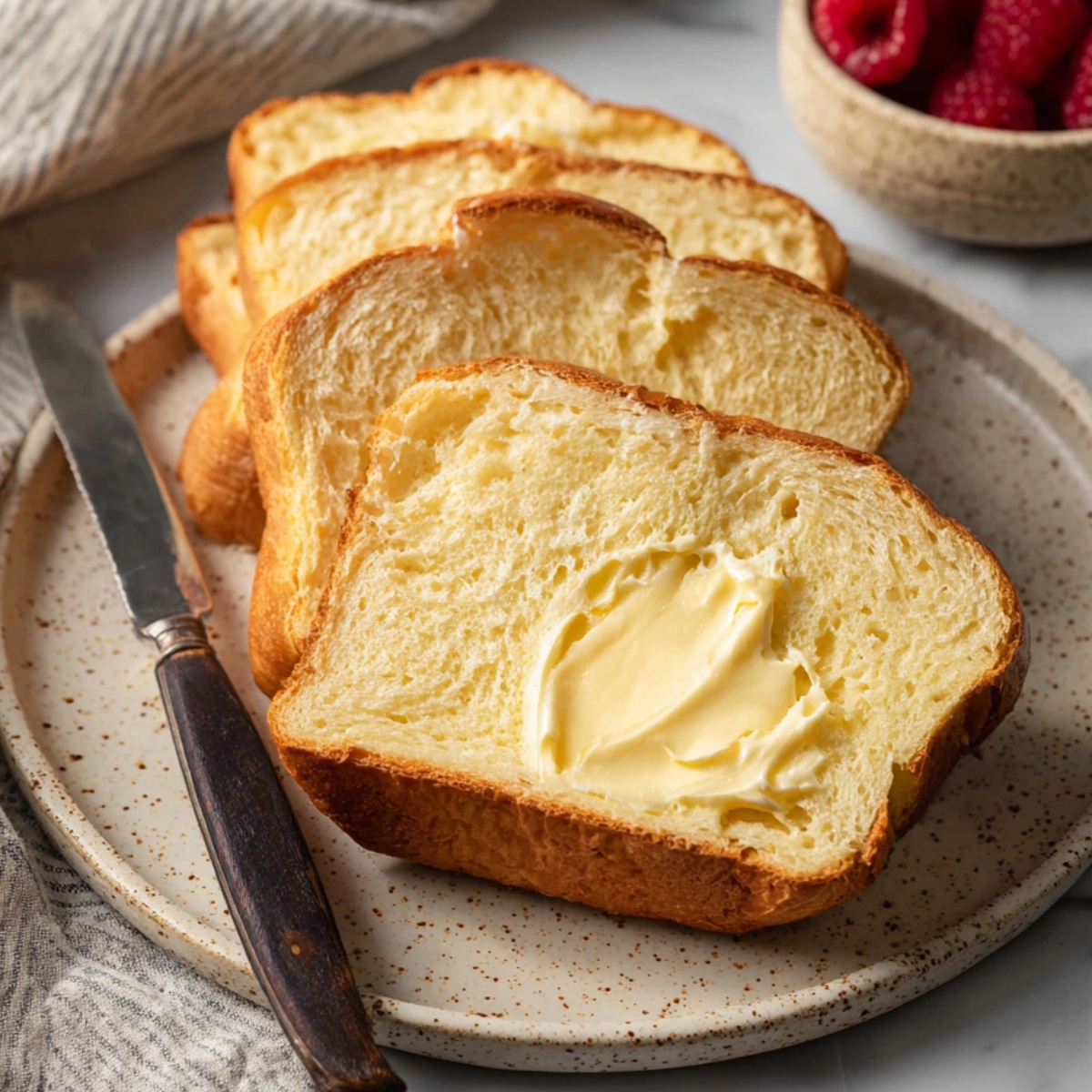
- Let the loaf cool completely for at least 1 hour before slicing; the crumb will set during this time, yielding clean, fluffy slices (though stealing a warm piece is highly encouraged).
- Wrap any leftover brioche in plastic wrap or store in an airtight container at room temperature for up to 5 days, or refrigerate for up to 1 week.
Notes
This brioche is the ultimate comfort bread—tender, buttery, and nearly melting on your tongue. The overnight refrigeration isn't just a convenience; it's the secret to developing deep flavor and achieving that signature silky crumb. Perfect for fancy toast, French toast, or simply torn apart and savored warm from the oven.