
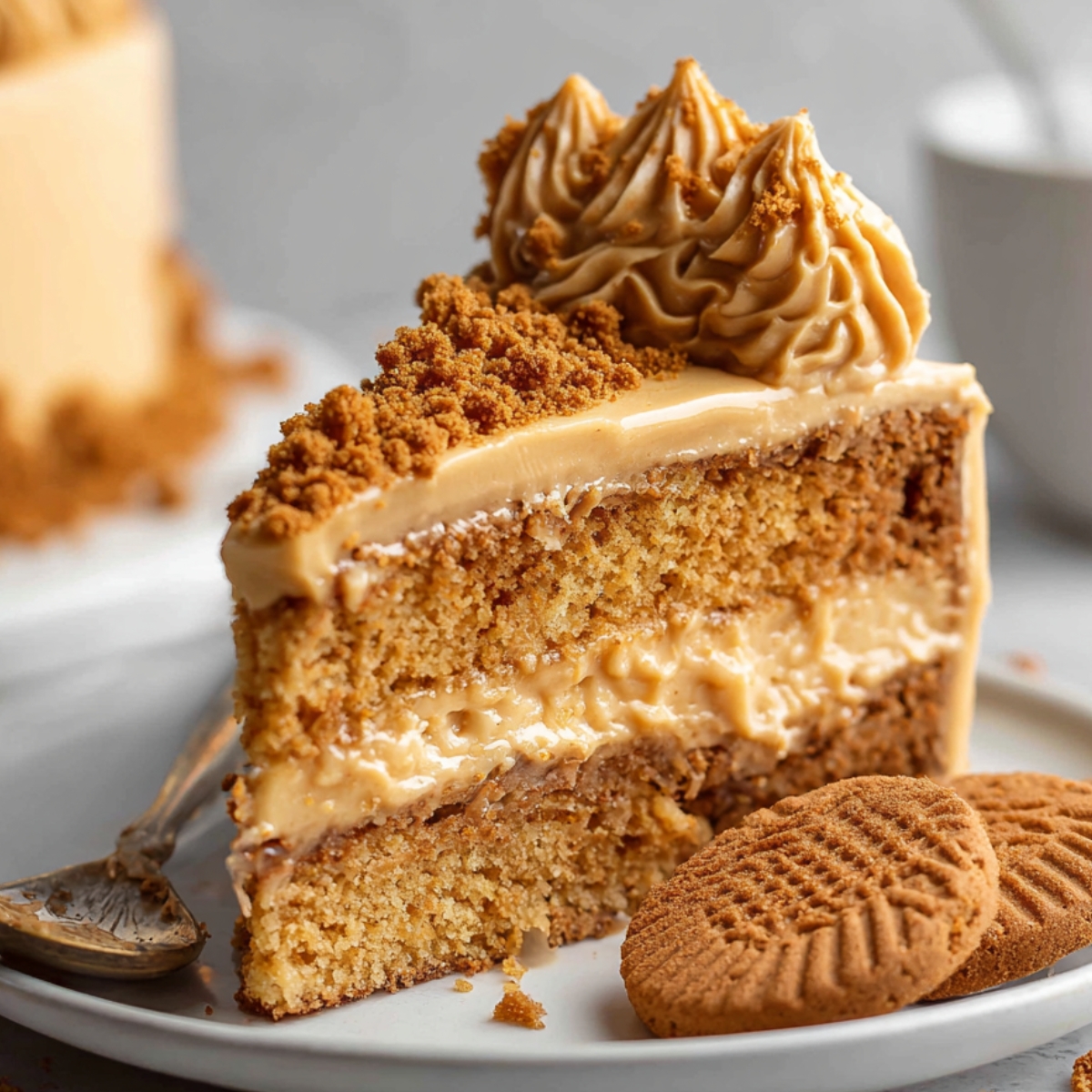
These soft, caramel-scented layers of Biscoff cookie butter cake hit different. The first time I made this, I watched my sister Karla sneak back to the kitchen three times in one evening, fork in hand, claiming she was "just checking if it stayed moist." The cookie butter gets swirled into the batter, melted between the layers, and whipped into the silkiest frosting you've ever tasted. It's easier than it looks, and every bite tastes like you ordered it from a fancy bakery.
If you love cookie butter as much as we do, you might also want to try these No-Bake Biscoff Cheesecake Cups or these Easy Creme Brûlée Cookies for more sweet, caramelized flavor.
Why You'll Love This Biscoff Cookie Butter Cake
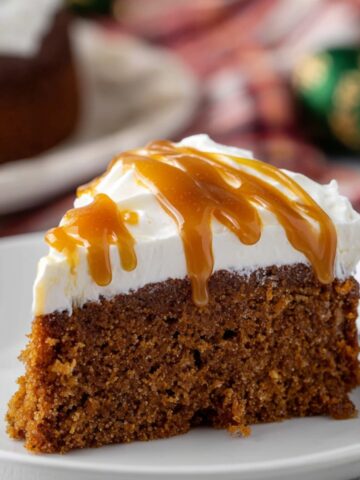
This Biscoff Cookie Butter Cake brings all the cozy, spiced sweetness of Lotus Biscoff cookies into a three-layer masterpiece. The crumb is incredibly soft and tender thanks to the sour cream and cake flour, while chunks of actual Biscoff cookies add little pockets of caramelized crunch throughout. The buttercream is dangerously smooth, made with real cookie butter that whips up light and fluffy. And those melted cookie butter drizzles between the layers? They soak into the cake just enough to make every forkful ridiculously moist.
It's a showstopper for birthdays, holidays, or any time you want to impress without spending all day in the kitchen. The recipe is straightforward, the ingredients are easy to find, and the results look like something from a professional bakery. Plus, you can make it ahead and freeze it, which is a lifesaver during busy weeks.
Jump to:
Biscoff Cookie Butter Cake Ingredients
Here's everything you need to make this Biscoff Cookie Butter Cake from scratch.
See Recipe Card Below This Post For ingtedient Quantites
For the Cake:
- Salted butter: Creamed with the cookie butter and sugar to create a rich, tender base. Make sure it's softened to room temperature.
- Cookie butter: This is the star of the recipe. It adds deep caramelized flavor and keeps the cake incredibly moist.
- Granulated sugar: Sweetens the cake and helps create a light, fluffy texture when creamed with the butter.
- Vegetable oil: Adds extra moisture and keeps the cake soft for days.
- Egg whites: These give the cake structure without making it too heavy. Room temperature eggs mix in more easily.
- Pure vanilla extract: Enhances all the warm, spiced flavors in the cookie butter.
- Cake flour: Creates a fine, tender crumb that melts in your mouth. It's lighter than all-purpose flour.
- Baking powder: Helps the cake rise and stay fluffy.
- Baking soda: Works with the sour cream to give the cake a soft, even texture.
- Salt: Balances the sweetness and brings out the caramel notes in the Biscoff.
- Whole milk: Adds moisture and richness. Room temperature milk blends in smoothly without deflating the batter.
- Sour cream: This is what makes the cake so soft and moist. It also adds a subtle tang that complements the sweetness.
- Biscoff cookies: Broken into chunks and folded into the batter for little bites of crunchy, caramelized goodness.
For the Biscoff Buttercream:
- Salted butter: The base of the frosting. Softened butter whips up light and fluffy.
- Cookie butter: Whipped into the frosting for that unmistakable Biscoff flavor and silky texture.
- Powdered sugar: Sweetens and thickens the frosting to the perfect spreadable consistency.
- Heavy cream: Loosens the frosting just enough to make it smooth and creamy. Add a little at a time.
- Pure vanilla extract: Rounds out the flavor and adds warmth.
For Assembly:
- Cookie butter: Melted and drizzled between the layers and over the top for extra richness and that beautiful drip effect.
- Biscoff cookies: Crushed and sprinkled on top for decoration and a little extra crunch.
How to Make Biscoff Cookie Butter Cake
Follow these steps to bake and assemble your Biscoff cookie butter cake.
Preheat the oven: Preheat your oven to 350°F (175°C). Line the bottoms of three 8-inch round cake pans with circles of parchment paper, then spray the pans with baking spray to prevent sticking.
Prepare the cake batter: In a large mixing bowl, beat the softened butter, cookie butter, and granulated sugar together for 2 to 3 minutes until the mixture is smooth and well combined. Add the vegetable oil, egg whites, and vanilla extract, then beat again until the batter looks creamy and fluffy.
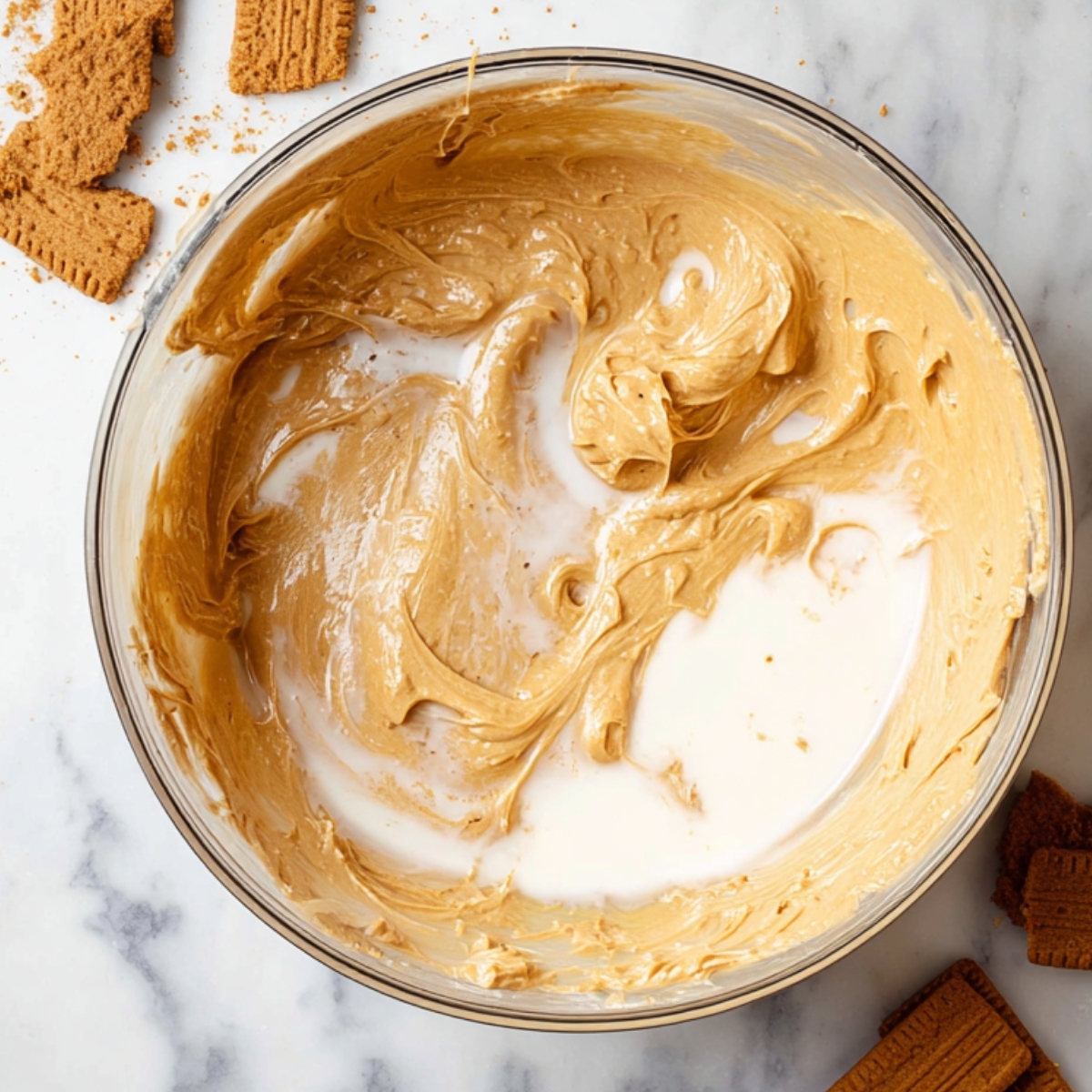
Mix dry and wet ingredients: Add half of the cake flour along with all of the baking powder, baking soda, and salt. Mix on low speed just until combined, scraping down the sides of the bowl as needed. Add half of the milk and sour cream, then mix again. Repeat this process with the remaining flour, milk, and sour cream, mixing just until everything is smooth and no streaks remain.
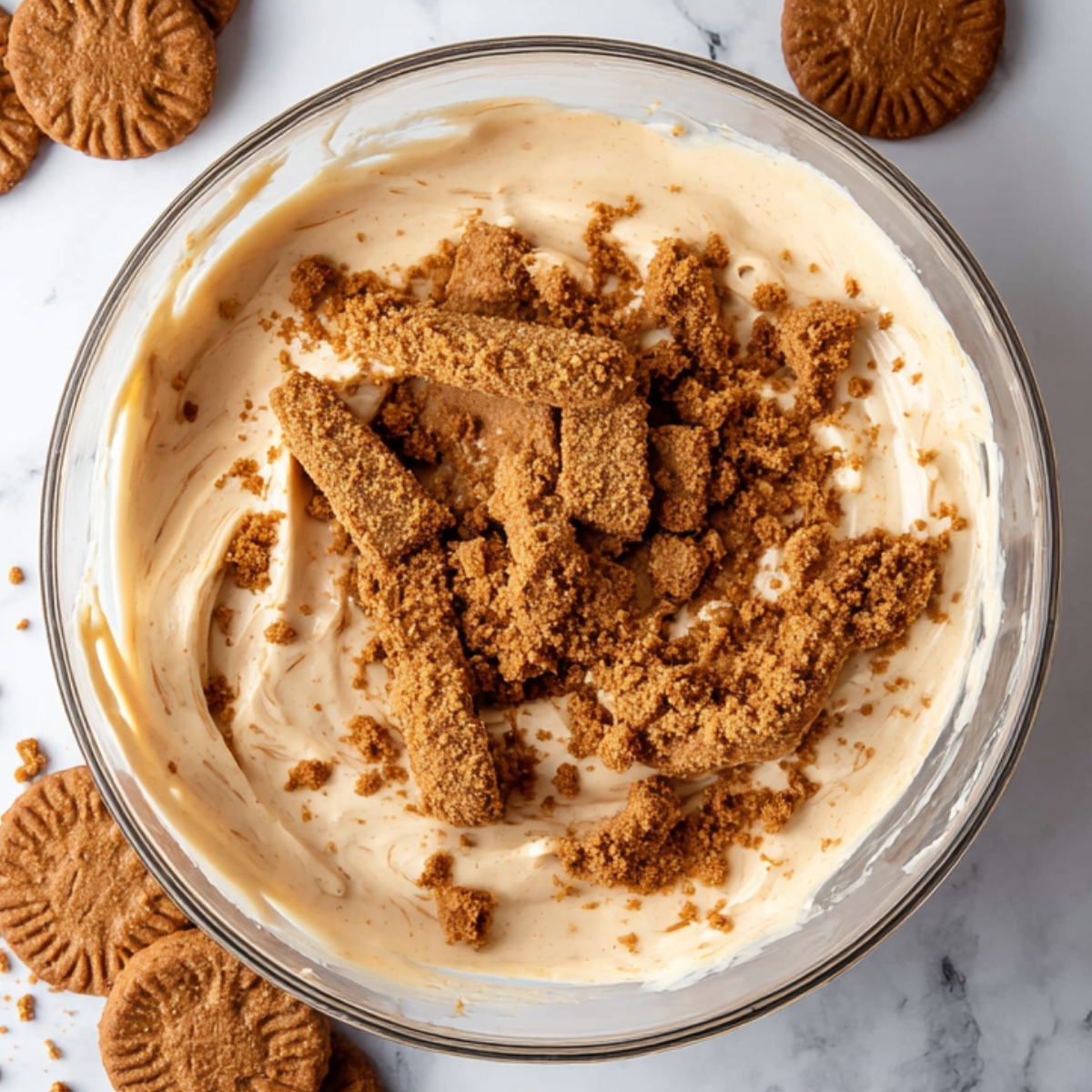
Stir in the Biscoff cookies: Gently fold the broken Biscoff cookie pieces into the batter, making sure they're evenly distributed. Divide the batter evenly among the three prepared pans. If you want to be precise, the total batter weighs about 1,614 grams, or roughly 538 grams per pan.
Bake the cake: Bake at 350°F for 24 to 27 minutes, until the tops spring back when lightly pressed and a toothpick inserted into the center comes out clean. Let the cakes cool in the pans for 10 minutes, then carefully turn them out onto a wire rack to cool completely before frosting.
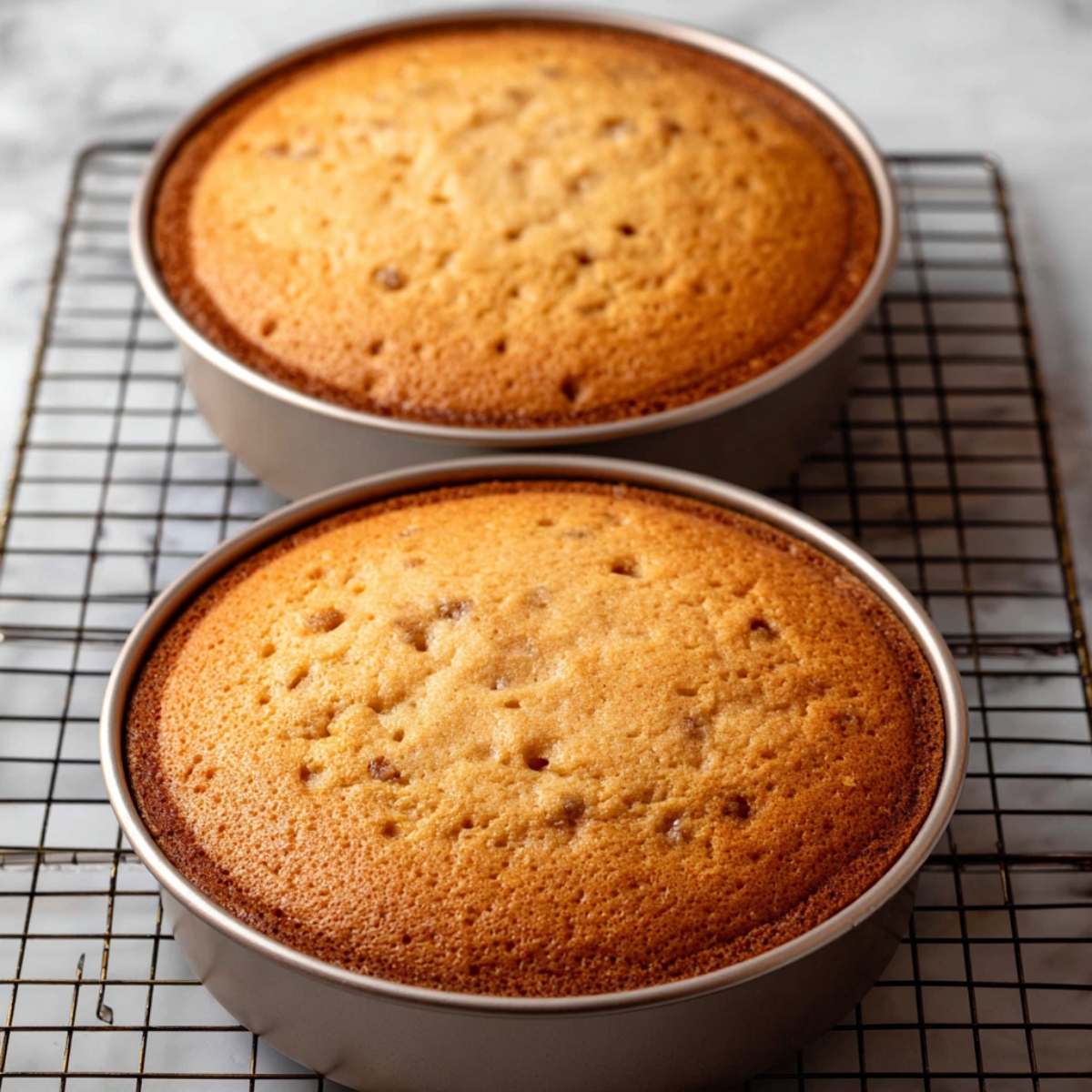
Make the buttercream: In a large bowl, beat the softened butter and cookie butter together until smooth and creamy. Gradually add half of the powdered sugar, mixing on low speed until combined. Add the remaining powdered sugar, heavy cream, and vanilla extract, then beat on medium-high speed until the frosting is light and fluffy. If it's too thick, add an extra tablespoon of cream.
Assemble the cake: Place the first cake layer on a cake plate or stand. Spread about ¾ cup of the Biscoff buttercream over the top. Microwave ½ cup of the cookie butter for 30 seconds, just until it's pourable but not too hot, then drizzle about ¼ cup over the frosted layer. Repeat with the second layer, adding frosting and melted cookie butter. Place the third layer on top, then apply a thin crumb coat of frosting over the entire cake. Freeze the cake for 30 minutes to let the frosting set.
Final frosting and decoration: Once the crumb coat is firm, spread the remaining buttercream over the top and sides of the cake in an even layer. Microwave the remaining ¼ cup of cookie butter for 20 to 25 seconds until it's pourable, then drizzle it over the top of the cake. Use a small spatula to gently nudge the drizzle toward the edges so it drips down the sides. Sprinkle the crushed Biscoff cookies around the top edge for decoration.
Substitutions and Swaps
You can adjust this Biscoff Cookie Butter Cake based on what you have on hand.
Cookie butter: If you can't find Biscoff brand cookie butter, any speculoos spread will work. You can also use creamy peanut butter or almond butter, though the flavor will be different.
Cake flour: Don't have cake flour? Use 2 ½ cups of all-purpose flour instead. The texture will be slightly denser but still delicious.
Sour cream: Greek yogurt or plain full-fat yogurt works just as well and gives the same moist, tender crumb.
Egg whites: You can use 2 whole eggs instead of 4 egg whites if that's easier. The cake will be a little richer and slightly denser.
Salted butter: If you only have unsalted butter, add an extra ¼ teaspoon of salt to the cake batter and another pinch to the frosting.
Whole milk: Any milk works here, though full-fat gives the best texture and flavor.
Equipment For Biscoff Cookie Butter Cake
Having the right tools makes this Biscoff Cookie Butter Cake easier.
3 (8-inch) round cake pans: You'll need three pans to bake all the layers at once. If you only have two, bake two layers first, then bake the third.
Parchment paper: Lining the bottoms of the pans prevents sticking and makes the cakes easier to remove.
Electric mixer: A hand mixer or stand mixer makes quick work of creaming the butter and sugar and whipping the frosting.
Mixing bowls: You'll need a large bowl for the batter and another for the frosting.
Cake plate or stand: A flat surface or rotating Biscoff Cookie Butter Cake stand makes assembly and frosting much easier.
Offset spatula: This tool is perfect for spreading frosting smoothly and creating that drip effect with the melted cookie butter.
Wire rack: Cooling the cakes on a rack allows air to circulate and prevents the bottoms from getting soggy.
Microwave-safe bowl: You'll use this to melt the cookie butter for drizzling.
Storage and Make-Ahead Tips
This Biscoff Cookie Butter Cake keeps well and can even be made in advance.
Room temperature: Store the cake in an airtight container or under a cake dome at room temperature for 3 to 5 days. If you've already sliced it, press plastic wrap against the cut edges to keep it from drying out.
Refrigerator: The cake can be refrigerated for up to a week, though the frosting will firm up. Let it sit at room temperature for about an hour before serving so the texture softens.
Freezer: Wrap the entire assembled Biscoff Cookie Butter Cake tightly in plastic wrap, then cover it with aluminum foil. Freeze for up to 3 months. Thaw overnight at room temperature before serving. You can also freeze individual slices wrapped in plastic for quick treats.
Make-ahead: Bake the cake layers a day or two ahead, wrap them tightly, and store them at room temperature or in the fridge. Make the frosting the day you plan to assemble the cake for the best texture.
Serving Suggestions
Here are a few cozy ways to serve this Biscoff Cookie Butter Cake.
With coffee: A slice of this Biscoff Cookie Butter Cake alongside a hot cup of coffee or espresso is perfect for an afternoon treat. The caramel notes in the Biscoff pair beautifully with the rich, roasted flavor of coffee. You might also enjoy Easy Strawberry Danish Recipe if you love that combo.
With vanilla ice cream: Serve a warm slice with a scoop of vanilla ice cream melting over the top. The contrast between the cold ice cream and the soft, Biscoff Cookie Butter Cake is incredible.
With fresh berries: A handful of fresh raspberries or strawberries on the side adds a bright, fruity note that cuts through the richness. If you love fruity desserts, try these Raspberry Lemon Cookies too.
With whipped cream: A dollop of lightly sweetened whipped cream on top adds a light, airy contrast to the dense, moist Biscoff Cookie Butter Cake.
Expert Tips
Room temperature ingredients: Make sure your butter, eggs, milk, and sour cream are all at room temperature before you start. Cold ingredients don't mix as smoothly and can create a lumpy batter.
Don't overmix: Once you add the flour, mix just until you don't see any dry streaks. Overmixing develops too much gluten and makes the Biscoff Cookie Butter Cake tough.
Weigh your batter: For perfectly even layers, weigh your batter and divide it equally among the three pans. Each pan should get about 538 grams.
Test for doneness: The cakes are done when the tops spring back when you press them lightly and a toothpick inserted in the center comes out clean or with just a few moist crumbs.
Cool completely: Make sure the cake layers are completely cool before you frost them. Warm Biscoff Cookie Butter Cake will melt the buttercream and make assembly messy.
FAQ
Are Biscoff and cookie butter the same?
Yes, Biscoff cookie butter is a spread made from ground Lotus Biscoff cookies. It has the same caramelized, spiced flavor as the cookies themselves. You'll find it in most grocery stores near the peanut butter.
Can I add Biscoff to cake mix?
You can add cookie butter to a boxed Biscoff Cookie Butter Cake mix to give it extra flavor. Stir in about ½ cup of melted cookie butter along with the wet ingredients. It makes the cake richer and adds that distinctive Biscoff taste.
Can you add Biscoff to buttercream?
Absolutely. Beat softened cookie butter into your buttercream along with the butter and powdered sugar. It creates a smooth, creamy frosting with the perfect hint of caramel and spice. That's exactly how the frosting for this Biscoff Cookie Butter Cake is made.
What is Biscoff cookie butter used for?
Cookie butter is incredibly versatile. Spread it on toast, swirl it into oatmeal, use it as a dip for fruit or pretzels, or bake it into cakes, cookies, and brownies. It also makes an amazing addition to milkshakes and coffee drinks. If you want more ways to use it, check out this Chocolate Brownie Pie for another sweet treat idea.
Related
Looking for other recipes like this? Try these:
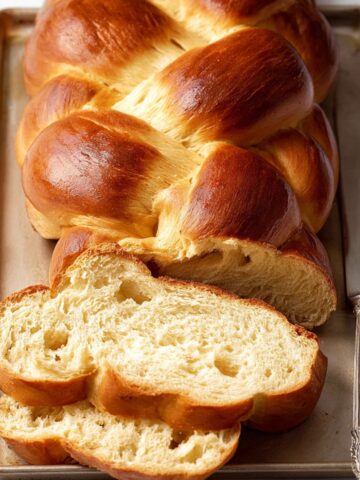
Pairing
These are my favorite dishes to serve with Biscoff Cookie Butter Cake
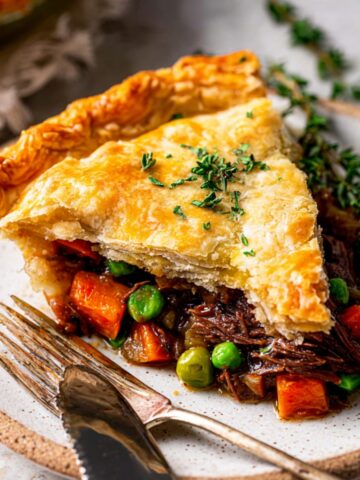
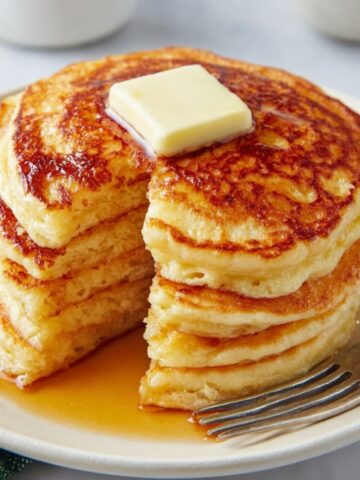
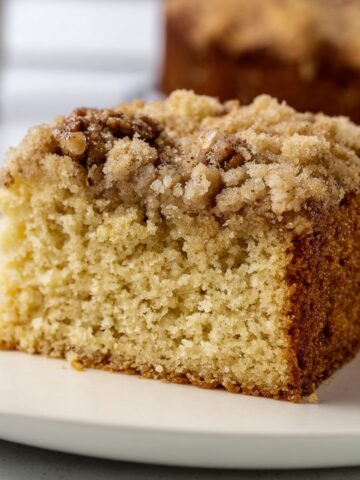
Biscoff Cookie Butter Cake
Ingredients
Equipment
Method
- Preheat the oven to 350°F. Line three 8-inch cake pans with parchment paper circles and grease them with baking spray.
- In a large bowl, beat together the softened butter, cookie butter, and granulated sugar for 2-3 minutes until fully combined. Add the vegetable oil, egg whites, and vanilla extract. Continue beating until the mixture is smooth and creamy.
- Add half of the sifted cake flour to the mixture, followed by the baking powder, baking soda, and salt. Mix until just combined. Add half of the milk and sour cream and mix again, scraping the bowl as needed. Repeat with the remaining flour, milk, and sour cream.
- Fold in the roughly broken Biscoff cookies, ensuring they are evenly distributed in the batter. Divide the batter evenly between the prepared pans.
- Bake at 350°F for 23-28 minutes, or until a toothpick inserted into the center comes out clean. Remove the cakes from the oven and allow them to cool in the pans for 10 minutes before transferring to a wire rack to cool completely. bake
- For the buttercream frosting, beat the softened butter and cookie butter until smooth. Gradually add half of the powdered sugar and mix until combined. Add the remaining powdered sugar along with the heavy cream and vanilla extract. Continue beating until light and fluffy.
- Place the first cake layer on a cake stand. Frost it with about ¾ cup of the cookie butter frosting. Heat ½ cup of the remaining cookie butter in the microwave for 30 seconds until pourable but not too hot. Drizzle ¼ cup of the melted cookie butter over the first cake layer. Repeat this process for the second layer.
- Top with the final cake layer and apply a crumb coat of frosting over the entire cake. Freeze the cake for 30 minutes to set the frosting.
- Once firm, apply the remaining frosting to cover the top and sides of the cake. Heat the remaining ¼ cup of cookie butter in the microwave for 20-25 seconds until pourable. Drizzle over the top of the cake and use a spatula to create a drip effect if desired. Finish by sprinkling crushed Biscoff cookies around the top for decoration.
Leave a Reply