
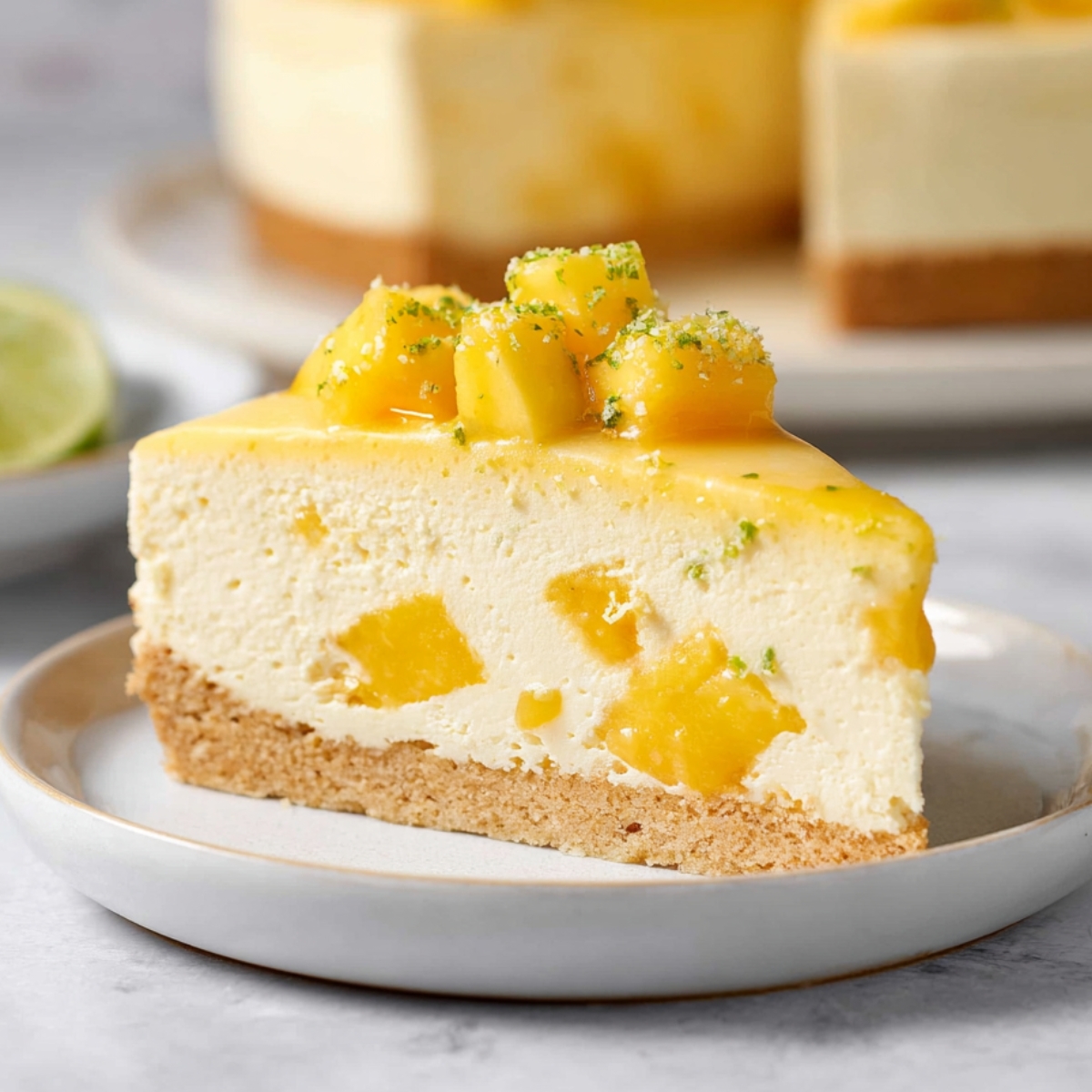
This Mango Mousse Cake is the kind of dessert that makes people stop talking mid-bite. A buttery, crumbly coconut sablé crust, a cloud-soft mango mousse, and a silky mango lime curd on top it's layered, tropical, and genuinely stunning without being stressful to put together. I first made it for a summer birthday, and the moment I pulled it out of the fridge and lifted that cake ring, I couldn't believe I'd made it at home.
If you love things like my Dole Whip Cupcakes or the fruity brightness in my Strawberry Truffles, this one is going to feel right at home in your kitchen. And honestly? The steps are more forgiving than the cake looks if you've ever tackled my Choux au Craquelin, this will feel approachable.
Why You'll Love This Mango Mousse Cake
This Mango Mousse Cake has that rare quality where it looks almost too pretty to cut into, but the first bite makes you forget all about that. The coconut sablé crust is buttery and slightly crisp, the mousse is cloud-light without feeling insubstantial, and the mango lime curd on top adds just enough tang to keep every layer tasting fresh and bright.
Jump to:
Mango Mousse Cake Ingredients
Here's everything you need for each layer. Nothing too hard to find ripe mangoes and a little patience are the main ingredients.
See Recipe Card Below This Post For Ingredient Quantities
Coconut Sablé Crust
- Egg yolks: Two large egg yolks at room temperature help bind the crust dough and give it a rich, golden color when baked.
- Icing sugar: icing sugar dissolves smoothly into the butter and yolks, giving the crust a fine, melt-in-your-mouth texture instead of a grainy one.
- Salted butter: softened salted butter adds richness and a subtle savory note that balances the sweetness of the crust. Make sure it's fully softened before you start.
- All-purpose flour: flour gives the crust its structure and that satisfying crisp bite.
- Desiccated coconut: desiccated coconut adds a gentle chew, a faint tropical flavor, and a little visual texture to the base.
Mango Mousse
- Mango flesh (purée base): mango flesh gets blended and strained into a smooth purée that becomes the backbone of the mousse. The riper the mango, the more intense the flavor.
- Caster sugar: caster sugar sweetens the mousse and dissolves quickly into the warm mango mixture.
- Lime juice: fresh lime juice brightens the mango flavor and keeps the mousse from tasting flat.
- Gelatin powder: gelatin powder is what gives the mousse its set. Without it, the layers won't hold when you slice.
- Cold water: cold water is used to bloom the gelatin before it goes into the warm mango mixture.
- Lime zest: lime zest adds tiny bursts of citrus throughout the mousse.
- Heavy whipping cream: cold heavy cream gets whipped to stiff peaks and folded in to make the mousse light and airy.
- Mango cubes: 150 g of fresh mango flesh, cut into small cubes, gets tucked inside the mousse layer for little pockets of real fruit in every bite.
Mango Curd
- Mango flesh: blended mango is the base of the curd. Smooth and bright, it cooks down into a thick, glossy finish.
- Egg yolks: egg yolks thicken the curd as it cooks and give it that rich, creamy body.
- Caster sugar: caster sugar sweetens the curd without overpowering the mango.
- Lime juice: lime juice adds tartness and helps balance the richness of the butter.
- Unsalted butter: unsalted butter, added gradually, makes the curd silky and spreadable.
- Lime zest (optional): lime zest stirred in at the end adds a little brightness to the finished curd.
To Finish
- Mango slices: Half a large mango, sliced very thin, arranged in a decorative swirl around the top edge.
- Lime zest: Half a teaspoon, sprinkled over the top for a pop of color and a fresh citrus hit.
- Desiccated coconut (optional): A light sprinkle adds texture and echoes the coconut in the crust.
How to Make Mango Mousse Cake
Coconut Sablé Crust
Prep your pan: Place a 10-inch (26 cm) cake ring on a baking tray lined with parchment paper or a baking mat. This keeps everything tidy and easy to lift later.
Mix egg yolks and sugar: Whisk the 2 egg yolks and 75 g of icing sugar together until the mixture looks thick and slightly pale.
Add the butter: Whisk in the 75 g of softened salted butter until it's fully blended in and the mixture looks smooth.
Form the dough: Add the 125 g of all-purpose flour and 40 g of desiccated coconut. Mix until a thick, slightly sticky dough comes together.
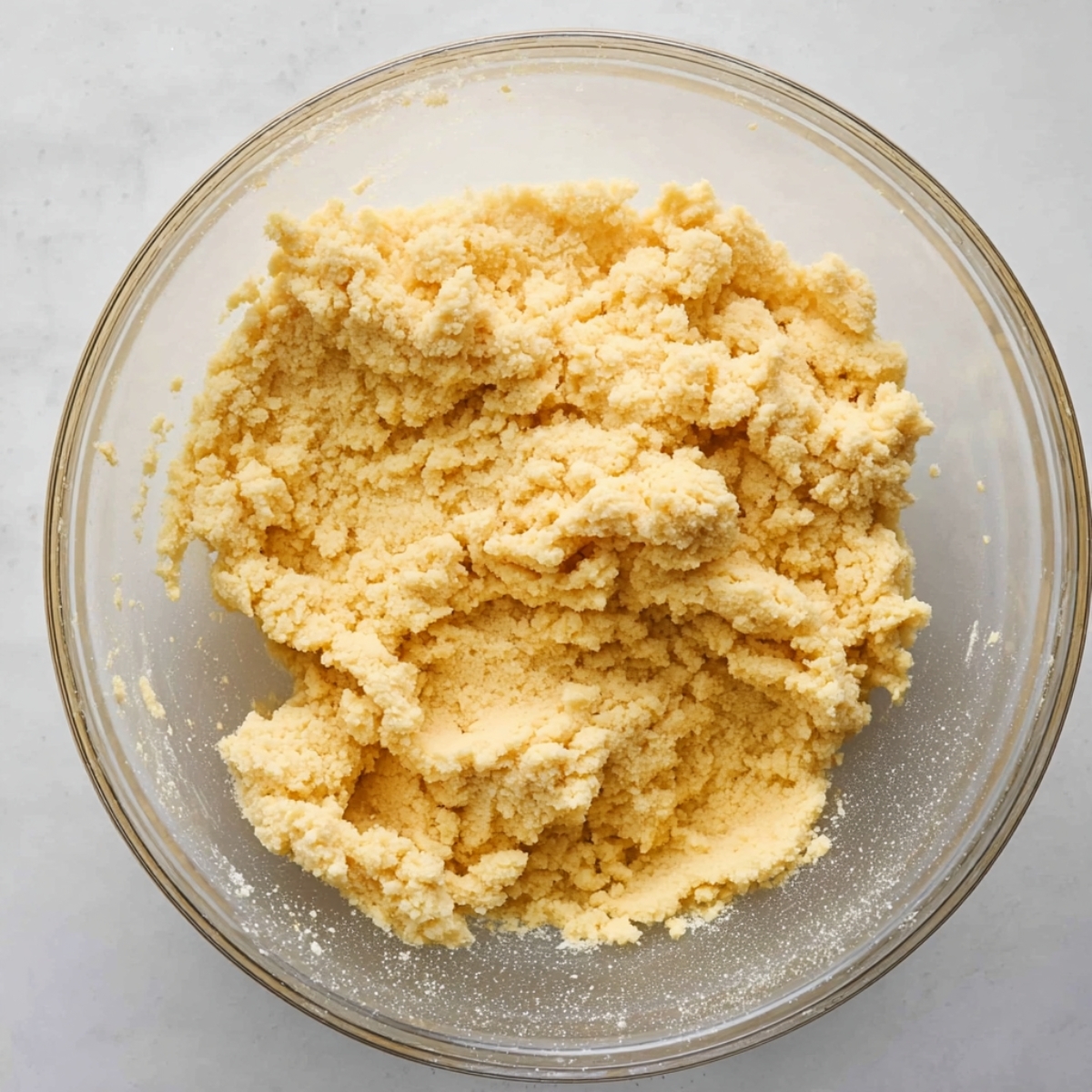
Press into the ring: Press the dough evenly into the bottom of the cake ring. The bottom of a flat measuring cup or an offset spatula works great for this.
Chill: Refrigerate for 30 minutes so the dough firms up before baking.
Preheat and bake: Preheat your oven to 160°C (325°F). Bake the crust for 30 minutes until it's lightly golden around the edges and set in the center.
Cool completely: Let the crust cool fully on a wire rack before adding any mousse. A warm crust will melt the mousse and throw off the set.
Set up for filling: Transfer the cooled crust on its ring to a serving plate or board. If using it, line the inside of the cake ring with a 5 cm (2-inch) acetate strip. This makes removing the ring much cleaner later.
Mango Mousse
Blend and strain: Blend the 300 g of mango flesh until completely smooth, then strain it through a fine mesh sieve into a small saucepan. This removes any fibrous bits.
Add sugar and lime: Whisk in the 30 ml of lime juice and 60 g of caster sugar.
Bloom the gelatin: In a small bowl, stir the 7 g of gelatin powder into 1 tablespoon of cold water and let it sit for a few minutes to hydrate.
Warm the mango mixture: Heat the mango mixture over medium-low heat until it just starts to simmer. Remove it from the heat.
Add gelatin and zest: Whisk the bloomed gelatin and 1 teaspoon of lime zest into the hot mango mixture until fully dissolved.
Chill the purée: Pour the mango mixture into a shallow pan, press plastic wrap directly onto the surface, and refrigerate for 1 hour or until it's no longer warm to the touch.
Whip the cream: Beat the 350 ml of heavy cream to stiff peaks. It should hold its shape when you lift the beaters.
Combine: Transfer the chilled mango purée to a large bowl. Whisk in a small spoonful of the whipped cream to loosen it, then gently fold in the rest in 3 to 4 additions. Stop folding as soon as you don't see any streaks.
Layer the mousse: Spread half the mousse over the cooled crust. Scatter the 150 g of mango cubes evenly over the surface, leaving about 2 cm of space around the edges. Cover with the remaining mousse and smooth the top.
Chill to set: Refrigerate for at least 4 hours, but overnight is even better. The mousse needs time to firm up properly.
Mango Curd
Blend the mango: Blend the 125 g of mango flesh until smooth. Strain through a fine mesh sieve if you want an extra silky curd.
Cook the base: In a heavy-bottomed saucepan, whisk together the 2 egg yolks and 20 g of caster sugar. Stir in the mango purée and 15 ml of lime juice.
Thicken: Cook over low heat for 3 to 4 minutes, stirring constantly. You'll notice it starting to thicken slightly.
Add the butter: Add the 45 g of unsalted butter a little at a time, letting each piece melt before adding the next. Keep stirring.
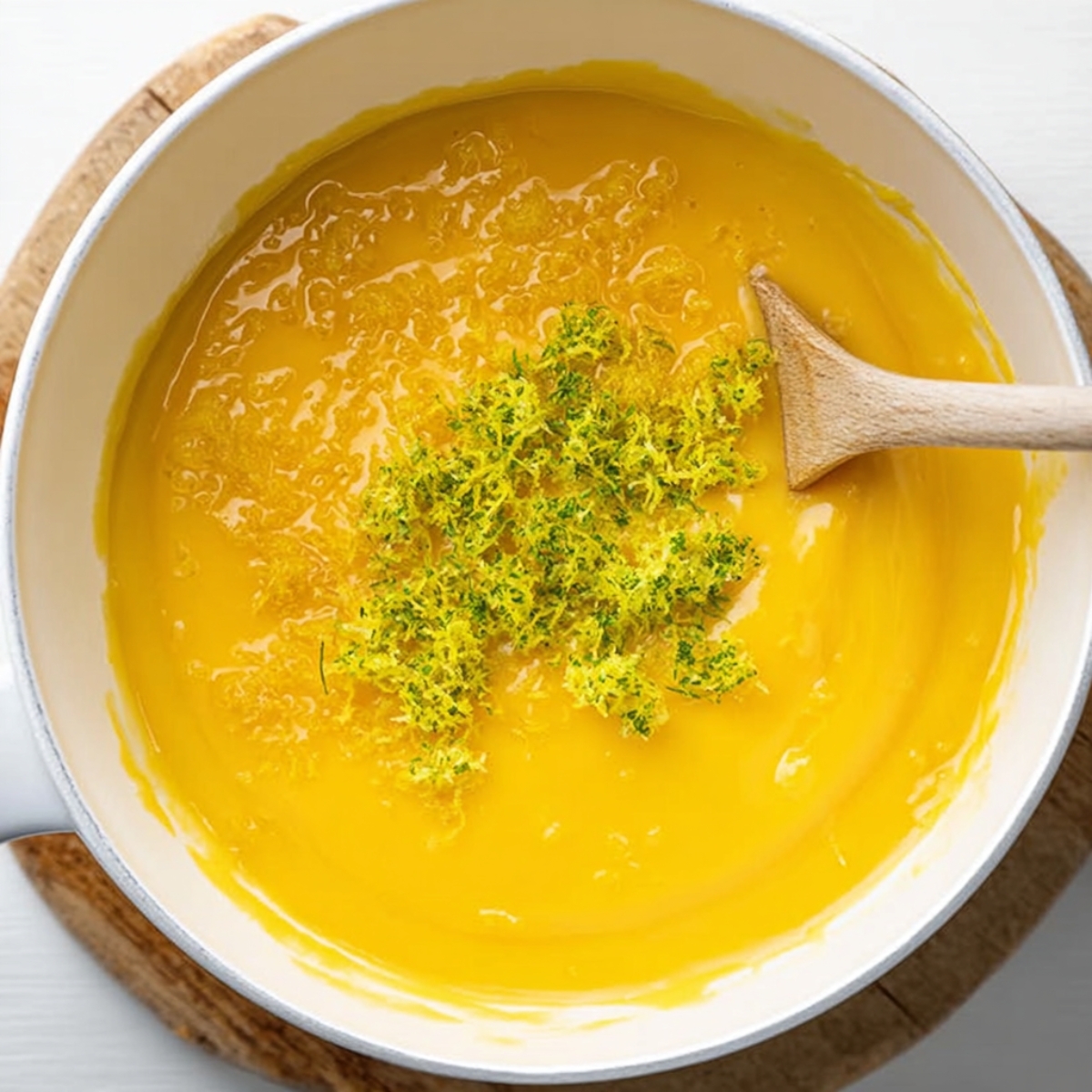
Finish cooking: Continue cooking for 5 to 8 minutes until the curd coats the back of a spoon and holds a line when you drag your finger through it.
Strain and flavor: Strain the curd into a clean bowl. Stir in the 1 teaspoon of lime zest.
Cool slightly: Let the curd cool for a few minutes until it's warm but not hot, then pour it over the set mousse layer.
Smooth and chill: Use an offset spatula to smooth the curd into an even layer. Refrigerate for another 2 hours or until fully set.
To Finish
Remove the ring: Carefully lift off the cake ring. If you used an acetate strip, peel that away gently.
Decorate: Slice half a large mango into very thin strips. Arrange them in a decorative swirl around the top edge of the cake.
Final touches: Sprinkle the top with half a teaspoon of lime zest and an optional dusting of desiccated coconut. Slice and serve cold.
Substitutions
No desiccated coconut? You can swap it out for finely ground almond flour or just leave it out. The crust will still work, it'll just have a plainer flavor.
No gelatin powder? Agar agar works as a plant-based substitute. Use the same weight, but follow the package instructions since it behaves a little differently when heated.
No heavy cream? Full-fat coconut cream (chilled overnight) can be whipped and folded in instead. It adds a coconut note that actually plays really well with the mango.
Frozen mango? Yes, it works. Thaw it completely and drain off any extra liquid before blending. Fresh is more vibrant, but frozen mango is perfectly usable here.
No cake ring? A springform pan of the same size will work. Just make sure the sides are tall enough for the mousse and curd layers.
Equipment For Mango Mousse Cake
- 10-inch (26 cm) Mango Mousse Cake ring or springform pan
- Baking tray
- Parchment paper or baking mat
- Mixing bowls
- Whisk
- Electric hand mixer or stand mixer
- Immersion blender or countertop blender
- Fine mesh sieve
- Heavy-bottomed saucepan
- Rubber spatula
- Offset spatula
- Cooling rack
- Plastic wrap
- Acetate cake collar (optional but recommended)
Storage Tips For Mango Mousse Cake
Refrigerator: Keep the Mango Mousse Cake covered in the fridge for up to 3 days. The mousse and curd layers hold up well, and the crust stays firm without getting soggy.
Freezer: You can freeze the assembled Cake before adding the decorative mango slices and lime zest. Wrap it tightly, freeze for up to 1 month, and thaw overnight in the fridge. Add the fresh mango garnish just before serving.
Make-ahead tip: This Mango Mousse Cake is actually better after a full night of chilling. Make it the day before your event, keep it covered, and add the fresh mango decoration the morning of.
Serving Suggestions
Serve it cold from the fridge. The mousse layer is best when it's fully set and a little firm at the edges.
With a cup of something warm. A cup of jasmine tea or lightly sweetened coconut milk alongside a slice is a really lovely combination.
At a summer birthday. This Mango Mousse Cake is elegant enough that it holds its own as a celebration dessert without needing any extra garnish beyond what's already there.
Alongside other tropical treats. If you're putting together a dessert spread, it pairs beautifully with something like Chocolate Orange Tartlets or Mini Chocolate Éclairs for contrast.
Expert Tips
Use the ripest mangoes you can find. The flavor of the mousse and curd comes entirely from the mango, so the more fragrant and sweet the fruit, the better the cake.
Don't skip blooming the gelatin. Pouring dry gelatin straight into a hot liquid won't dissolve it properly, and you'll end up with lumps in your mousse.
Cool the mango purée before folding in the cream. If the purée is still warm when you add the whipped cream, the cream will deflate and the mousse won't set right.
Use an acetate strip if you have one. It makes pulling the Mango Mousse Cake ring off so much cleaner, and the sides of the mousse look polished rather than rough.
FAQ
How do you make Mango Mousse Cake from scratch?
You build it in three layers: a baked coconut sablé crust, a gelatin-set mango mousse, and a cooked mango lime curd. Each layer chills and sets before the next one goes on. The full process takes about 1 hour of active work and 8 hours of chilling. A family tip: set it up the night before and it's completely stress-free the next day.
Can mango mousse cake be made ahead of time?
Yes, and it's actually better that way. The mousse and curd both firm up and the flavors deepen overnight. Make the whole Mango Mousse Cake the day before, keep it covered in the fridge, and add the fresh mango garnish on the day you're serving it.
What is the best mango variety for Mango Mousse Cake?
Ataulfo (also called honey or champagne mango) is ideal. They're sweet, smooth, and low in fiber, which means less straining and a cleaner purée. Alfonso mangoes are another great option. Avoid mangoes that are stringy or underripe since they won't have enough natural sweetness.
Why didn't my mango mousse set properly?
A few things can cause this. The most common is that the mango purée was still warm when the whipped cream was folded in, which deflated the cream and weakened the set. Another reason is undermeasured gelatin, or gelatin that didn't fully bloom before being added to the warm purée. Make sure the purée is cooled and the gelatin is fully dissolved before folding in the cream.
Related
Looking for other recipes like this? Try these:
Pairing
These are my favorite dishes to serve with Mango Mousse Cake



Mango Mousse Cake
Ingredients
Method
- Place a 10-inch cake ring on a parchment-lined baking tray and prepare it for assembling the crust.
- Whisk the egg yolks and icing sugar until pale and thick, then blend in the softened butter until smooth.
- Fold in the flour and coconut until a soft dough forms without overmixing.
- Press the dough firmly into the bottom of the cake ring, creating an even layer, then refrigerate for 30 minutes.
- Bake the chilled crust at 325°F (160°C) for about 30 minutes until lightly golden. Cool completely, then transfer to a serving board and line the inside of the ring with acetate if using.
- Blend the mango into a smooth puree and strain it through a fine sieve for a silky texture.
- Combine the puree with sugar and lime juice in a saucepan. Warm until it begins to simmer, then stir in the bloomed gelatin and lime zest until fully dissolved.
- Transfer the mixture to a shallow container, cover the surface, and chill for about 1 hour until completely cooled but still pourable.
- Whip the cold cream until stiff peaks form. Gently fold a small amount into the mango mixture before carefully folding in the remaining whipped cream until fully combined.
- Spread half of the mousse over the cooled crust. Scatter the diced mango across the center, leaving a small border around the edge, then cover with the remaining mousse and smooth the surface.
- Refrigerate the cake for at least 4 hours, or until the mousse is fully set.
- Blend the mango for the curd until smooth, straining if a finer texture is preferred.
- Whisk together the egg yolks, sugar, mango puree, and lime juice in a saucepan. Cook gently over low heat, stirring constantly until it starts to thicken slightly.
- Gradually stir in the butter, allowing each addition to melt before adding more. Continue cooking until the curd coats the back of a spoon.
- Strain the curd into a clean bowl, stir in the lime zest if using, cool slightly, then spread evenly over the chilled mousse. Refrigerate for about 2 hours until firm.
- Remove the cake ring and acetate. Decorate with thin mango slices arranged around the edge, then finish with lime zest and a sprinkle of coconut before serving.

Leave a Reply