
These rustic Ciabatta Bread have a golden, flour-dusted crust and an airy, chewy center that pulls apart in soft, irregular layers. The dough is wet and a little wild, but that's what gives you those beautiful air pockets inside. I first made this bread on a rainy weekend when I had nowhere to be, and the slow fermentation filled my kitchen with the kind of yeasty, warm smell that makes you want to stay home all day.
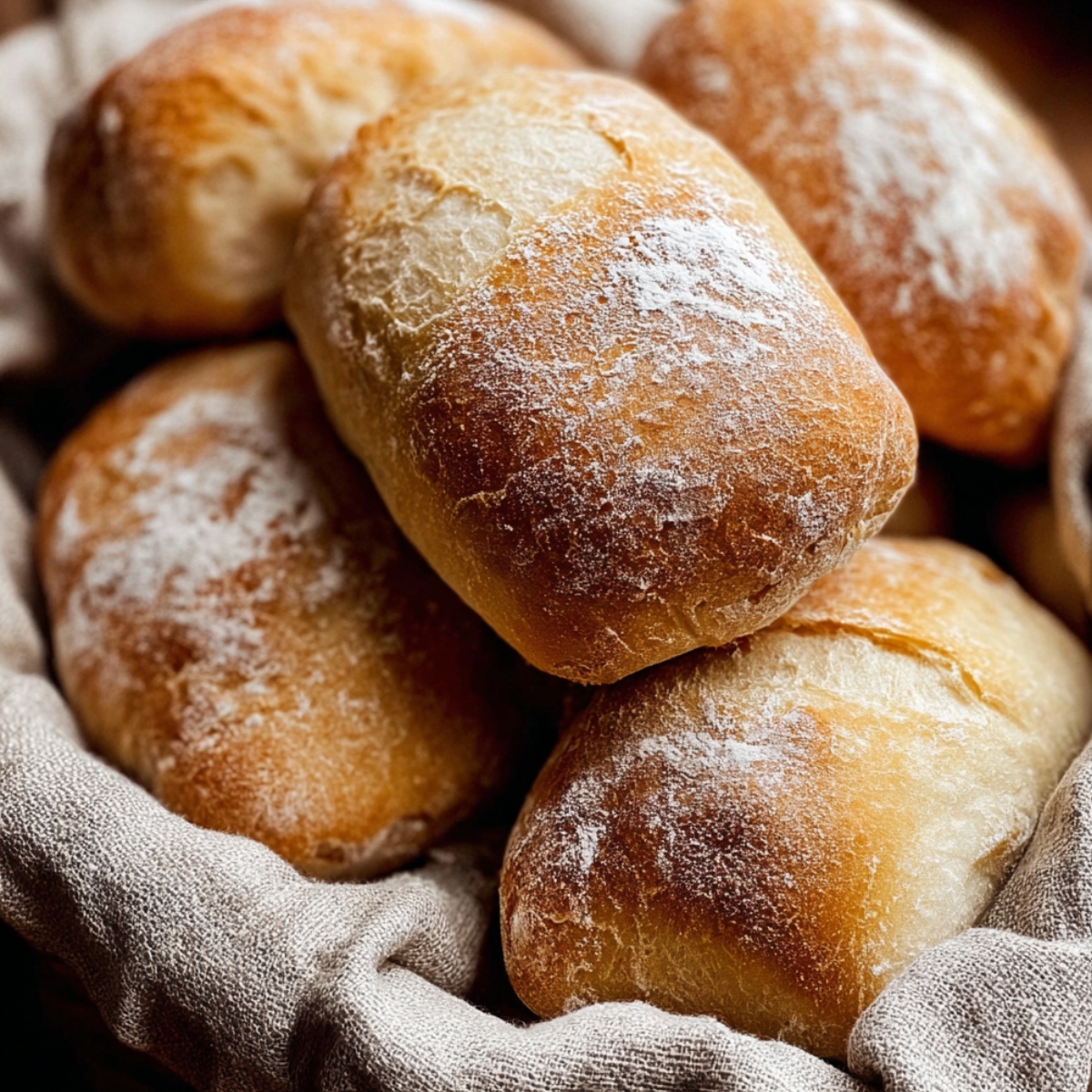
The Ciabatta Bread takes two days, but most of that time is just waiting. If you're craving something with that same cozy, sweet comfort, try these Dirt Cake Cookies or these Key Lime Pie Bars. And if you love working with dough that rewards patience, Vegan Hot Cross Buns are another favorite.
What Makes This Ciabatta Bread Special
Homemade Ciabatta Bread starts with a biga, which is just a fancy word for a simple flour-and-water mixture that sits overnight. That long rest develops flavor you can't rush. The dough itself is sticky and soft, nothing like a typical bread dough. You'll stretch and fold it instead of kneading, and that gentle handling creates the open, irregular crumb ciabatta is known for.
The steam in the oven is key. Ice cubes in a pan create the moisture that helps form that thin, crackling crust. When you pull these rolls out, they'll sound hollow when you tap the bottom, and the smell is incredible.
Jump to:
Ciabatta Bread Ingredients
Here's what you need to make Ciabatta Bread rolls with that signature airy crumb.
See Recipe Card Below This Post For Ingredient Quantities
Biga/Preferment:
- Bread flour: Forms the structure and gives the biga strength to ferment slowly overnight.
- Active-dry or instant yeast: Just a pinch is enough to start the fermentation that builds deep flavor.
- Room-temperature water: Keeps the yeast happy without shocking it awake too fast.
Ciabatta Rolls:
- Active-dry or instant yeast: Activates the final dough and helps it rise after the biga has done its work.
- Warm water: Wakes up the yeast and keeps the dough soft and extensible.
- Bread flour: Provides the protein needed for that chewy, open crumb. You'll need a little extra for dusting.
- Table salt: Balances the flavor and strengthens the gluten network.
- Olive oil: Keeps your hands and tools from sticking to this very sticky dough.
How to Make Ciabatta Bread
This is a two-day Ciabatta Bread, but the steps are simple and the results are worth the wait.
Day 1 - Make the Biga/Preferment:
- Mix the biga: In a large mixing bowl, whisk together the bread flour and yeast until evenly distributed. Add the room-temperature water and stir with a silicone spatula until no dry flour remains. The mixture will look shaggy and thick.
- Let it ferment: Cover the bowl tightly with plastic wrap and let it sit at room temperature for 8 to 24 hours. The biga will bubble up, smell yeasty, and develop a slightly sour aroma as it ferments.
Day 2 - Make the Dough:
- Activate the yeast: In a separate large mixing bowl or the bowl of a stand mixer fitted with a dough hook, whisk together the yeast and warm water. Let it sit for 5 to 10 minutes until the yeast dissolves and the mixture looks slightly foamy.
- Combine everything: Add the biga, bread flour, and salt to the yeast mixture. Mix gently with a spatula, spoon, or dough hook until everything comes together. The dough will be very sticky and wet, almost like thick batter. This is exactly what you want.
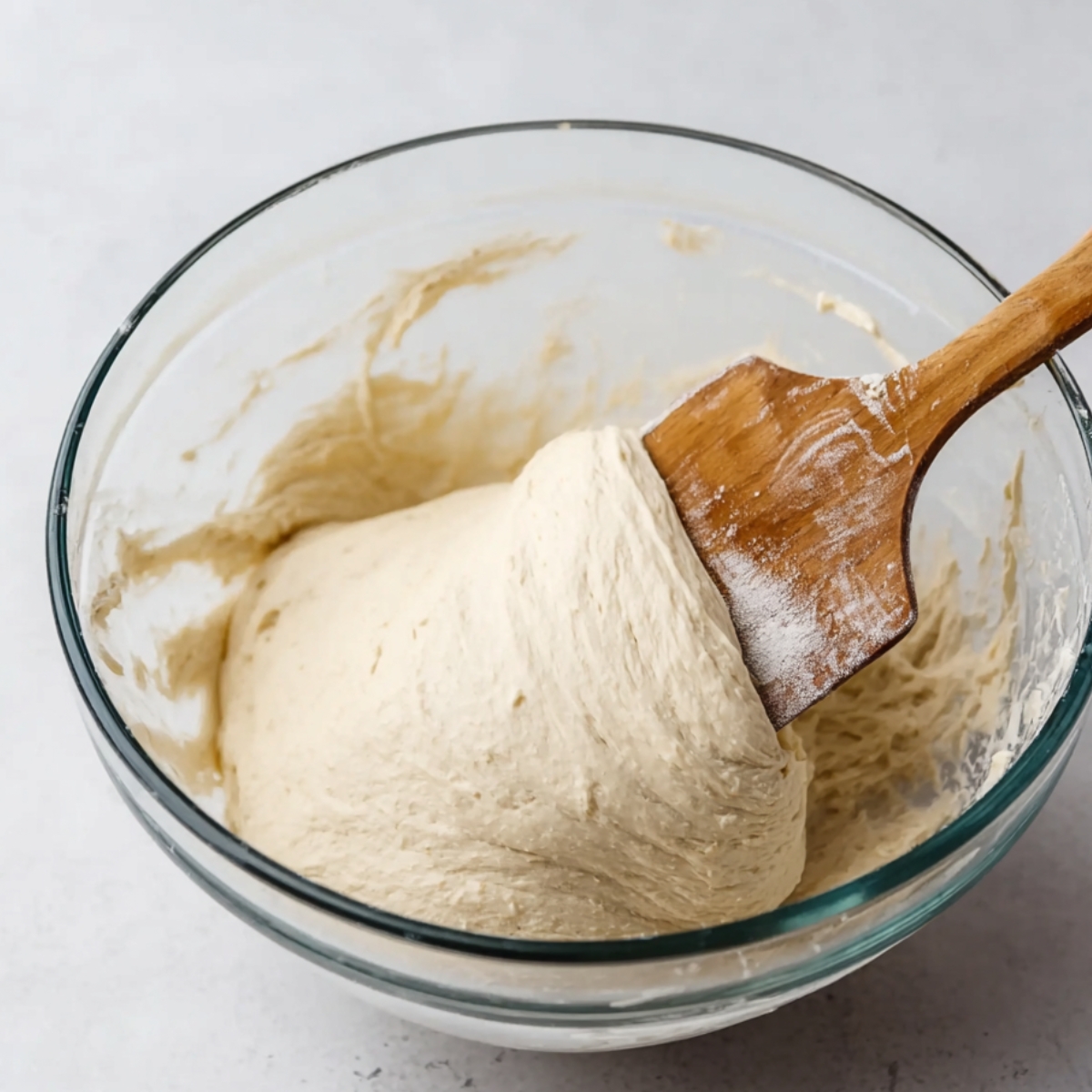
- Knead gently if needed: If you'd like, grease your hands with a little olive oil and give the dough a few gentle kneads in the bowl. Don't overwork it.
First Rest & Stretch-and-Fold:
- Rest the dough: Cover the bowl and let the dough rest for 30 minutes at room temperature. It'll relax and become easier to handle.
- Stretch and fold: Imagine the bowl as a clock. At the 12 o'clock position, grab the dough and pull it up, then fold it down toward 6 o'clock. Rotate the bowl 90 degrees and repeat. Do this 8 times total, working your way around the bowl. Cover and rest for another 30 minutes.
- Repeat the folds: Perform the stretch-and-fold process three more times, with 30-minute rests between each session. After the fourth round, cover the bowl and refrigerate the dough for 1 to 24 hours. The cold rest develops flavor and makes the dough easier to shape.
Shape the Rolls/Bread:
- Prepare your surface: Generously flour your work surface. Use oiled hands or a spatula to gently scrape the dough out of the bowl onto the floured surface. Shape it into a 10x7-inch rectangle, handling it as gently as possible to keep the air bubbles intact.
- Cut the dough: For 8 rolls, cut the dough into 8 pieces, each about 2.5x3.5 inches. For 2 loaves, cut the dough in half to make two 5x7-inch or 10x3.5-inch rectangles.
- Arrange and rest: Place the dough pieces on lightly floured parchment paper, spacing them about 2 inches apart. Lightly sprinkle flour over the tops, cover loosely, and let rest for 1 hour at room temperature. They'll puff up slightly.
Bake:
- Preheat and prep: Preheat your oven to 450°F (232°C) with a baking sheet on the middle rack. Fill a shallow pan with several cups of ice cubes and have it ready.
- Create steam: Uncover the dough and give it a light spray of water. Transfer the parchment paper with the dough onto the preheated baking sheet. Quickly place the ice pan on the lower rack and close the oven door to trap the steam.
- Bake until golden: Bake for 20 to 25 minutes, until the rolls are golden brown and sound hollow when tapped on the bottom. If you have an instant-read thermometer, the internal temperature should reach 205°F to 210°F.
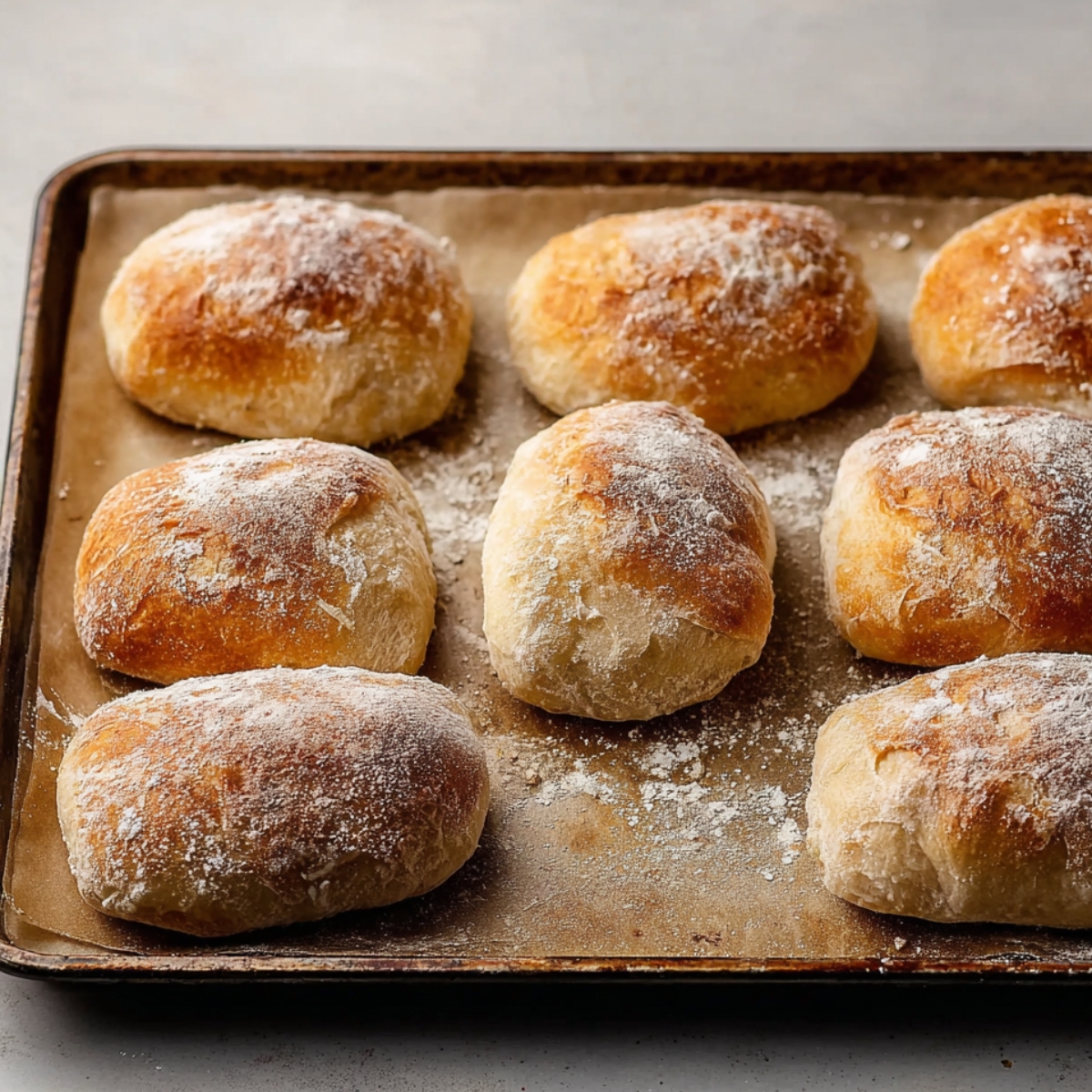
- Cool completely: Let the bread cool on the baking sheet for at least 45 minutes before slicing. The interior continues to set as it cools.
Substitutions and Variations
Bread flour: You can use all-purpose flour, but the texture won't be quite as chewy. Ciabatta Bread flour's higher protein content is what gives ciabatta its structure.
Yeast: Active-dry and instant yeast work equally well. Just make sure it's fresh and not expired.
Olive oil: Any neutral oil works for greasing your hands, but olive oil adds a subtle flavor that pairs beautifully with Italian-style Ciabatta Bread.
Ice cubes: If you don't have ice, you can spray the oven walls with water a few times during the first 10 minutes of baking to create steam.
Equipment For Ciabatta Bread
- Kitchen scale: Measuring by weight gives you the most consistent results, especially with bread dough.
- Mixing bowls: A large glass or ceramic bowl works great. If you have a stand mixer, use the bowl with a dough hook.
- Silicone spatula or wooden spoon: For mixing the wet dough without it sticking everywhere.
- Bench scraper: Helpful for cutting the dough into rolls and scraping it off your work surface.
- Baking sheet: A sturdy sheet that can handle high heat.
- Parchment paper: Keeps the rolls from sticking and makes transferring them to the oven easier.
- Instant-read thermometer: Takes the guesswork out of knowing when the bread is fully baked.
How to Store Ciabatta Bread
Room temperature: Store cooled ciabatta in a paper bag or loosely wrapped in a kitchen towel for up to 2 days. The crust will soften slightly, but you can crisp it up in the oven.
Refrigerator: Not recommended. The cold makes bread go stale faster.
Freezer: Wrap individual rolls tightly in plastic wrap, then place them in a freezer bag. Freeze for up to 3 months. Thaw at room temperature or warm in a 350°F oven for 10 minutes.
Refresh leftovers: If your ciabatta has gone a little soft or stale, spritz it lightly with water and warm it in a 375°F oven for 5 to 7 minutes. It'll taste fresh-baked again.
Serving Suggestions
Dip in olive oil: Tear off chunks and dip them in good olive oil mixed with a pinch of salt, cracked pepper, and Italian herbs.
Make sandwiches: Slice the rolls in half and fill them with fresh mozzarella, tomatoes, basil, and a drizzle of balsamic glaze.
Serve with soup: Ciabatta is perfect for soaking up minestrone, tomato soup, or a creamy white bean stew.
Toast it: Slice the Ciabatta Bread, brush with butter or olive oil, and toast under the broiler until golden and crispy on the edges.
Expert Tips
Don't add too much flour. The dough is supposed to be sticky. Adding extra flour will make the Ciabatta Bread dense instead of airy.
Handle gently. Rough handling deflates the air pockets you've worked so hard to build. Treat the dough like it's delicate.
Use a scale. Bread baking is all about precision. Measuring by weight instead of cups makes a huge difference.
Steam is everything. The ice cubes create the moisture that gives ciabatta its signature thin, crackling crust. Don't skip this step.
Let it cool. I know it's tempting to slice into warm Ciabatta Bread, but letting it cool completely helps the interior finish setting.
FAQ
Is ciabatta healthier than bread?
Ciabatta is bread, just a specific Italian style. It's made with simple ingredients like flour, water, yeast, and salt, so it's about as healthy as any other white bread. It's lower in fat than enriched breads like brioche, but it's still a refined carb.
What makes ciabatta different from bread?
Ciabatta has a very wet dough, which creates those big, irregular air pockets inside. The crust is thin and crispy, and the texture is chewy. Most breads use a stiffer dough and don't have the same open crumb.
Should you toast ciabatta?
You can, and it's delicious. Toasting brings back some of the crispness if the bread has softened. Brush it with olive oil or butter first for extra flavor.
Is ciabatta bread a sourdough bread?
Not usually. Traditional ciabatta uses commercial yeast and a biga for flavor, while sourdough relies on wild yeast and a longer fermentation. Some bakers do make sourdough ciabatta, but it's not the classic version.
Related
Looking for other recipes like this? Try these:

Pairing
These are my favorite dishes to serve with Ciabatta Bread



Homemade Ciabatta Bread
Ingredients
Method
- Mix flour and yeast, add water, and stir. Let rest for 8-24 hours.
- Combine yeast, warm water, and biga. Mix with flour and salt until uniform.
- Cover the dough and let it rest for 30 minutes.
- Lift dough at 12 o'clock and fold toward 6 o'clock. Repeat around the bowl, then rest.
- Repeat folding three more times, resting 30 minutes between each. Refrigerate dough for 1-24 hours.
- Flour work surface, scrape dough onto it, and shape into a rough rectangle. Cut into 8 pieces (for rolls) or 2 loaves.
- Let the dough rest on parchment for 1 hour.
- Preheat oven to 450°F (232°C) with a baking sheet on the center rack. Place ice cubes in a pan for steam.
- Bake rolls for 20-25 minutes until golden brown and hollow-sounding. Check with a thermometer (205°F-210°F or 96°C-99°C).
- Allow bread to cool for at least 45 minutes before slicing.

Leave a Reply