
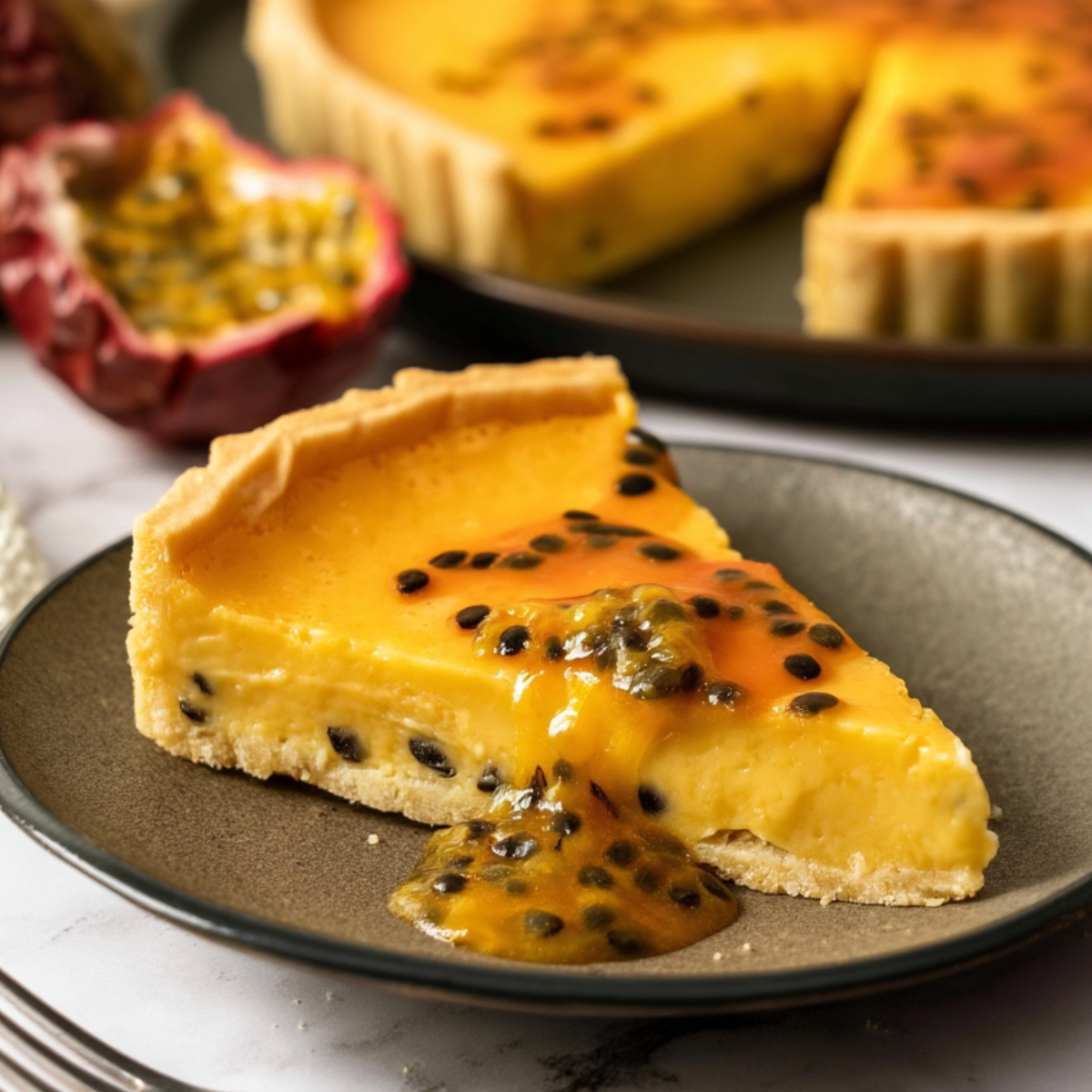
Crisp, golden, buttery crust filled with a silky, tangy passionfruit tart custard that wobbles just slightly when you pull it from the oven - this one is the real deal. I first made it for a summer dinner party when I needed something that looked impressive but wasn't going to have me sweating in the kitchen all day. The filling comes together on the stovetop in one saucepan, and the pâte sucrée shell bakes up beautifully with almost no fuss. If you love bright, tropical flavors with that creamy custard richness, you'll want to bookmark this right now.
If you're into baked custard desserts, you might also love this Cinnamon Pie for its warm, creamy filling, or the Guava Cheesecake for another tropical-inspired treat. And if you need a crowd-pleasing showstopper, the Louisiana Crunch Cake is always a good backup plan too.
Why You'll Love This Passionfruit Tart
- The filling has that perfectly balanced sweet-tangy flavor that tropical fruit lovers go absolutely wild for.
- The pâte sucrée shell bakes up crisp, golden, and buttery without shrinking down into nothing.
- You can make the shell up to 3 days ahead, which makes this a great dessert for entertaining.
- The custard filling is baked low and slow, which gives it that silky, set texture with the tiniest wobble in the center.
- Every single slice looks like it came out of a patisserie case.
Jump to:
Passionfruit Tart Ingredients
Here's a quick look at what goes into this Passionfruit Tart and why each ingredient matters.
See Recipe Card Below This Post For Ingredient Quantities
Tart Shell - Pâte Sucrée
- Unsalted butter : Creamed butter gives the shell its rich, tender crumb. Using softened butter makes it much easier to cream with the sugar without overmixing.
- Icing sugar / powdered sugar : Icing sugar dissolves more easily than granulated sugar and creates a finer, more delicate texture in the pastry. It's what gives pâte sucrée that slightly cookie-like quality.
- Egg : Binds the dough and helps it hold together when rolling and pressing into the tin. Room temperature egg incorporates more smoothly.
- Plain / all-purpose flour : Forms the structure of the shell. The relatively low sugar and fat ratio keeps it sturdy enough to hold the filling without going soggy.
Filling
- Granulated white sugar : Sweetens the curd and helps it thicken as it cooks. Balances the natural tartness of the passionfruit.
- Passionfruit pulp : The star of the recipe. Fresh or thawed frozen pulp both work well, and the seeds give the filling that gorgeous speckled look.
- Eggs and egg yolks : The eggs provide structure to the curd and custard. The extra yolks add richness and a deeper golden color to the finished filling.
- Lemon zest : Brightens the flavor and adds a gentle citrus lift that makes the passionfruit taste even more vibrant.
- Unsalted butter : Added piece by piece to the hot curd, the cold butter emulsifies into the mixture and creates an incredibly silky, velvety texture.
- Thickened cream / heavy cream : Added to the cooled curd before baking, the cream turns the filling into a baked custard with a smooth, creamy consistency.
- Extra egg : Whisked into the cream and curd mixture before baking, this final egg helps set the filling into that wobble-and-hold custard texture.
How to Make Passionfruit Tart
Here's a quick note before you dive in - the shell needs at least 2 hours to chill before baking, so plan your timing accordingly. Everything else moves along at a nice pace.
Make the pastry dough: Beat the softened butter and icing sugar together until smooth and fully combined, about 1 to 2 minutes. Add the egg and beat on low until smooth. If the mixture looks a little wet, add 1 tablespoon of the flour to help it come together. Add the remaining flour and mix just until large clumps form - don't overwork it.
Shape and chill the dough: Turn the dough out onto a clean work surface and gently bring it together into a smooth ball. Flatten it into a disc about 1 inch thick, wrap it, and refrigerate it for at least 2 hours or up to 3 days.
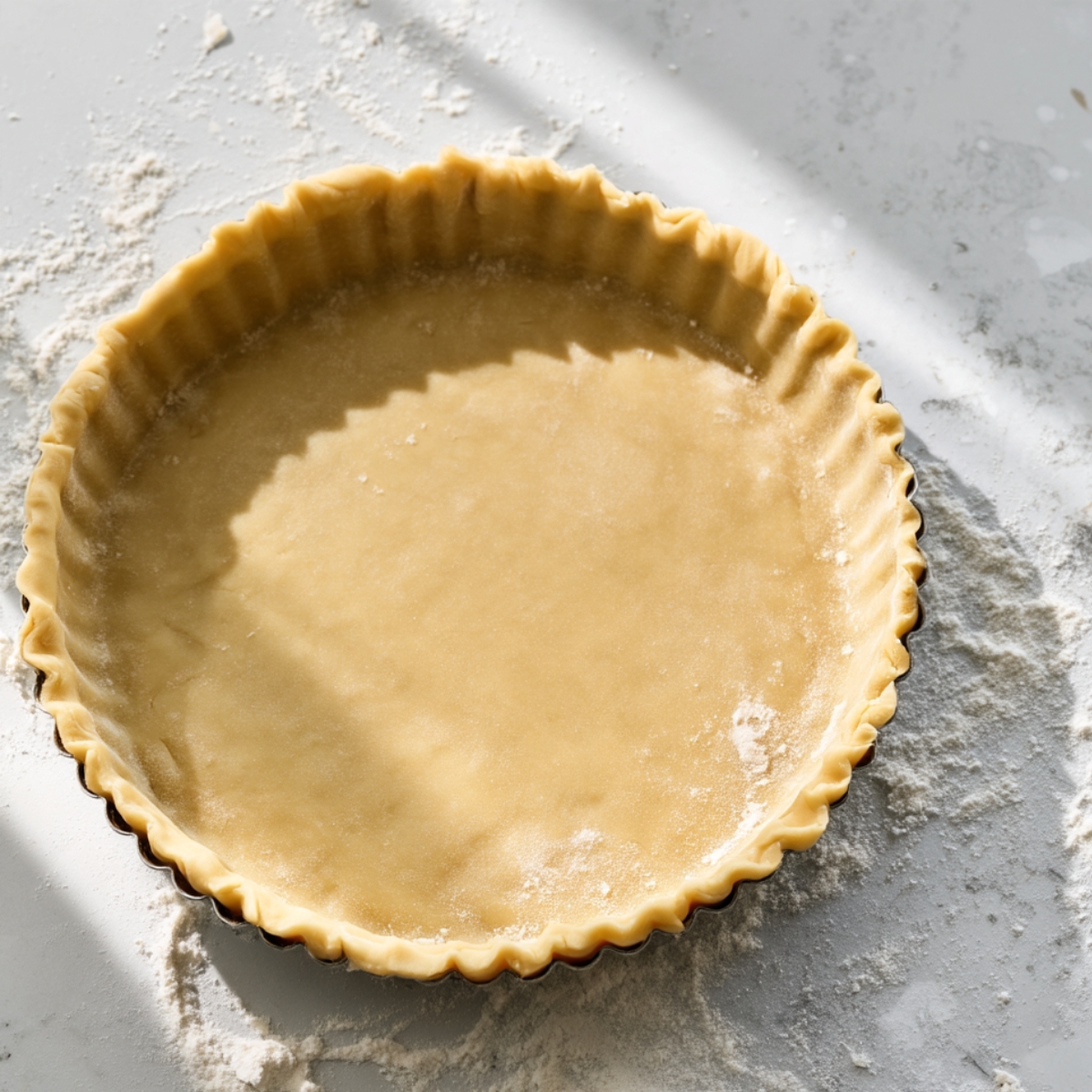
Roll and line the tin: Roll the chilled pastry on a lightly floured surface to approximately 4 to 5 mm thick, or about 11 inches in diameter. Carefully drape it over the rolling pin and transfer it into a 9-inch tart tin with a removable base.
Press and chill again: Press the pastry firmly into the base, corners, and fluted sides of the tin, leaving the overhang intact. Refrigerate for another 30 minutes if you have time - this helps prevent shrinkage during baking.
Preheat the oven: Heat your oven to 180°C (160°C fan) / 350°F while the shell is chilling.
Par-bake the shell: Prick the pastry base all over with a fork and trim the excess pastry flush with the rim. Line the shell with crumpled baking paper and fill with pie weights, baking beans, or rice. Bake for 15 minutes.
Finish baking the shell: Remove the paper and weights carefully and return the shell to the oven for another 7 minutes, until the base looks dry and very lightly golden. Set aside while you make the filling.
Start the curd: Whisk together the sugar, passionfruit pulp, 2 whole eggs, egg yolks, and lemon zest directly in a heavy-based saucepan. Cook over low-medium heat, stirring, until the sugar dissolves completely.
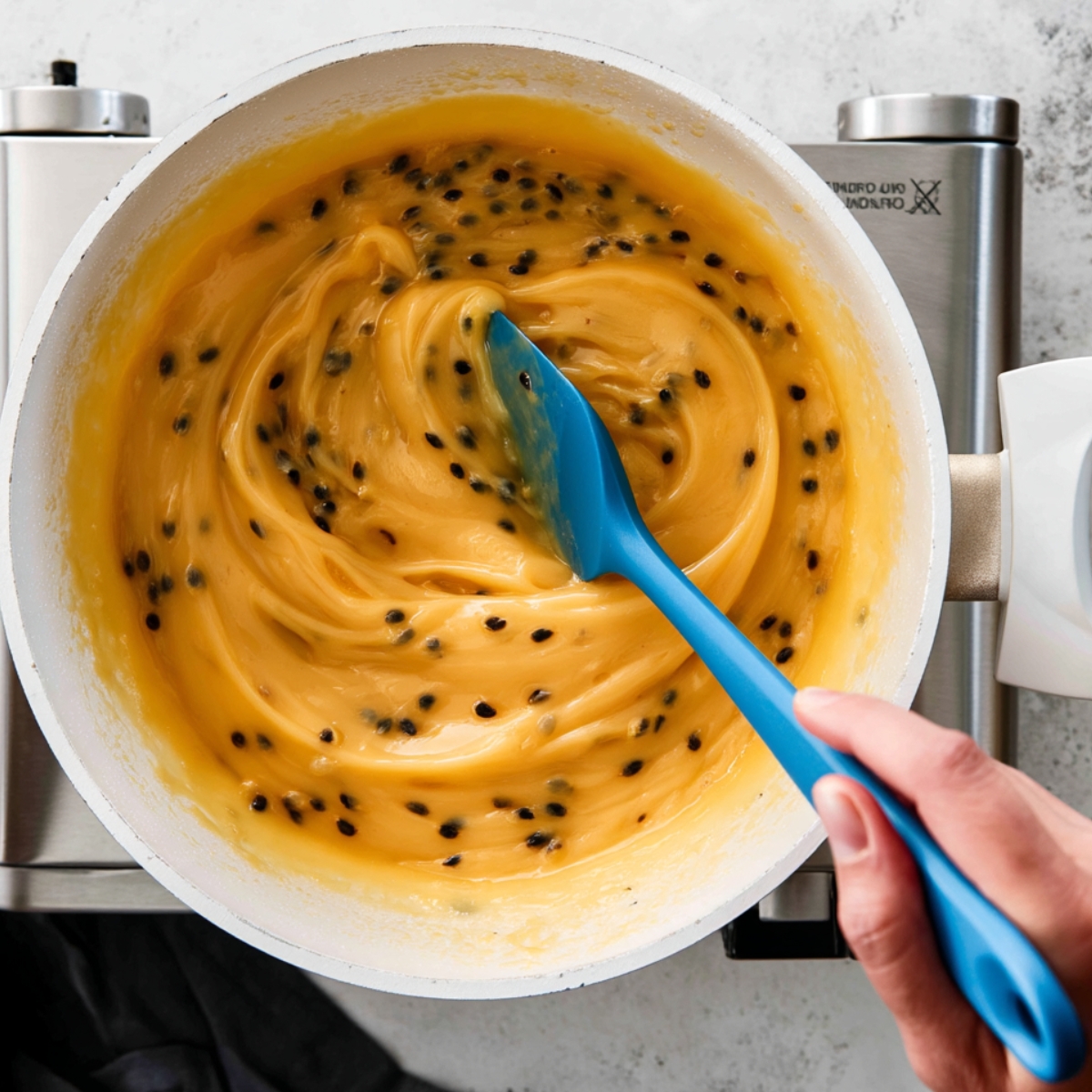
Build the curd: Add the cold butter a few pieces at a time, stirring after each addition until fully melted before adding more. Reduce the heat to low and cook for another 2 to 3 minutes, until the curd is thick enough to coat the back of a spoon.
Cool the curd: Take the curd off the heat and let it cool for about 15 minutes. It will thicken up a bit more as it cools.
Reduce the oven temperature: Turn the oven down to 160°C (140°C fan) / 320°F.
Assemble and bake: Whisk together the cooled passionfruit curd, cream, and the extra egg until smooth. Pour the filling into the prepared tart shell. Bake for 30 to 35 minutes, until the filling is almost set with only a slight wobble in the very center when you gently shake the tin.
Cool completely: Let the tart cool to room temperature on a wire rack before slicing and serving. Don't rush this step - the filling needs time to fully set.
Substitutions Worth Knowing
Passionfruit pulp: Frozen passionfruit pulp works beautifully here. Thaw it fully and use it exactly as you would fresh. Some brands come sweetened, so taste it first and reduce the sugar slightly if needed.
Icing sugar in the pastry: If you only have caster sugar on hand, it'll work, but the texture of the shell will be slightly less delicate.
Thickened cream / heavy cream: Regular full-fat cream works fine. Avoid low-fat versions as the filling won't set properly.
Lemon zest: You can swap this for lime zest for a slightly different citrus note that works really well with the passionfruit.
Pie weights: Dry beans, dry rice, or even dry lentils all work perfectly as blind baking weights.
Equipment For Passionfruit Tart
- 9-inch fluted loose-bottomed tart tin
- Heavy-based medium saucepan
- Stand mixer or electric mixer
- Rolling pin
- Pie weights, baking beans, or rice
- Whisk
- Silicone spatula
- Sharp knife
- Baking paper
How to Store Passionfruit Tart
Refrigerator: Store the finished Passionfruit Tart loosely covered in the fridge for up to 3 days. The pastry will soften slightly over time, so it's best eaten within the first 2 days.
Freezing: The tart shell can be baked and frozen unfilled for up to 1 month. Wrap it well and thaw at room temperature before filling and baking.
Make ahead: The baked tart shell can be stored at room temperature for up to 24 hours before filling. The passionfruit curd can be made and refrigerated up to 2 days ahead - just bring it to room temperature and whisk in the cream and egg before baking.
How to Serve It
Chilled with whipped cream: A dollop of lightly sweetened whipped cream on each slice is the simplest and most classic way to serve this Passionfruit Tart. The cool cream against the tangy filling is really lovely.
With fresh fruit: A few extra fresh passionfruit halves spooned over the top, or a handful of raspberries, makes the whole thing look like it came straight from a patisserie display.
With a scoop of ice cream: Vanilla ice cream alongside a slice is a great pairing, especially if you're serving it slightly warm from the oven. If you want another frozen dessert to offer alongside, this Brownie Batter Ice Cream is a crowd favorite.
On a brunch board: Slice the tart into thin wedges and add it to a dessert and sweet board alongside Chess Squares and fresh fruit. It looks incredible and cuts really cleanly into neat slices.
Expert Tips
Weigh your ingredients. This is especially important for the pastry. A kitchen scale gives you much more consistent results than measuring by volume, particularly for the flour and butter.
Don't skip the chilling time. Two hours in the fridge before baking the shell is the minimum. The cold dough holds its shape better and is less likely to shrink away from the sides of the tin during baking.
Add the butter slowly to the curd. Cold butter added piece by piece creates that silky, smooth texture.
FAQ
How do you make a homemade passionfruit tart?
Make and chill the pâte sucrée shell, blind bake it, then cook the passionfruit curd on the stovetop. Whisk in the cream and extra egg, pour it into the shell, and bake low and slow until just set.
Can I use frozen passionfruit pulp for passionfruit tart?
Yes, frozen pulp works just as well as fresh. Thaw it completely before measuring, and if it's sweetened, reduce the sugar in the filling a little.
What is the best crust for a passionfruit tart?
Pâte sucrée is the best choice - it's buttery, slightly sweet, and firm enough to hold the custard filling without going soggy.
How do you know when a custard tart is fully baked?
The edges should look set with just a slight wobble in the very center. It firms up as it cools, so don't wait for it to look fully solid in the oven.
Related
Looking for other recipes like this? Try these:
Pairing
These are my favorite dishes to serve with Passionfruit Tart



Passion Fruit Tart
Ingredients
Method
- Beat the softened butter with the icing sugar until smooth and creamy. Add the egg and mix until fully blended, adding a spoonful of flour if needed to help it come together.
- Mix in the remaining flour just until a shaggy dough forms.
- Gather the dough with your hands, gently shape it into a smooth ball, then flatten into a thick disk without overworking it.
- Roll the pastry on a lightly floured surface into a circle about 4-5 mm thick, turning it often to prevent sticking.
- Lift the pastry over a rolling pin and carefully drape it into a 9-inch tart pan with a removable base.
- Press the pastry firmly into the corners and fluted edges, leaving the excess hanging over the rim. Refrigerate for at least 2 hours until well chilled.
- Preheat the oven to 350°F (180°C).
- Prick the base of the pastry with a fork and trim away the overhanging dough with a sharp knife.
- Line the shell with crumpled baking paper and fill completely with pie weights or dried beans, pressing them into the edges.
- Bake for 15 minutes.
- Carefully remove the paper and weights, then return the shell to the oven for another 7 minutes until lightly golden. Let it cool slightly.
- Whisk together the sugar, passion fruit pulp, eggs, egg yolks, and lemon zest in a saucepan over medium-low heat until the sugar has dissolved.
- Add the cold butter a few cubes at a time, stirring until each addition has melted before adding more.
- Continue cooking over low heat until the mixture thickens enough to coat the back of a spoon.
- Remove from the heat and allow the curd to cool for about 15 minutes.
- Reduce the oven temperature to 320°F (160°C).
- Whisk the cooled curd with the heavy cream and the remaining egg until smooth.
- Pour the filling into the baked tart shell and bake for 30 minutes, or until the edges are set and the center has a gentle wobble.
- Cool completely, then chill before slicing and serving for the cleanest texture.

Leave a Reply