
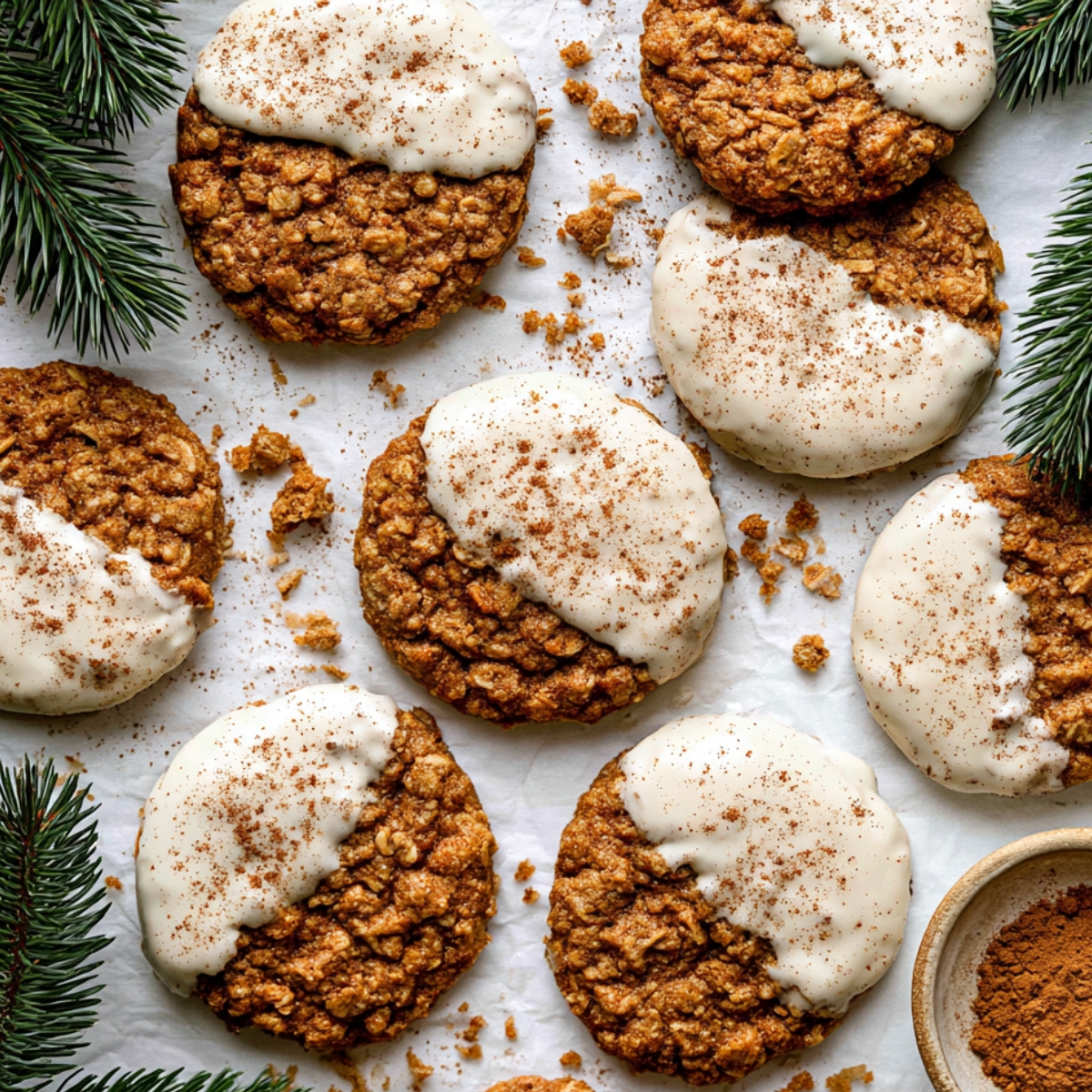
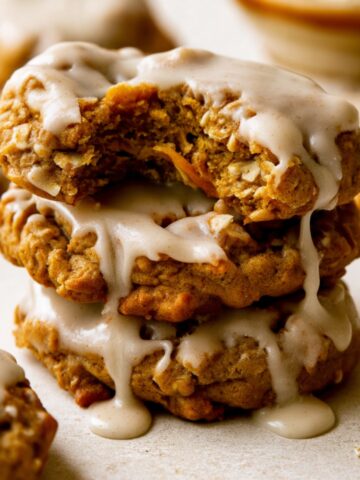
Soft, chewy, warmly spiced gingerbread latte cookies loaded with oats and molasses, half-dipped in espresso white chocolate and dusted with cinnamon and nutmeg. These cookies smell like a holiday coffee shop the second they hit the oven, and they taste even better than they sound. I started making these a few years ago when I wanted something that felt festive but also a little coffeehouse-cozy, and the combination of ginger, molasses, and espresso powder was an instant keeper.

If you love my Salted Caramel Cupcakes or my Orange Glazed Cranberry Bread, these cookies belong right next to them on your holiday dessert tray. And honestly, pairing one with a Black Forest Icebox Cake makes for a seriously cozy holiday spread.
Why You'll Love These Gingerbread Latte Cookies
These Gingerbread Latte Cookies check a lot of boxes without asking much of you.
- Deep, layered flavor. Molasses, warm spices, and espresso powder all work together in a way that feels rich and complex, not one-note.
- Perfectly chewy texture. The oats and the chilled dough give you that soft, dense chew that holds up well even after a couple of days.
- Stunning presentation. That white chocolate dip with a tiny pinch of cinnamon-nutmeg on top looks like it came from a bakery window.
- Easy to prep ahead. The dough can chill in the fridge for up to three days, which makes holiday baking feel a lot more manageable.
- Cookie exchange ready. They travel well, hold their shape, and look beautiful on a tray.
Jump to:
- Why You'll Love These Gingerbread Latte Cookies
- Gingerbread Latte Cookies Ingredients
- How to Make Gingerbread Latte Cookies
- Substitutions and Swaps
- Equipment For Gingerbread Latte Cookies
- Storage Tips For Gingerbread Latte Cookies
- Serving Suggestions
- Expert Tips For Gingerbread Latte Cookies
- FAQ
- Related
- Pairing
- Gingerbread Latte Cookies
Gingerbread Latte Cookies Ingredients
Everything you need is simple and straightforward. Here's what each one does.
See Recipe Card Below This Post For Ingredient Quantities
For the Cookies:
- Old-fashioned whole rolled oats : Pulsed in the food processor, the oats add structure, a slight chew, and that hearty oatmeal texture that makes these cookies feel substantial.
- All-purpose flour : The base of the dough. Spooning and leveling keeps the flour from packing in, which helps the cookies stay soft instead of dense.
- Espresso powder : This is the "latte" part. It deepens the flavor of the molasses and spices without making the cookies taste like coffee outright.
- Baking soda : Gives the cookies a slight lift and helps them spread just the right amount.
- Salt : Balances the sweetness of the sugars and molasses.
- Ground ginger : Warm, slightly sharp, and essential for that gingerbread flavor.
- Ground cinnamon : Adds sweetness and warmth and pairs beautifully with the molasses.
- Ground nutmeg : A little goes a long way. It adds depth without overpowering the other spices.
- Ground cloves : Earthy and intense. A small pinch rounds out the spice blend and gives the cookies that classic holiday depth.
- Unsalted butter : Room-temperature butter creams smoothly with the sugars to create a rich, tender dough. Using it softened rather than melted gives the cookies better texture.
- Light or dark brown sugar : Adds moisture, chew, and a caramel-like depth that pairs well with the molasses.
- Granulated sugar : Balances the brown sugar and helps the edges set with a very light crispness.
- Large egg : Binds the dough and adds moisture. Room temperature eggs blend in more evenly.
- Unsulphured or dark molasses : This is the soul of the recipe. It adds that signature gingerbread color, flavor, and chewiness. Unsulphured molasses has a cleaner, sweeter taste than blackstrap.
For the Topping:
- White chocolate, chopped : Melts smoothly and gives the cookies a sweet, creamy contrast to the spiced base. Chopping it yourself gives better results than chips, which can be waxy.
- Vegetable oil or coconut oil, optional : Adding a little oil helps the chocolate melt to a thinner, smoother consistency that's easier to dip into.
- Espresso powder : Stirred into the melted chocolate, this ties the topping back to the cookie and gives the white chocolate a subtle coffeehouse flavor.
- Pinch each of cinnamon and nutmeg: Just a tiny sprinkle over the white chocolate before it sets. It looks pretty and adds a last little hint of warmth.
How to Make Gingerbread Latte Cookies
Here's a simple one-line overview: pulse the oats, mix the dough, chill it, scoop and bake, then dip in espresso white chocolate.
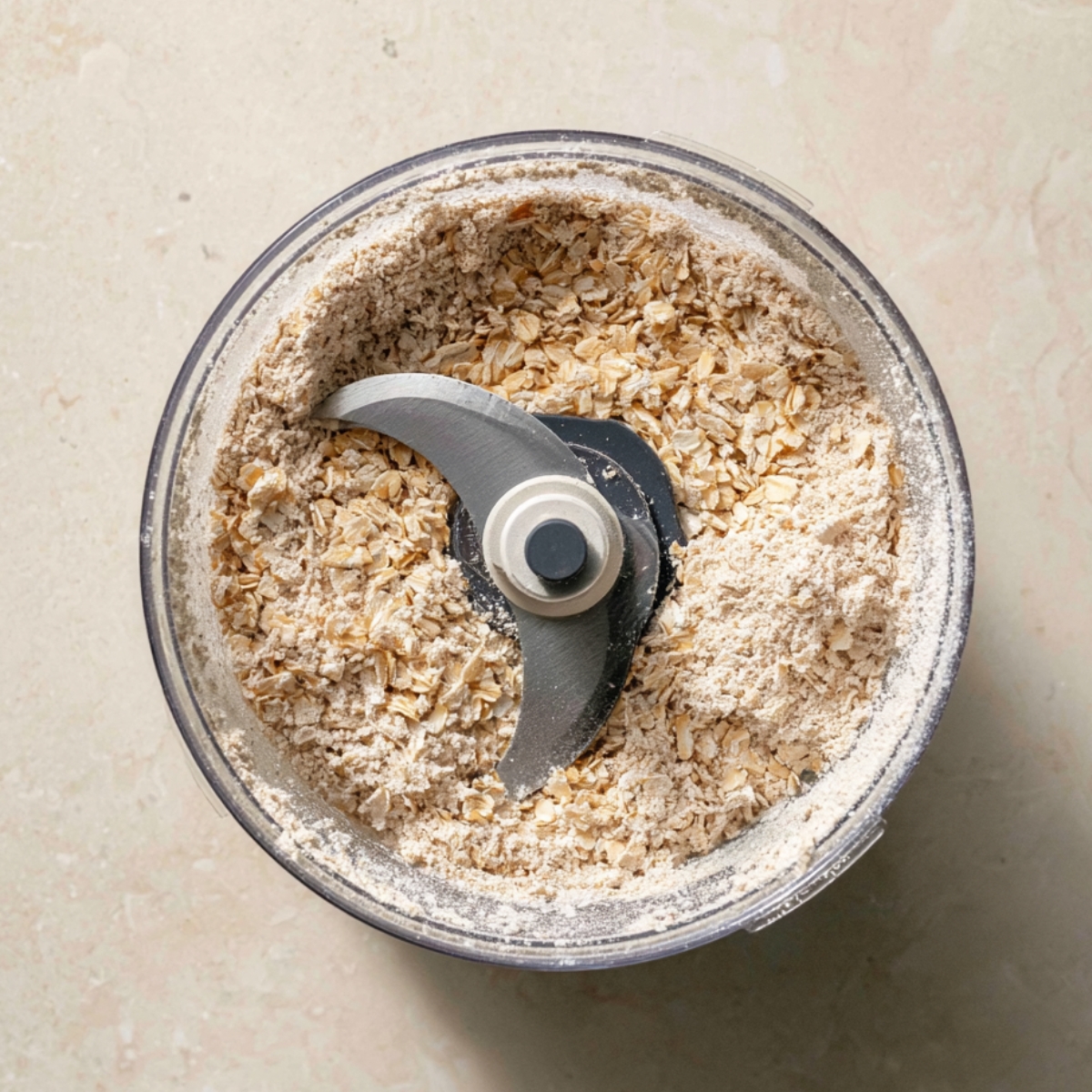
Pulse the oats: Add your old-fashioned oats to a food processor and pulse 10 to 12 times. You're not making oat flour - you want a mix of chopped oats and some finer pieces. That varied texture is what gives these Gingerbread Latte Cookies their signature chew.
Mix the dry ingredients: In a medium bowl, whisk together the pulsed oats, all-purpose flour, espresso powder, baking soda, salt, ground ginger, ground cinnamon, ground nutmeg, and ground cloves until evenly combined. Set the bowl aside.
Cream the butter and sugars: Using a hand mixer or stand mixer fitted with the paddle attachment, beat the softened butter, brown sugar, and granulated sugar together on medium-high speed for about 3 minutes, until the mixture looks light, pale, and fluffy. Don't rush this step - it matters for the final texture.
Add the egg and molasses: Add the egg and molasses to the creamed butter mixture and beat on high speed for about 1 minute until everything is fully combined. Scrape down the sides of the bowl and give it one more mix so nothing gets left behind.
Combine wet and dry: Add the dry ingredient mixture to the wet ingredients and mix on low speed until just combined. The dough will be very thick and sticky - that's completely normal. Don't worry about it.
Chill the dough: Cover the bowl tightly and refrigerate the dough for 30 to 45 minutes. If you're planning to chill it longer (up to 3 days works great for make-ahead baking), just let it sit at room temperature for at least 30 minutes before you scoop, so it softens enough to work with.
Preheat and prep: When you're ready to bake, preheat your oven to 350 degrees F (177 degrees C). Line your large baking sheets with parchment paper or silicone baking mats.
Scoop and space: Using a medium cookie scoop, portion out approximately 1.5 tablespoons (35g) of dough per cookie. Place them about 3 inches apart on the prepared baking sheets - they spread a little, so give them room.
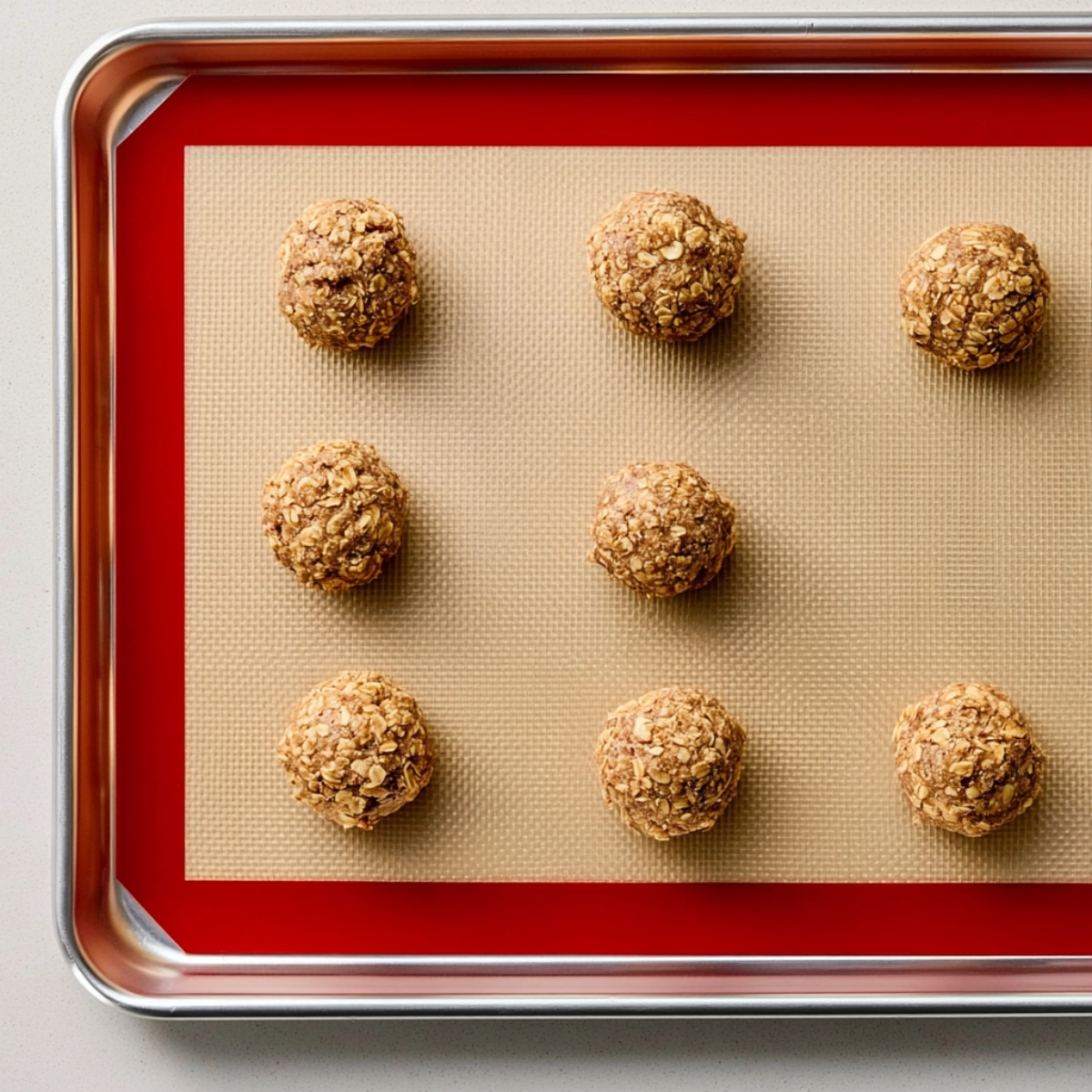
Bake: Bake for 12 to 13 minutes, until the edges are lightly browned and set. The centers will still look quite soft when you pull them out, and that's exactly what you want. They firm up as they cool.
Cool on the pan: Let the cookies rest on the baking sheet for 10 minutes before transferring them to a wire cooling rack. They need that time on the hot pan to finish setting up.
Make the white chocolate topping: While the cookies cool completely, melt the chopped white chocolate, oil, and espresso powder together using a double boiler over low heat, or in the microwave in 20-second increments, stirring between each interval until completely smooth.
Dip and sprinkle: Dip each cooled cookie halfway into the melted white chocolate, letting the excess drip off. In a small bowl, mix the cinnamon and nutmeg together, then lightly sprinkle a tiny pinch over the white chocolate portion of each cookie before it sets.
Set the topping: Lay the dipped cookies on a parchment-lined tray and refrigerate for about 30 minutes until the white chocolate is fully set and firm.
Substitutions and Swaps
Oats: Old-fashioned rolled oats work best here. Quick oats can work in a pinch but the texture won't be quite the same. Avoid instant oats entirely.
Espresso powder: If you don't have espresso powder, instant coffee granules work as a substitute. Use the same amount, but note that the flavor will be a little milder.
Molasses: Dark molasses gives the deepest color and richest flavor. Unsulphured molasses is slightly milder and sweeter. Don't swap in blackstrap molasses - it's too bitter for this recipe.
Butter: This recipe is designed for unsalted butter. If you only have salted, reduce the added salt to a tiny pinch.
White chocolate: High-quality white chocolate bars, chopped, melt much better than white chocolate chips. If you can find a good baking bar, it's worth it for the dipping step.
Egg: This recipe hasn't been tested as egg-free, but a flax egg (1 tablespoon ground flaxseed mixed with 3 tablespoons water, rested for 5 minutes) may work as a substitute.
Equipment For Gingerbread Latte Cookies
- Food processor: For pulsing the oats to that ideal mixed texture.
- Medium mixing bowl: For whisking the dry ingredients together.
- Whisk: Keeps the dry ingredients evenly distributed.
- Hand mixer or stand mixer with paddle attachment: For creaming butter and mixing the dough.
- Large mixing bowl: For the full dough.
- Baking sheets: Large ones work best so you can fit a full batch with spacing.
- Parchment paper or silicone baking mats: Essential for easy release and even browning.
- Medium cookie scoop: Makes portioning the dough quick and consistent.
- Cooling rack: Lets air circulate under the Gingerbread Latte Cookies as they cool.
- Double boiler or microwave-safe bowl: For melting the white chocolate topping smoothly.
Storage Tips For Gingerbread Latte Cookies
At room temperature: Store the finished Gingerbread Latte Cookies in an airtight container for up to 3 days. They stay soft and chewy, and honestly taste even better on day two.
In the refrigerator: Covered and refrigerated, they'll keep well for up to 1 week. Let them come to room temperature for a few minutes before eating, or pop one in the microwave for 8 to 10 seconds.
Freezing the dough: The unbaked dough freezes beautifully. Scoop it into balls, freeze them on a lined tray until solid, then transfer to a zip-top bag. Bake from frozen, adding 2 to 3 minutes to the bake time.
Freezing baked cookies: You can freeze fully baked, undipped Gingerbread Latte Cookies for up to 2 months. Thaw at room temperature, then dip in white chocolate fresh before serving.
Serving Suggestions
With a holiday latte: These Gingerbread Latte Cookies were basically made to be dunked into a vanilla latte or a warm spiced chai. The espresso notes in both the cookie and the topping play off each other perfectly.
On a cookie exchange tray: Paired with something fruity like [Roasted Chocolate Cherry Brownies](Roasted Chocolate Cherry Brownies) or something creamy like [Butterscotch Lush](Butterscotch Lush), these Gingerbread Latte Cookies hold their own beautifully in a holiday spread.
As a simple dessert with ice cream: Crumble a warm Gingerbread Latte Cookies over a scoop of vanilla ice cream with a drizzle of caramel. Cozy and simple.
Gifted in a tin: Stack them carefully in a decorative tin lined with parchment - they look gorgeous, travel well, and make a gift people actually remember.
Expert Tips For Gingerbread Latte Cookies
Don't skip the chill. The 30 to 45 minute refrigeration step is what keeps these Gingerbread Latte Cookies from spreading too thin in the oven. The dough is very sticky, and chilling it firms it up enough to scoop cleanly and hold its shape while baking.
Spoon and level your flour. Scooping flour directly from the bag packs it down and throws off the ratio. Spoon it into the measuring cup and level it off with a straight edge for accuracy.
Pulse, don't blend. Ten to twelve pulses is the goal. You want a rough, varied chop - not smooth oat flour. That texture is what gives the Gingerbread Latte Cookies their chewy, slightly rustic character.
Cool completely before dipping. Even a slightly warm Gingerbread Latte Cookies will melt the white chocolate too quickly and create a streaky, uneven coat. Let them cool fully on the rack first.
FAQ
How do you make Gingerbread Latte Cookies from scratch?
Start by pulsing rolled oats in a food processor, then whisk them together with flour, espresso powder, and your warm spices. Cream butter and sugars until fluffy, add egg and molasses, then mix in the dry ingredients. Chill the dough, scoop it into balls, and bake at 350 degrees F for 12 to 13 minutes. Once cooled, dip halfway in espresso-infused melted white chocolate and let it set. That's it - chewy, spiced, coffee-flavored holiday Gingerbread Latte Cookies start to finish. A family tip: let the kids do the dipping. Messy, but memorable.
Can I use instant coffee instead of espresso powder in cookies?
You can. Instant coffee granules work as a substitute for espresso powder in this recipe. Use the same measurement (2 teaspoons in the dough, ½ teaspoon in the topping), but keep in mind instant coffee is usually a bit milder than espresso powder, so the coffee flavor will be slightly more subtle. If your coffee lover household has strong instant coffee on hand, that version works especially well.
Why are my oatmeal cookies soft and chewy?
A few things work together here. Brown sugar holds moisture better than white sugar, molasses adds extra moisture and density, and the chilled dough means the Gingerbread Latte Cookies don't spread too fast in the oven. The oats - especially when pulsed rather than left whole - also contribute to that dense, chewy interior. If yours are coming out crispier than expected, make sure you're not overbaking. Pull them when the centers still look soft.
Can gingerbread cookies be frozen after baking?
Absolutely. Bake and fully cool the Gingerbread Latte Cookies, then skip the white chocolate dip for now. Freeze them flat on a parchment-lined tray until solid, then stack in a freezer bag or container with parchment between layers. They'll keep for up to 2 months. When you're ready to serve, thaw at room temperature and do the dipping fresh. The white chocolate looks and tastes much better when it hasn't been frozen.
Related
Looking for other recipes like this? Try these:



Pairing
These are my favorite dishes to serve with Gingerbread Latte Cookies



Gingerbread Latte Cookies
Ingredients
Method
- Pulse the oats several times in a food processor until a mixture of coarse oat pieces and fine oat crumbs forms.
- Combine the processed oats, flour, espresso powder, baking soda, salt, ginger, cinnamon, nutmeg, and cloves in a mixing bowl until evenly distributed.
- Beat the butter, brown sugar, and granulated sugar together until light and creamy. Add the egg and molasses and continue mixing until smooth and fully incorporated.
- Add the dry ingredients to the butter mixture and stir on low speed until a thick dough forms. Cover the bowl and refrigerate the dough for 30 minutes.
- Heat the oven to 350°F (177°C) and prepare baking sheets with parchment paper.
- Portion the dough into 1½-tablespoon scoops and arrange them several inches apart on the prepared baking sheets.
- Bake the cookies until the edges are lightly golden and the centers remain soft, about 12 to 13 minutes.
- Allow the cookies to rest on the baking sheets for 10 minutes before transferring them to a wire rack to cool completely.
- Melt the white chocolate with the oil and espresso powder until smooth and glossy, stirring frequently.
- Dip half of each cooled cookie into the melted white chocolate and place them on a lined tray or rack.
- Combine the cinnamon and nutmeg, then lightly sprinkle the mixture over the chocolate-coated portions.
- Refrigerate the cookies until the coating is firm and set, about 30 minutes.


Leave a Reply