
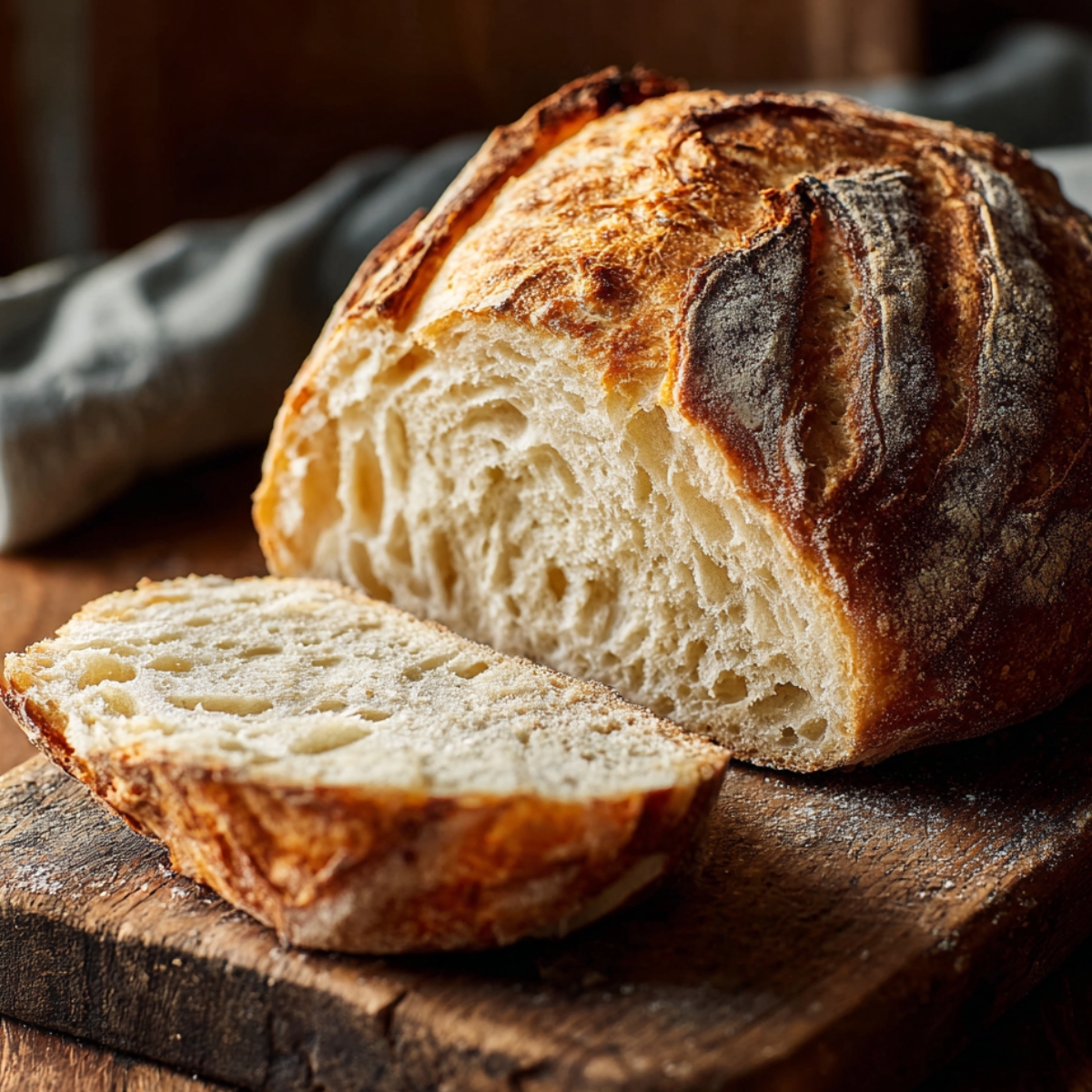
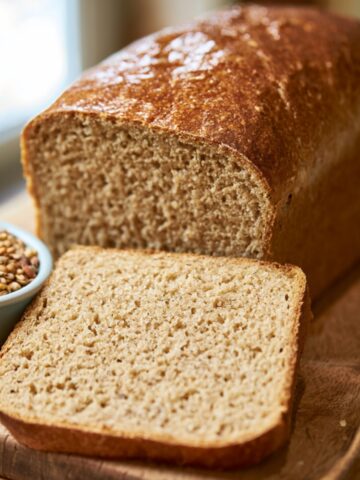
There's nothing quite like pulling a golden, crackling loaf of beginner sourdough bread out of your oven, especially when you made it yourself with just five simple ingredients. These crusty, artisan-style loaves have a light, plush crumb and that signature tangy flavor that makes store-bought bread taste like cardboard. I still remember the first time I baked sourdough-I was terrified I'd mess it up, but the moment I heard that crust crackle as it cooled, I was hooked.
If you love homemade baking, you might also enjoy my Orange Pie or these comforting Sweet Potato Rolls for your next family dinner.
Why You'll Love This Sourdough Bread Recipe
This easy artisan Sourdough Bread recipe is perfect for beginners because it doesn't require fancy equipment or complicated techniques. You'll use just five ingredients-active sourdough starter, bread flour, warm water, olive oil, and sea salt-to create a rustic, crusty loaf with a soft, airy crumb. The clear timing guides help you know exactly when your dough is ready, even if you've never baked bread before. Plus, baking in a Dutch oven gives you that bakery-style crust without any special skills. If you're looking for more simple homemade treats, try my Berry Galette or these rich Chocolate Snickerdoodles.
Jump to:
Sourdough Bread Ingredients
Here's what you'll need to make one beautiful loaf of homemade sourdough bread.
See Recipe Card Below This Post For Ingredient Quantities
- Bubbly, active sourdough starter: This is your natural yeast. Make sure it's fed and bubbly before you start.
- Warm water: Helps activate the starter and creates the dough's structure. Room temperature or slightly warm works best.
- Olive oil: Adds richness and tenderness to the crumb. It also helps keep the loaf soft as it cools.
- Bread flour: Provides the protein and structure needed for a chewy, open crumb. Don't substitute all-purpose flour here.
- Fine sea salt: Balances the tangy flavor and strengthens the gluten.
- Fine ground cornmeal or parchment paper: Prevents sticking in the Dutch oven.
How to Make Sourdough Bread
Follow these steps to bake your first beginner artisan Sourdough Bread.
Make the dough: In a large bowl, combine the sourdough starter, warm water, and olive oil. Mix with a fork until blended. Add the bread flour and salt, stirring until the dough becomes stiff. Use your hands to fully incorporate the flour. The dough will look rough and shaggy. Cover the bowl with plastic wrap or a damp towel and let it rest for 30 minutes to 1 hour.
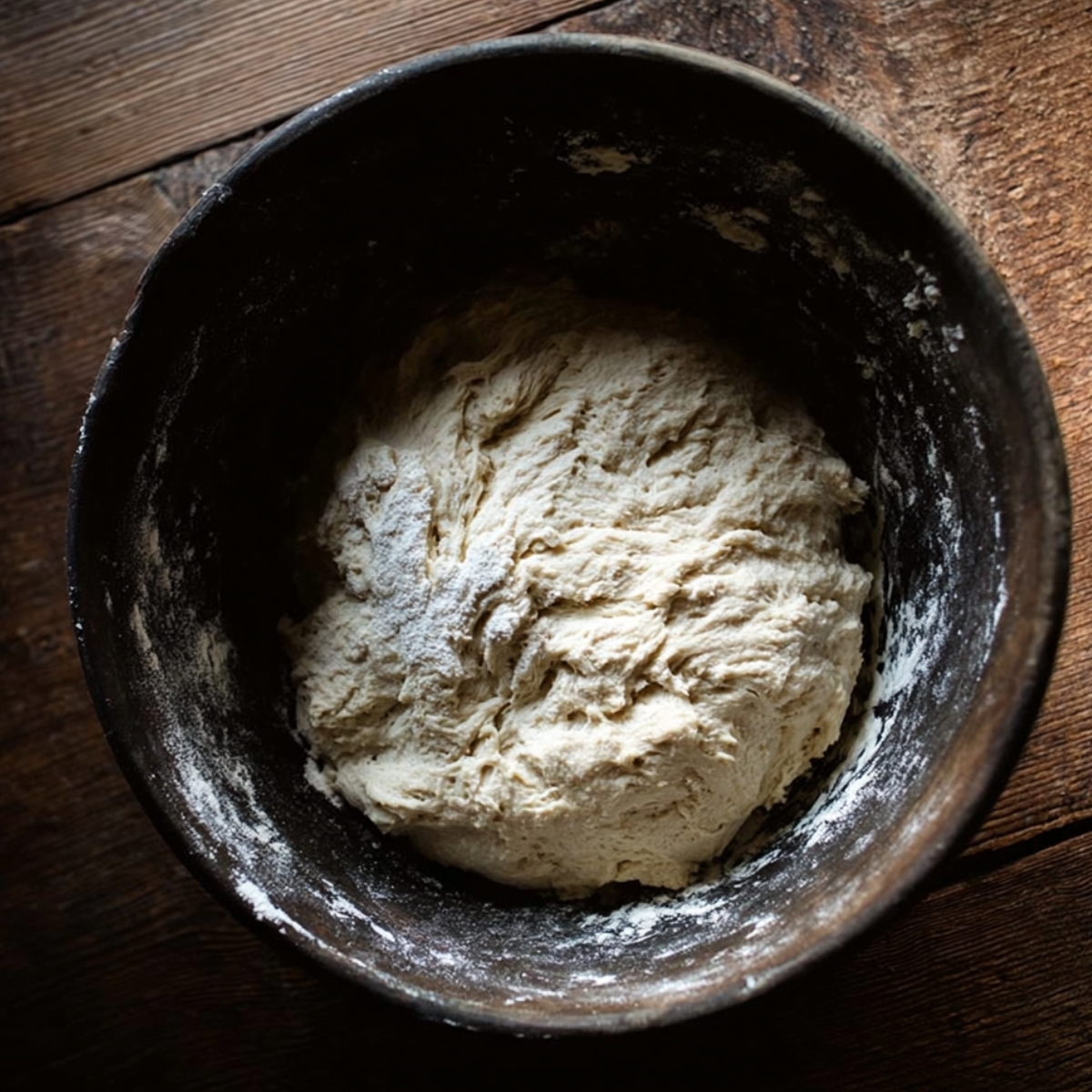
Bulk rise: After resting, shape the dough into a rough ball in the bowl for about 15 seconds. Cover again and let it rise in a warm spot between 70-75°F. The dough is ready when it looks softer, no longer dense, and has almost doubled in size. In summer, this takes about 2-4 hours at 80°F. In winter, it can take 10-12 hours at 68°F. Watch the dough, not the clock.
Optional stretch and fold: About 30-45 minutes into bulk fermentation, lift one side of the dough, stretch it upward, and fold it over itself. Rotate the bowl a quarter turn and repeat until you've completed a full circle. Do this 1-2 more times, spaced about an hour apart. This strengthens the dough and improves texture.
Shape the dough: Transfer the dough onto a lightly floured surface. Starting at the top, fold the dough toward the center, rotate slightly, and repeat folding until you've completed a circle. Flip the dough seam-side down. Cup the sides gently and rotate in a circular motion to tighten the surface and create tension.
Second rise: If using 250g water, line your Dutch oven with parchment paper or coat with cornmeal. Place the dough inside, cover, and let rise for 30 minutes to 1 hour. The dough should look slightly puffy but not doubled. Preheat your oven to 450°F.
Score the dough: Right before baking, use a bread lame, razor blade, or sharp knife to make a shallow 2-3 inch slash in the center of the dough, about ¼-inch deep.
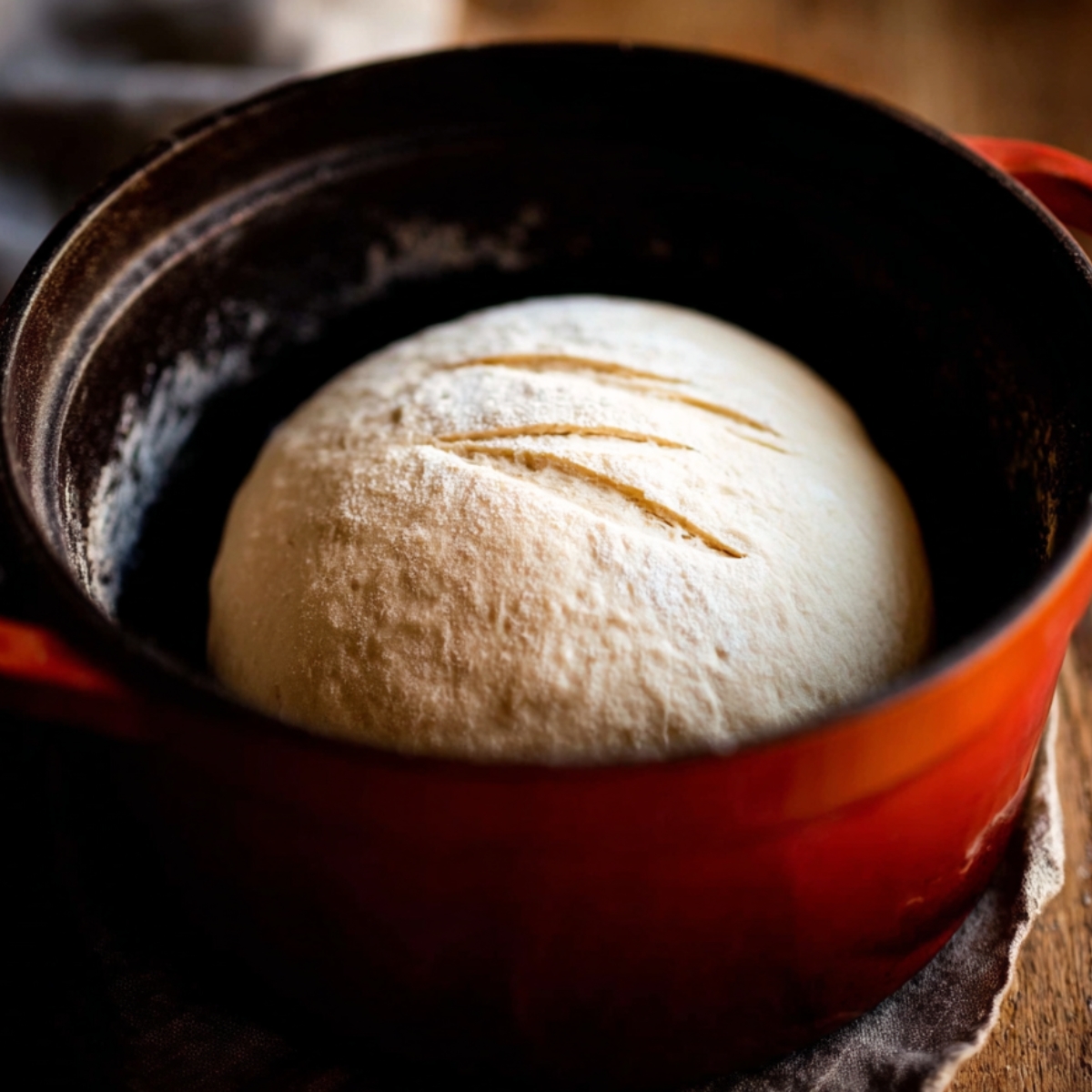
Bake the dough: Place the Dutch oven on the center rack with the lid on. Reduce the oven temperature to 400°F. Bake covered for 20 minutes, then remove the lid and bake uncovered for an additional 40 minutes until deep golden brown. The internal temperature should reach 205-210°F. Remove the bread and cool on a wire rack for at least 1 hour before slicing.
Ingredient Substitutions
Bread flour: If you don't have bread flour, you can use all-purpose flour, but the texture will be slightly less chewy and the crumb may be denser.
Olive oil: Any neutral oil works, or you can use melted butter for a richer flavor.
Water amount: For a softer, more pliable dough, increase the water to 300-325g. Wetter doughs will need a floured proofing basket or cloth-lined bowl during the second rise.
Equipment For Sourdough Bread
- Digital kitchen scale
- Large mixing bowl
- Fork
- Plastic wrap or damp kitchen towel
- Dough tub (optional)
- Dough scraper (optional)
- Proofing basket or cloth-lined bowl (optional)
- 5 ½ or 6 quart Dutch oven
- Parchment paper
- Bread lame, razor blade, or sharp knife
- Digital thermometer
- Wire cooling rack
Storage Tips
Room temperature: Store the cooled loaf in a paper bag or wrap it loosely in a kitchen towel for up to 3 days. The crust will soften slightly.
Freezer: Slice the bread and freeze in a freezer-safe bag for up to 3 months. Toast slices straight from frozen.
Refresh the crust: If the crust loses its crunch, pop the loaf in a 350°F oven for 5-10 minutes.
Expert Tips
Weigh your ingredients: A digital scale ensures accuracy and consistent results every time you bake.
Watch the dough, not the clock: Fermentation times vary based on your kitchen temperature. Look for visual cues like a softer texture and increased volume.
Don't skip the rest: The autolyse period helps the flour absorb water and makes the dough easier to work with.
Use bread flour: The higher protein content in Sourdough Bread flour creates a better crumb and chewier texture. This recipe was tested with King Arthur, Gold Medal, and Pillsbury bread flour.
FAQ
Why is my sourdough bread dense?
Your dough may not have fermented long enough during bulk rise, or your starter may not have been active enough. Make sure your starter is bubbly and doubles in size after feeding. Also, try adding a bit more water (300-325g) for a lighter crumb.
Can I make sourdough bread without a Dutch oven?
Yes, you can bake it on a baking sheet, but you'll need to create steam in the oven. Place a pan of hot water on the bottom rack or spray the loaf with water before baking. The crust won't be quite as crispy, but it'll still be delicious.
How do I know when bulk fermentation is complete?
The dough should look softer, less dense, and almost doubled in size. It should feel slightly jiggly when you gently shake the bowl. If you poke it, the indent should slowly spring back. Karla learned this the hard way-she kept poking hers every five minutes!
What is the best flour for beginner sourdough bread?
Bread flour is ideal because it has more protein than all-purpose flour, which helps create a chewy texture and open crumb. I've had great results with King Arthur, Gold Medal, and Pillsbury bread flour.
Related
Looking for other recipes like this? Try these:




Pairing
These are my favorite dishes to serve with Sourdough Bread



Sourdough Bread
Ingredients
Method
- Combine the sourdough starter, warm water, and olive oil in a large bowl until mostly smooth.
- Add the bread flour and sea salt, then stir until a rough dough forms and no dry flour remains.
- Cover the bowl tightly and allow the dough to rest for 30 minutes to 1 hour at room temperature.
- Gently knead the rested dough inside the bowl for about 15 seconds until it becomes slightly smoother and holds together better.
- Cover the bowl and leave the dough to rise in a warm area until nearly doubled and no longer dense, about 6 to 12 hours depending on room temperature.
- Optional: During the first rise, stretch one side of the dough upward and fold it over the center. Rotate the bowl and repeat all the way around, completing 1 set. Repeat 1 or 2 more times with resting periods between each set.
- Transfer the dough onto a lightly floured surface and fold the edges inward toward the center to shape it into a round loaf.
- Turn the dough seam-side down and gently rotate it against the counter to create surface tension and tighten the shape.
- Line a Dutch oven with parchment paper or sprinkle with cornmeal, then place the dough inside and cover loosely.
- Allow the dough to rise again for 30 minutes to 1 hour until slightly puffed while preheating the oven to 450°F.
- Use a bread lame or sharp knife to make a shallow slash across the top of the dough right before baking.
- Place the covered Dutch oven in the oven, reduce the temperature to 400°F, and bake for 20 minutes with the lid on.
- Remove the lid and continue baking for another 40 minutes until the crust becomes deep golden brown and crisp.
- Check that the center of the bread reaches 205-210°F, then transfer the loaf to a wire rack to cool completely before slicing.


Leave a Reply